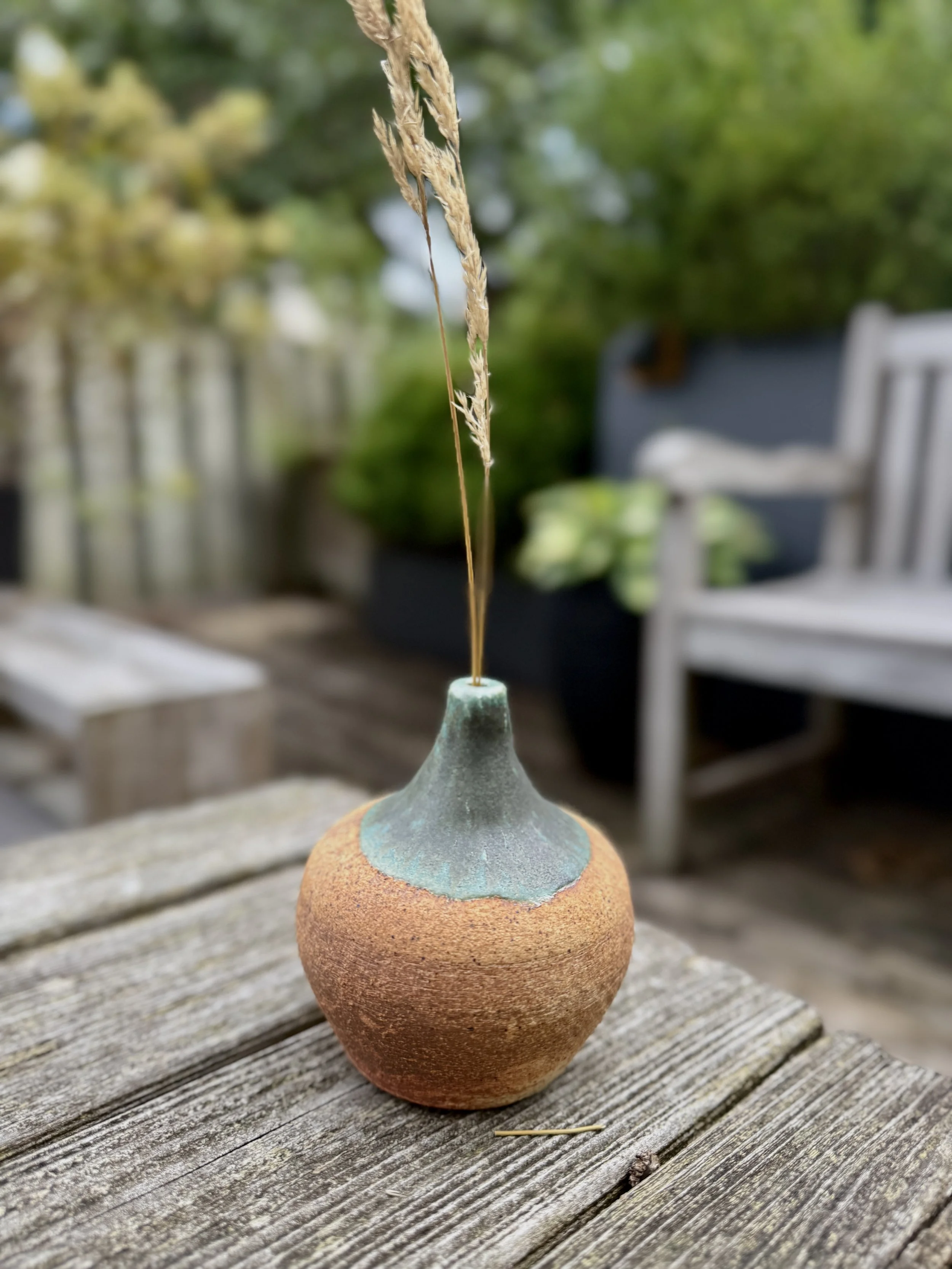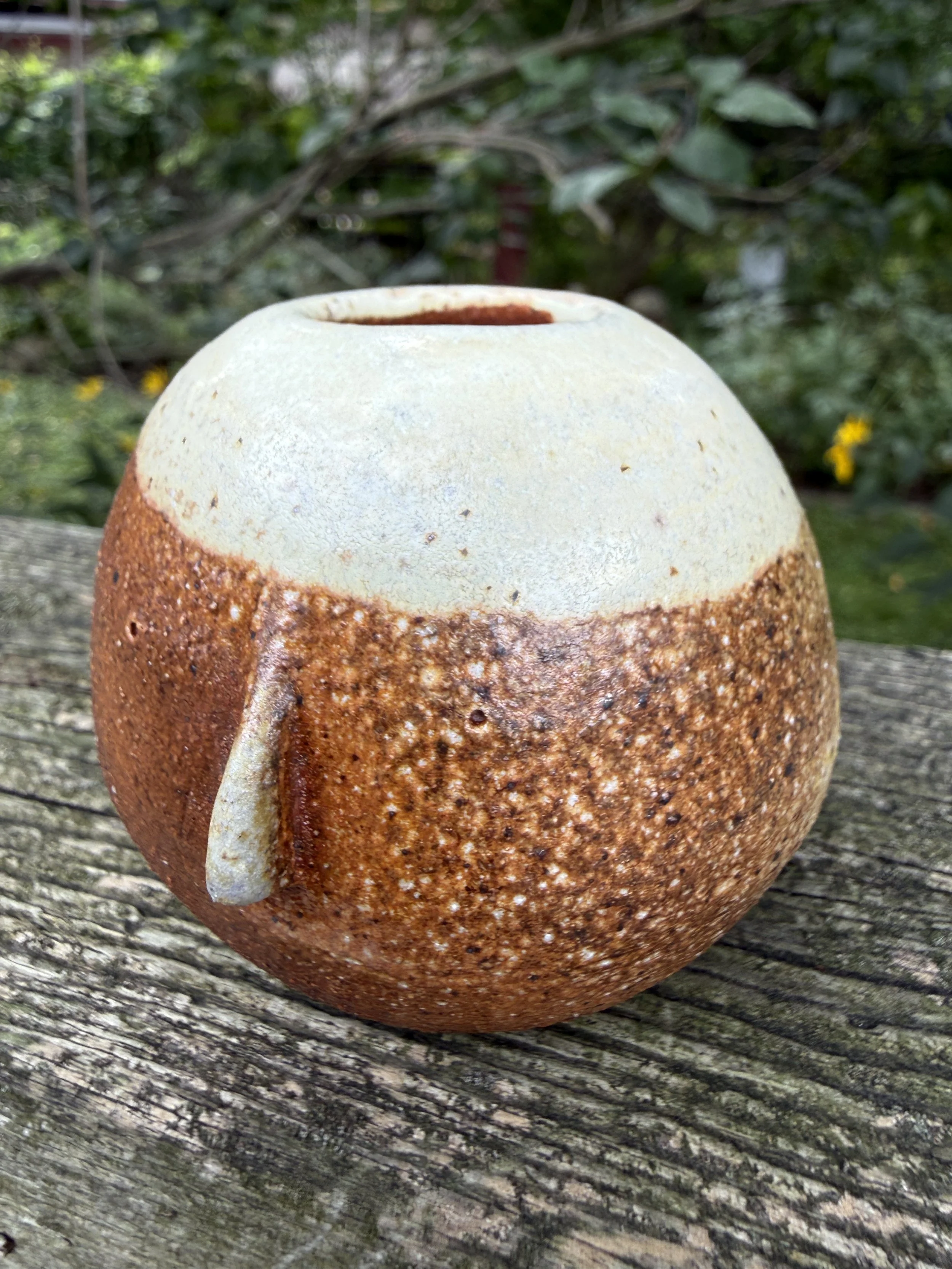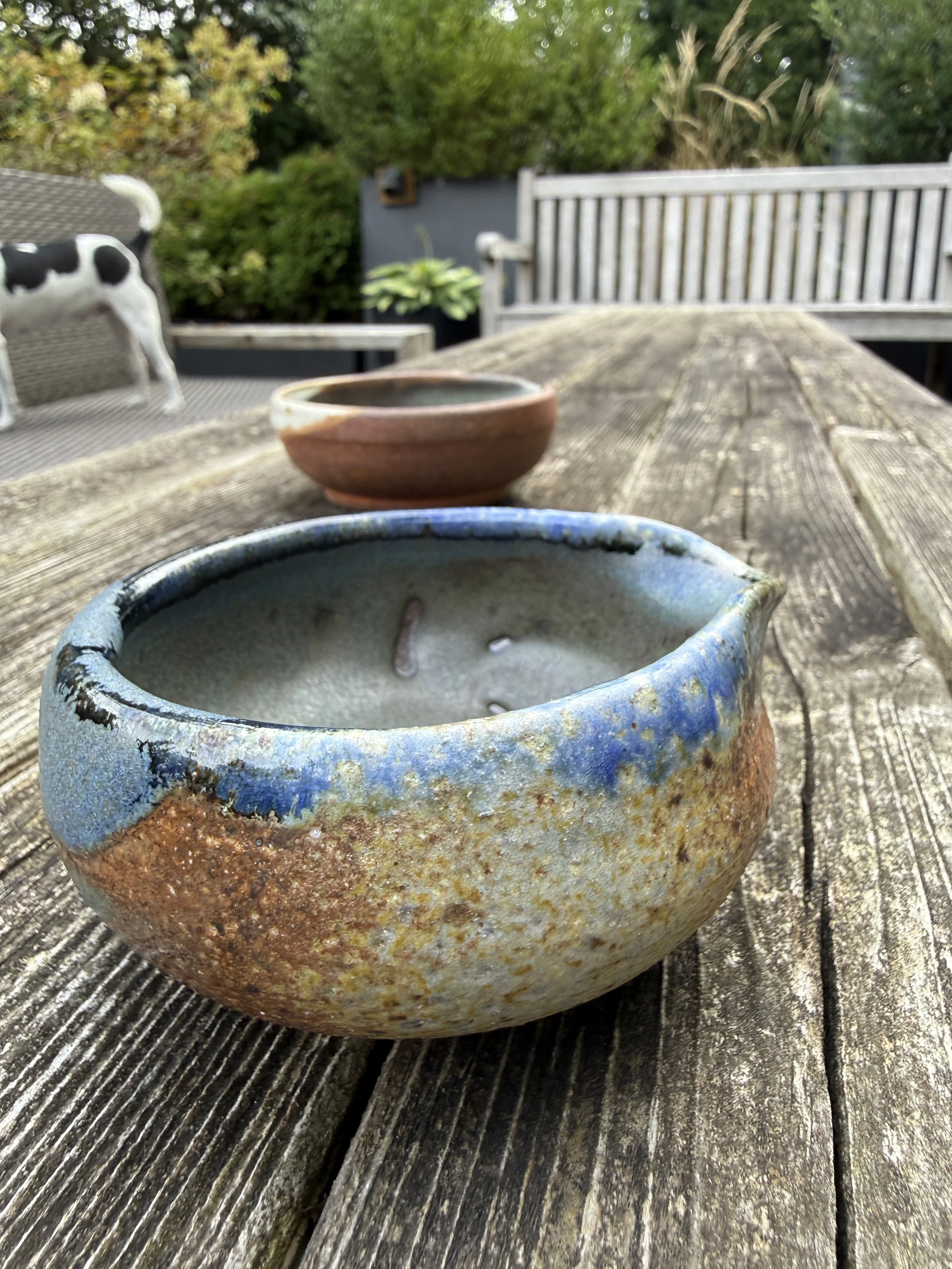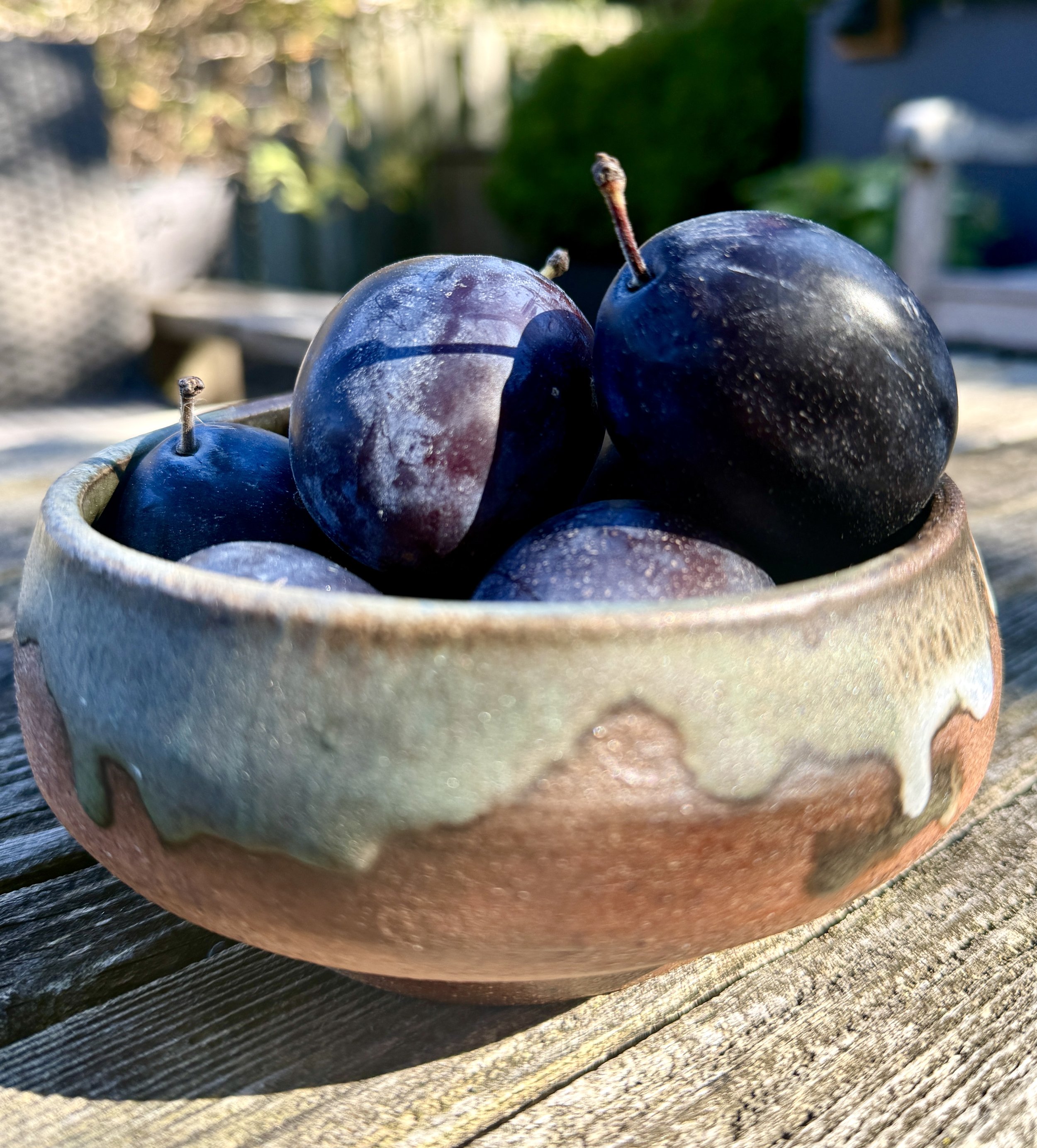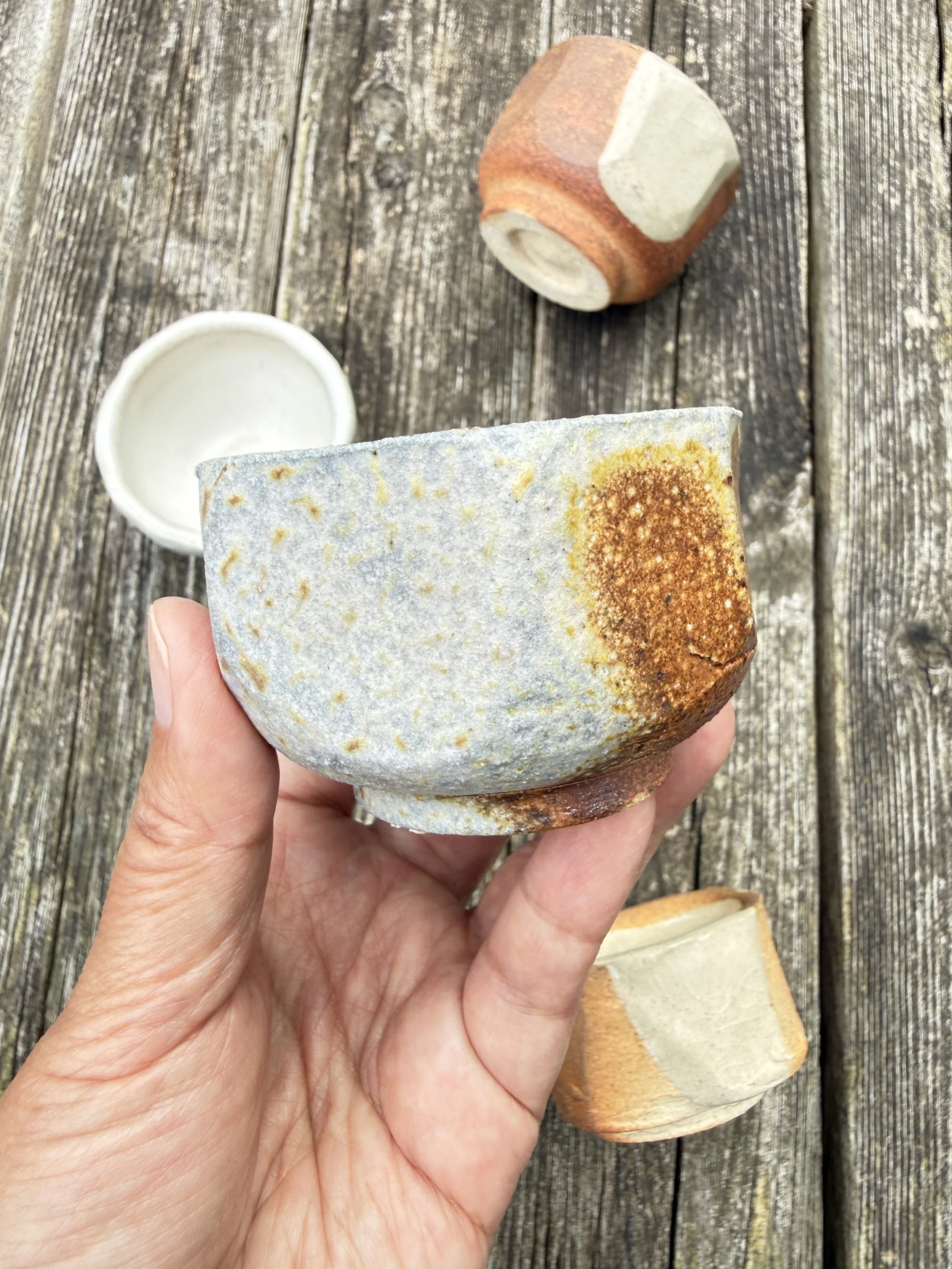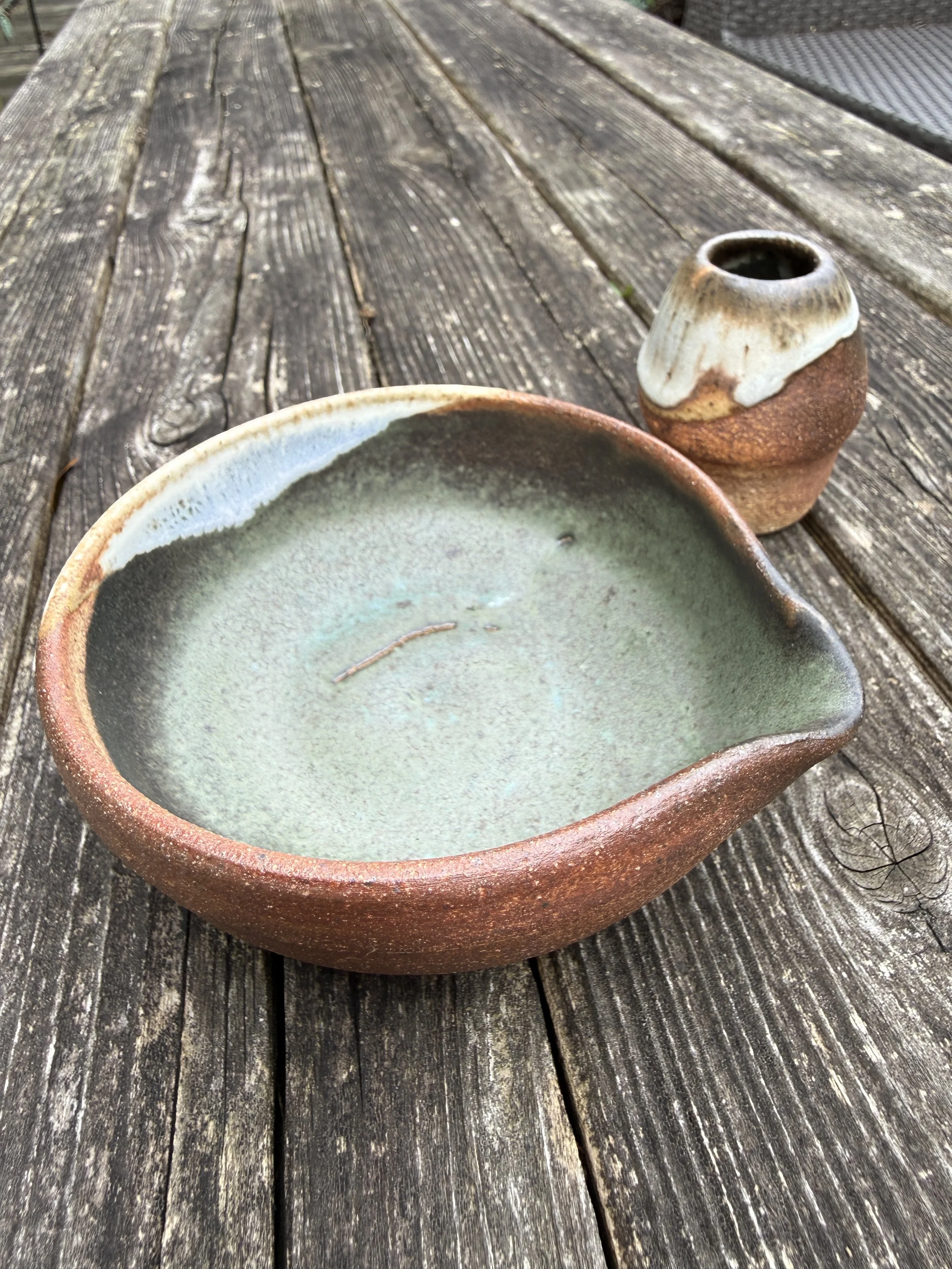
Wood-Firing in Prince Edward County
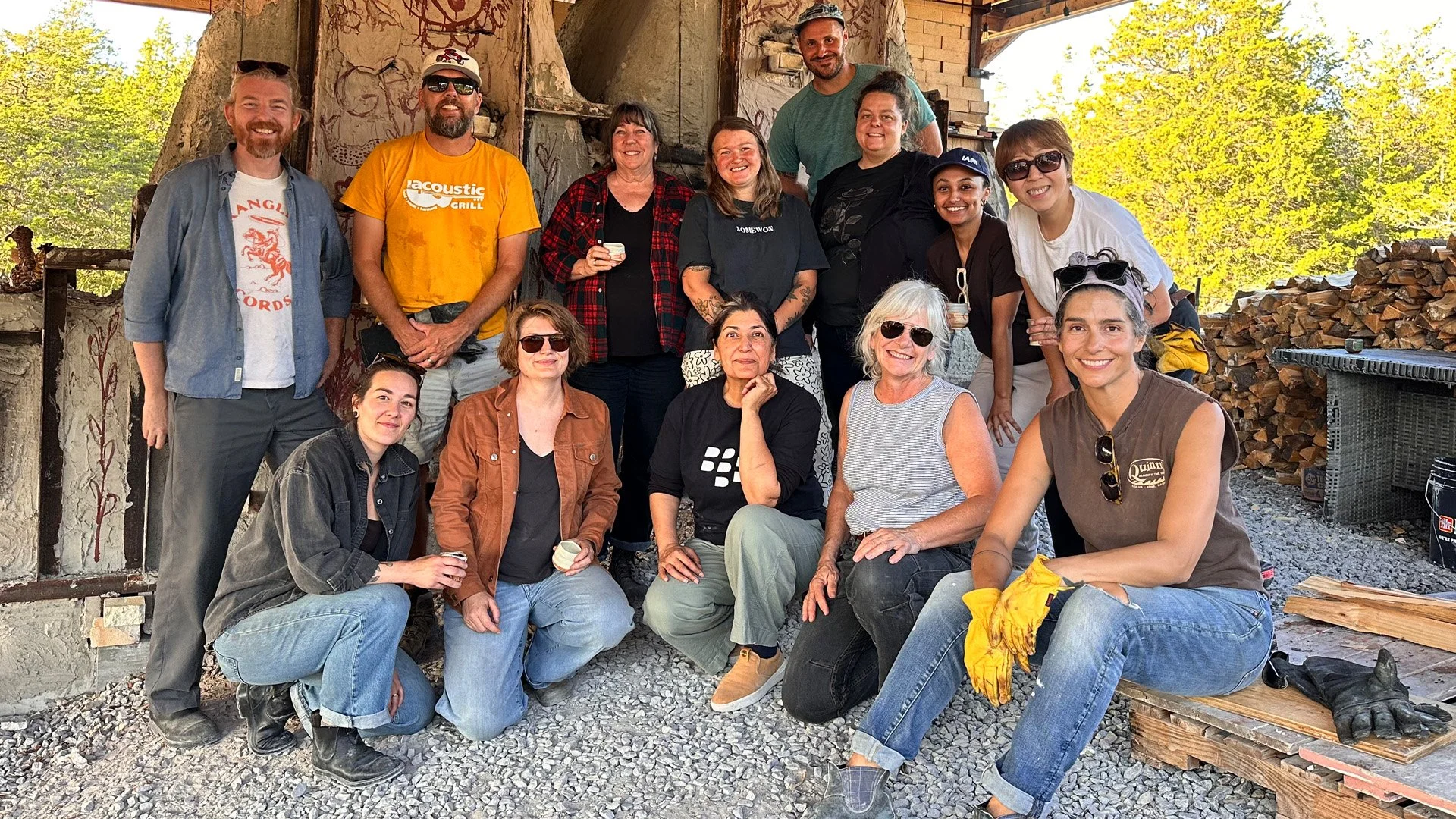
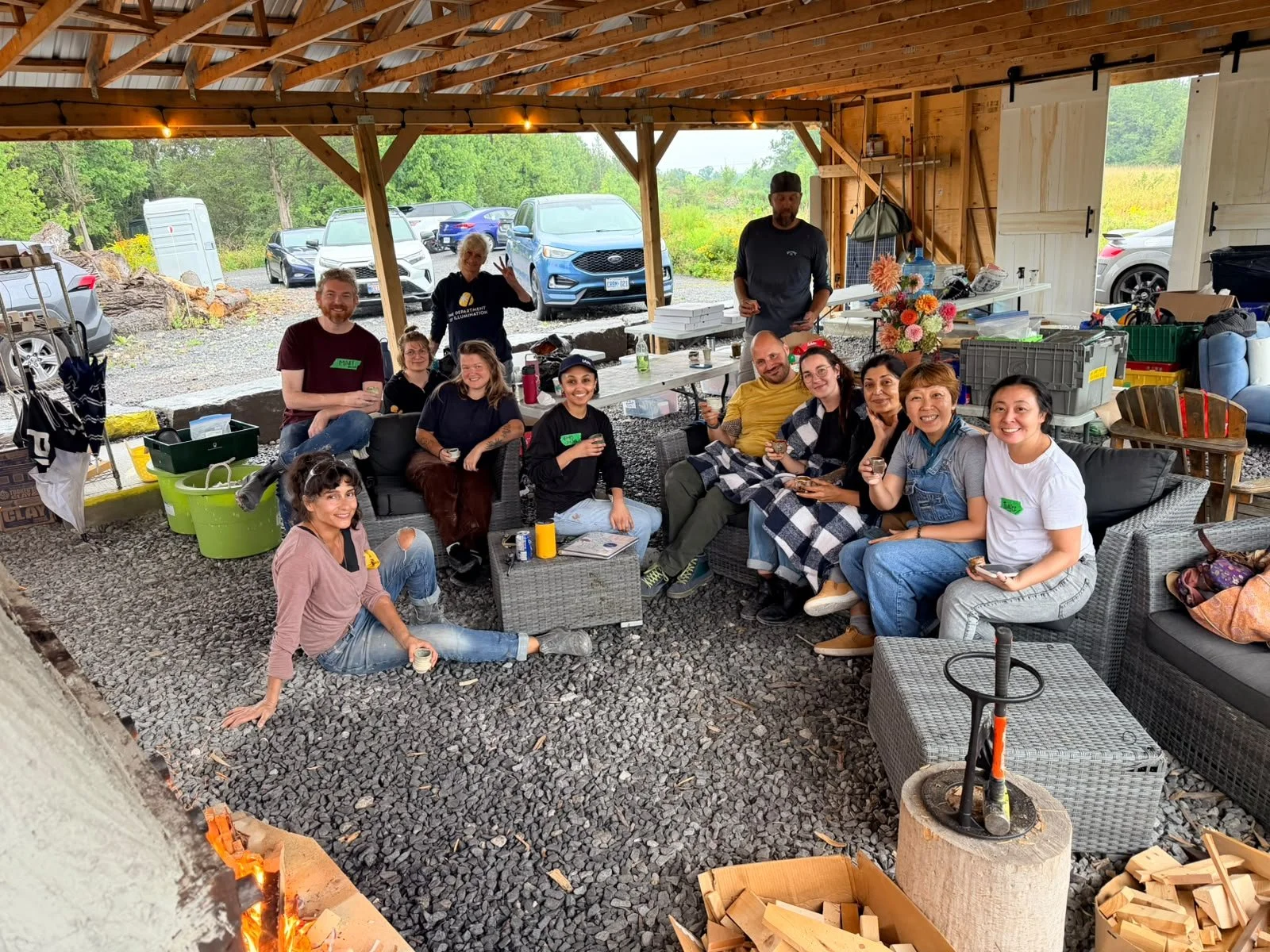
Potters unite! Back row left to right: Matt, Jay, Jenny, Ariel, Calvin, Helena, Gabrielle, Cris. Front row left to right: Kate, Amy, Moulshree, Andrea, Dawn. (not pictured: Junyee and Rebecca.)
Wood-firing! What an exhilarating experience! On September 8, I joined Dawn Middleton and friends from The Ye11ow Studio and a group of potters from across Canada. It happened over 6 days, including 3 days of around-the-clock firing.
Prelude to the big event

Bisqued pots waiting like soldiers for their moment to shine!
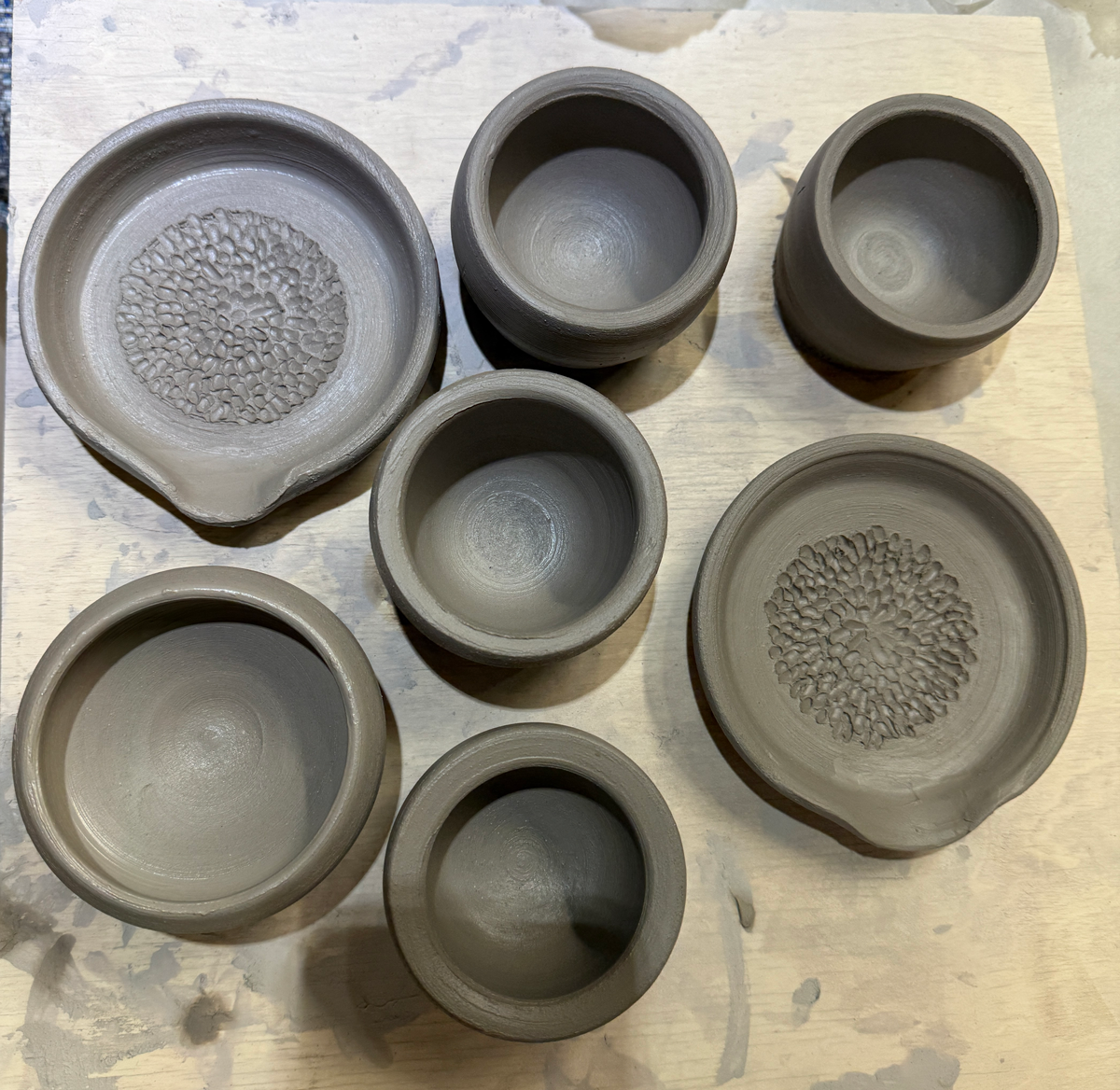
3 months in the making…
Shortly after signing up for the September firing, I started making my pots. We were asked to bring around 20 pieces of cone 10, bisque-fired items. I chose the Tucker’s Sandstone. My first choice was the Pro Stone but they were out of stock at the time. Later on, I found out many of the potters, including Dawn and the guides all like working with H.H.P. , which stands for Harlan House Porcelain. Yup, that’s right, the renowned Canadian ceramic artist, Mr. Harlan House. Who lives in Prince Edward County, by the way. That’s his clay. I heard porcelain can be hard to work with but all the potters said they love it. Can’t wait to give it a try the next time I get an opportunity to for high-range fire.
I got some advice from Dawn to work with thicker walls because the high temperature could cause warping. While building this special wood-fire collection, I began to realize my skills are woefully lacking. Great big thank you to the friends at Mini Pottery Studio that helped me with tips, guidance and encouragement. Despite everyone’s generosity, I knew it was time to get more professional help. I enrolled in Toronto Potter’s workshop. Will do another entry on that “side quest.”
Day 1 – Meet, Greet, and Glaze

This is definitely how I felt about my pots…
Something to strive for as I grow my skills.
We started the day at The Ye11ow Studio in Picton. Located on the charming main street in Picton, Ontario, the studio is also a beautiful retail shop. We got to use the studio to glaze our pieces. Dawn provided a large variety of special cone 10 glazes that they keep just for the high temperature firings. There are only 4 firings per year, so most of the time this treasure trove of glazes are kept in the basement for safe storage. Many years ago I visited the shop for the first time and I still recall how welcoming it felt. At that time, I had no idea some day I will practice clay arts and working in this very studio! Ain’t life grand?
Prior to meeting up, we’ve had a zoom session for a wood-firing 101. It was so nice to see everyone in person. Although I’ve never met Dawn in person, her warmth and sunny disposition made everyone felt welcomed. Felt like we’ve always known each other. I couldn’t resist and gave her a big hug. The morning was full of hustle, bustle and a bit of nervous energy in the air. While everyone unpacked, we chatted and can’t get enough to learn about each other’s experience.
Our group consists of nine potters from near and far. The furthest traveler is Ariel from Revelstoke, BC. Diverse range of pottery expertise as well. Although not the most junior in age, I am definitely the novice of the group… with a little over one year’s experience. Fellow potters brought a range of well-crafted bisque-ware, ready for glazing. After a detailed process review by Dawn, it was time to get to work. It’s quite a large selection of glazes so was a bit overwhelming to get started. We had lots of help along the way from Dawn and the guides. I think the toughest part was picking your glazes. Since it’s my first time, I opted to try different things and not be too precious about perfection. I tried to take notes and document the combinations but kind of fell to the wayside. Later, I learned from Andrea (one of our awesome guides) that there’s an app called Clay Lab.
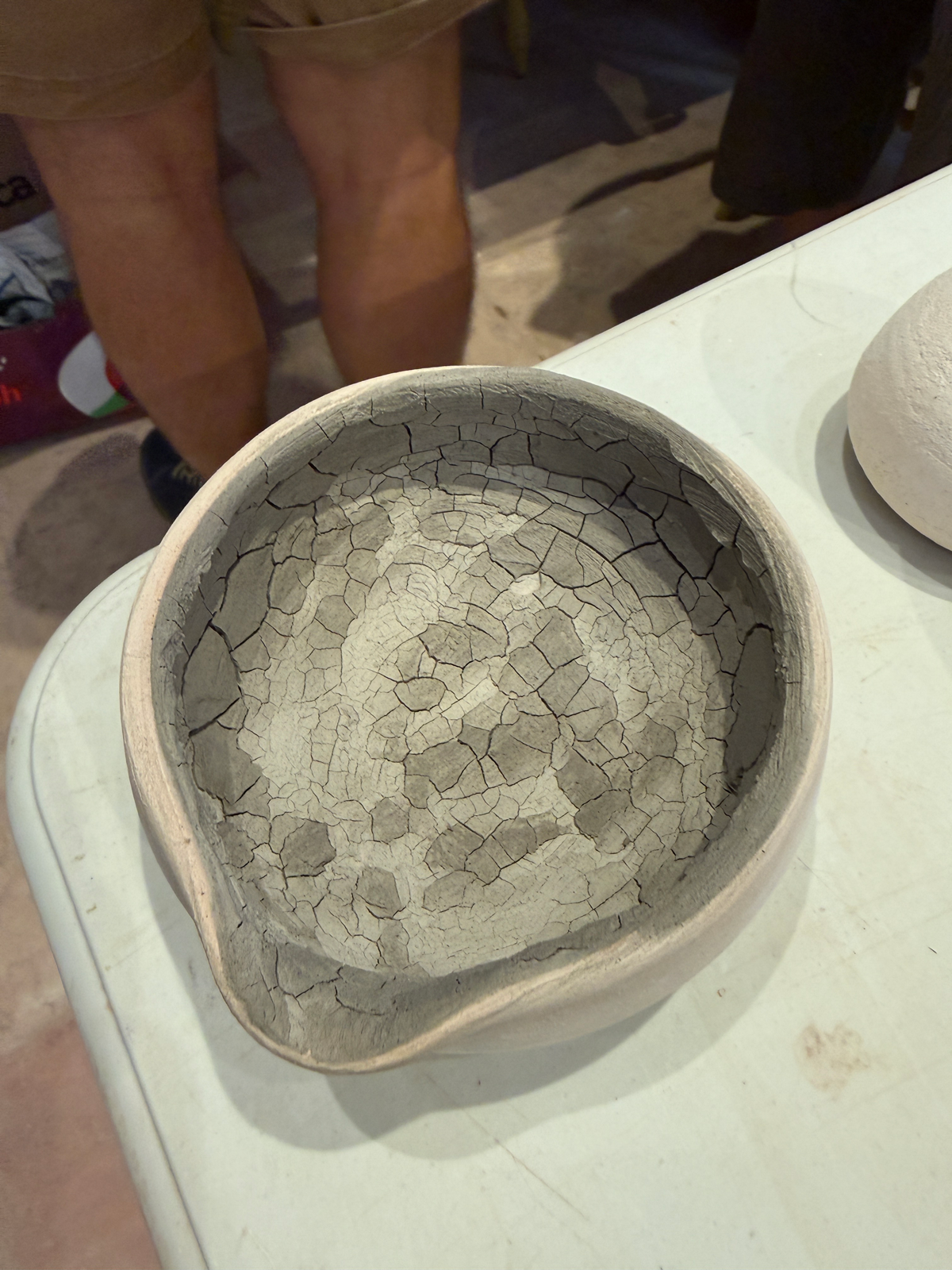
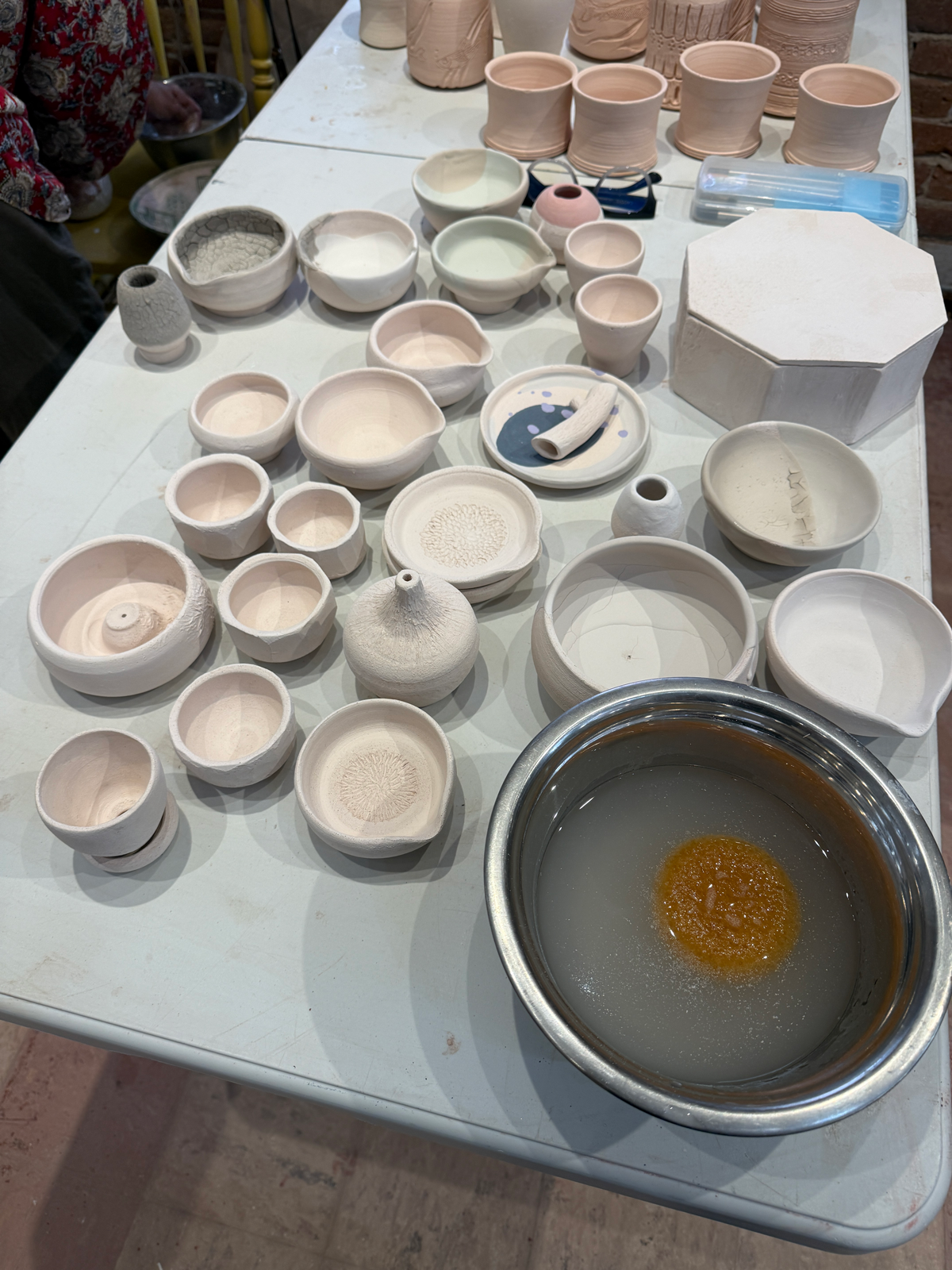
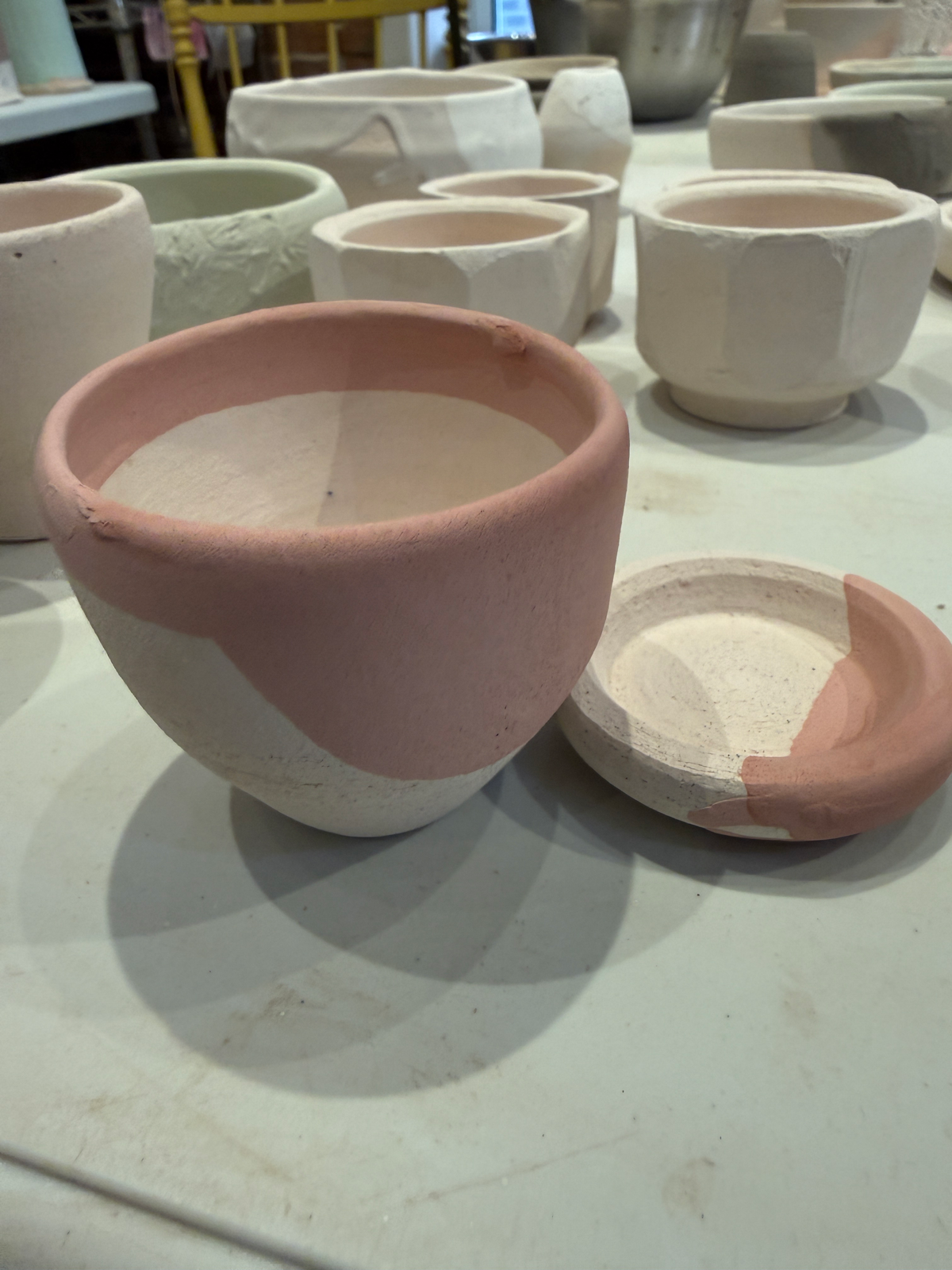
There was one particular glaze that got the best of me: Nuka! It contains ashes from a local restaurant, Flame + Smith. They’re known for wood-fired fare, (it’s one of the treasures of The County if you ever visit!) I thought it was meaningful to work with this special glaze. See the third photo… it was caking over. Dawn’s apprentice Amy was so kind to help me glaze and re-glaze. At that moment, a note-to-self was taken… work on glazing skills!
It was mid afternoon when all my glazing was complete. Each piece was carefully wrapped and packed away. They will go to the kiln the next day and the official firing will start!
Day 2 – Loading the Kiln and Pre-fire
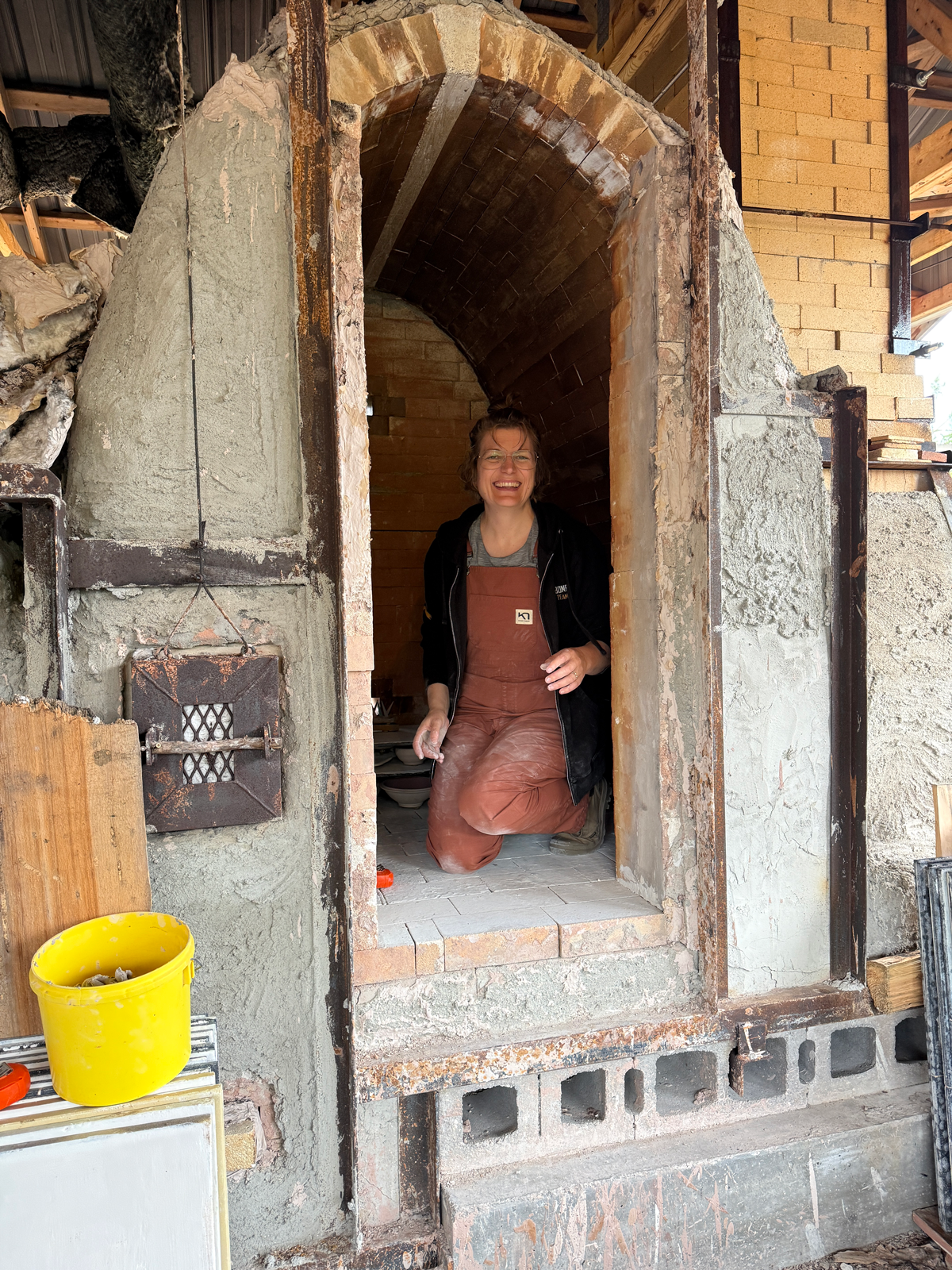
After a restful sleep, we all gathered at Ye11ow Studio’s kiln site. A short distance from the studio/shop. (Fun fact: If you watched June Motel on Netflix, it’s right up hill from the PEC location.) Climbing kilns need to be on a slope so it’s pretty site specific. The site is thoughtfully chosen with so much care taken with lots of creature comforts to ensure an enjoyable experience. There’s a huge roof custom built to shelter us from the elements. This came in handy on the first night where there was a crazy rain storm. We felt safe as kittens by the fire. You can really feel the love and care that Dawn and her partner Jay, put into the design and continuous improvement of the site. I learned that kilns need naming, much like a car or boat. This kiln is named Alice.
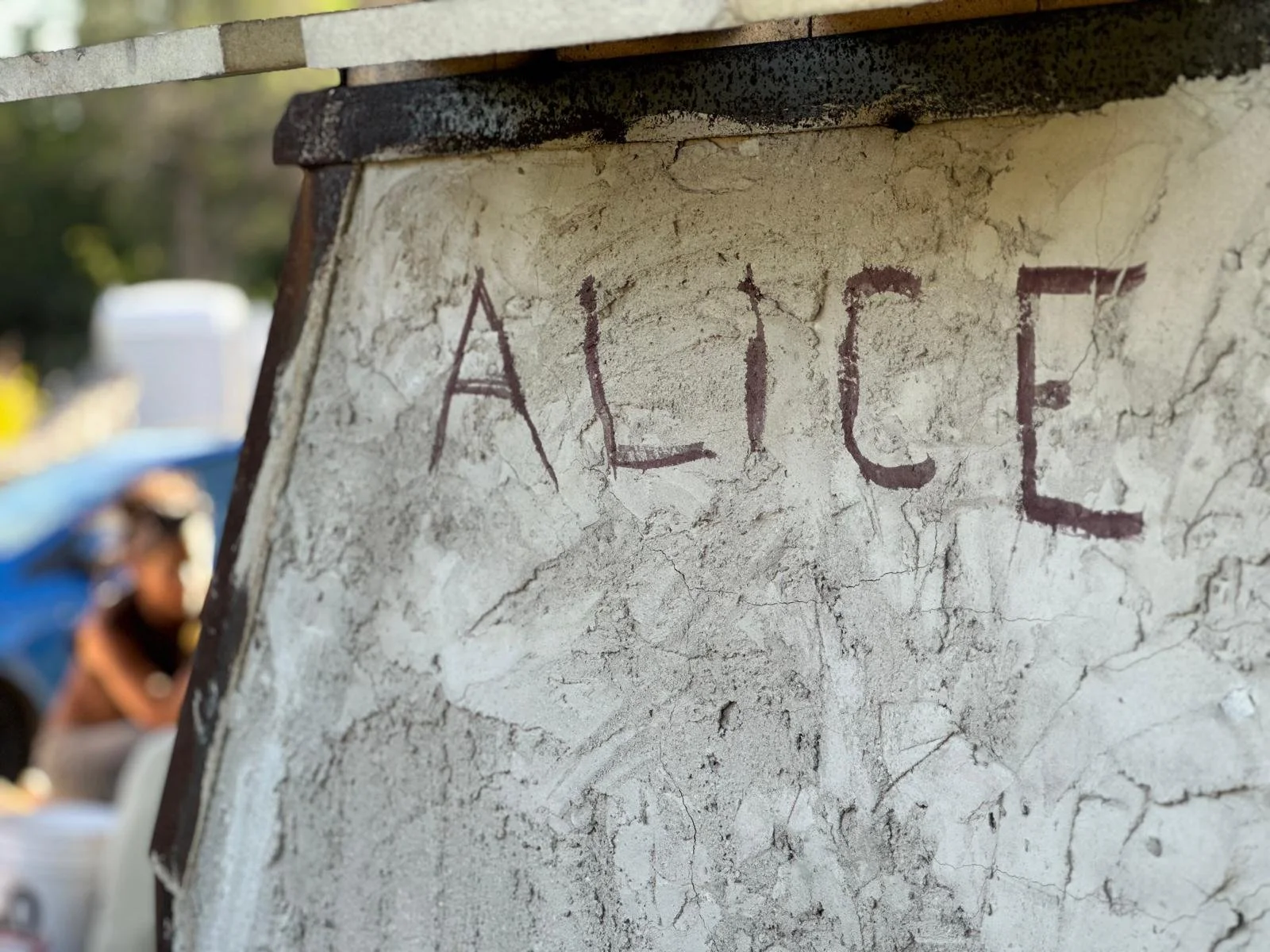
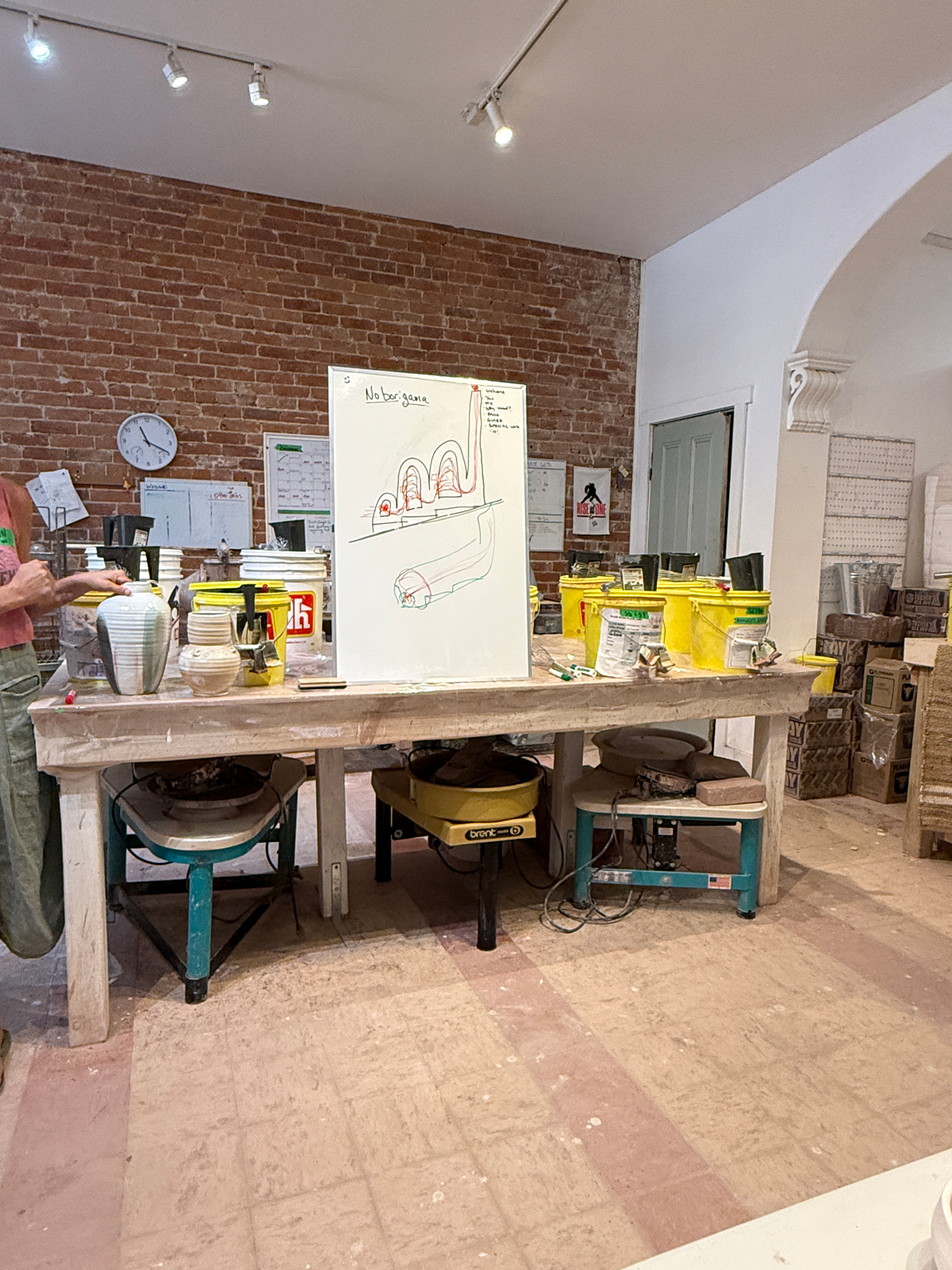
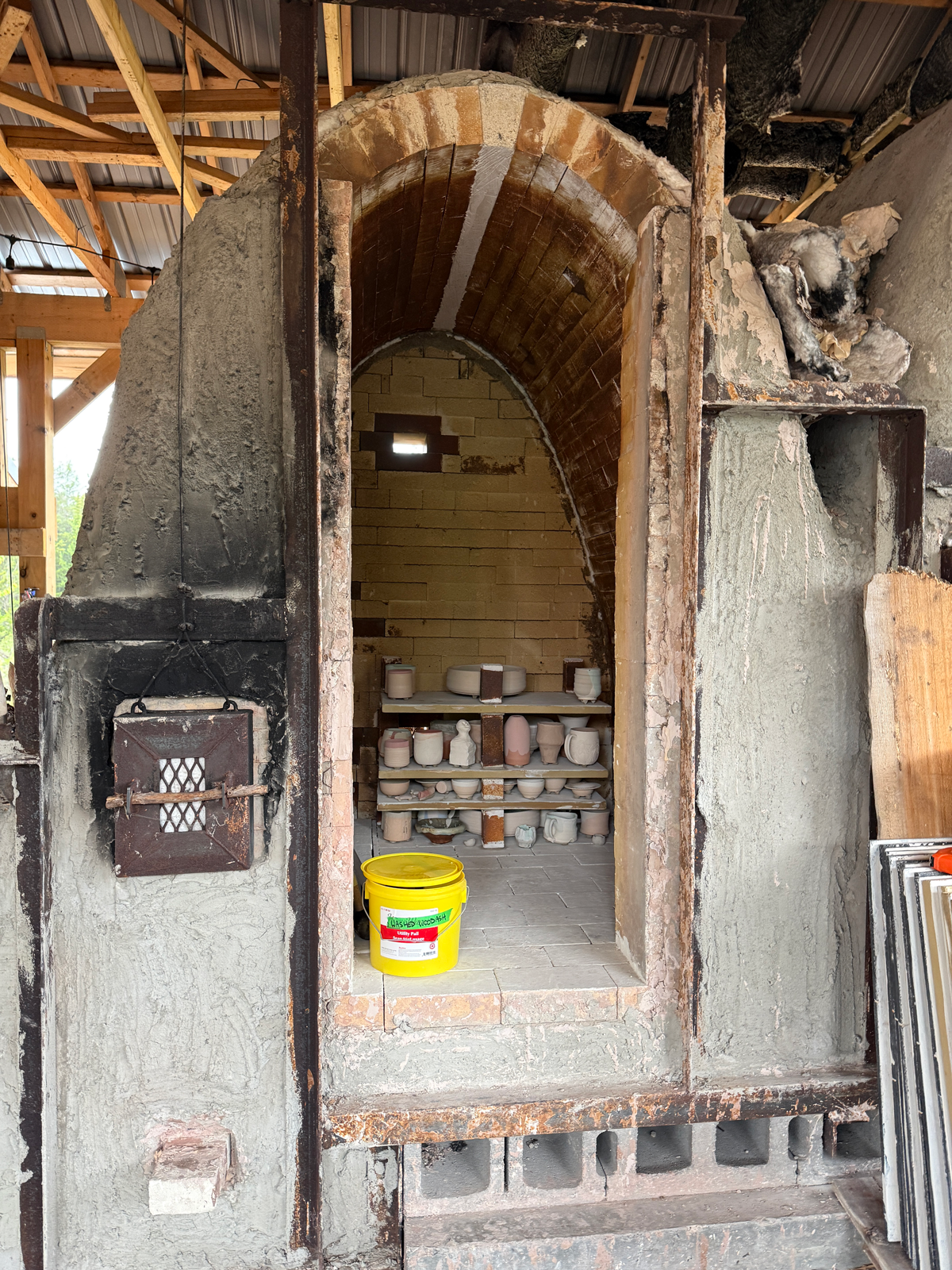
Noborigama Kiln
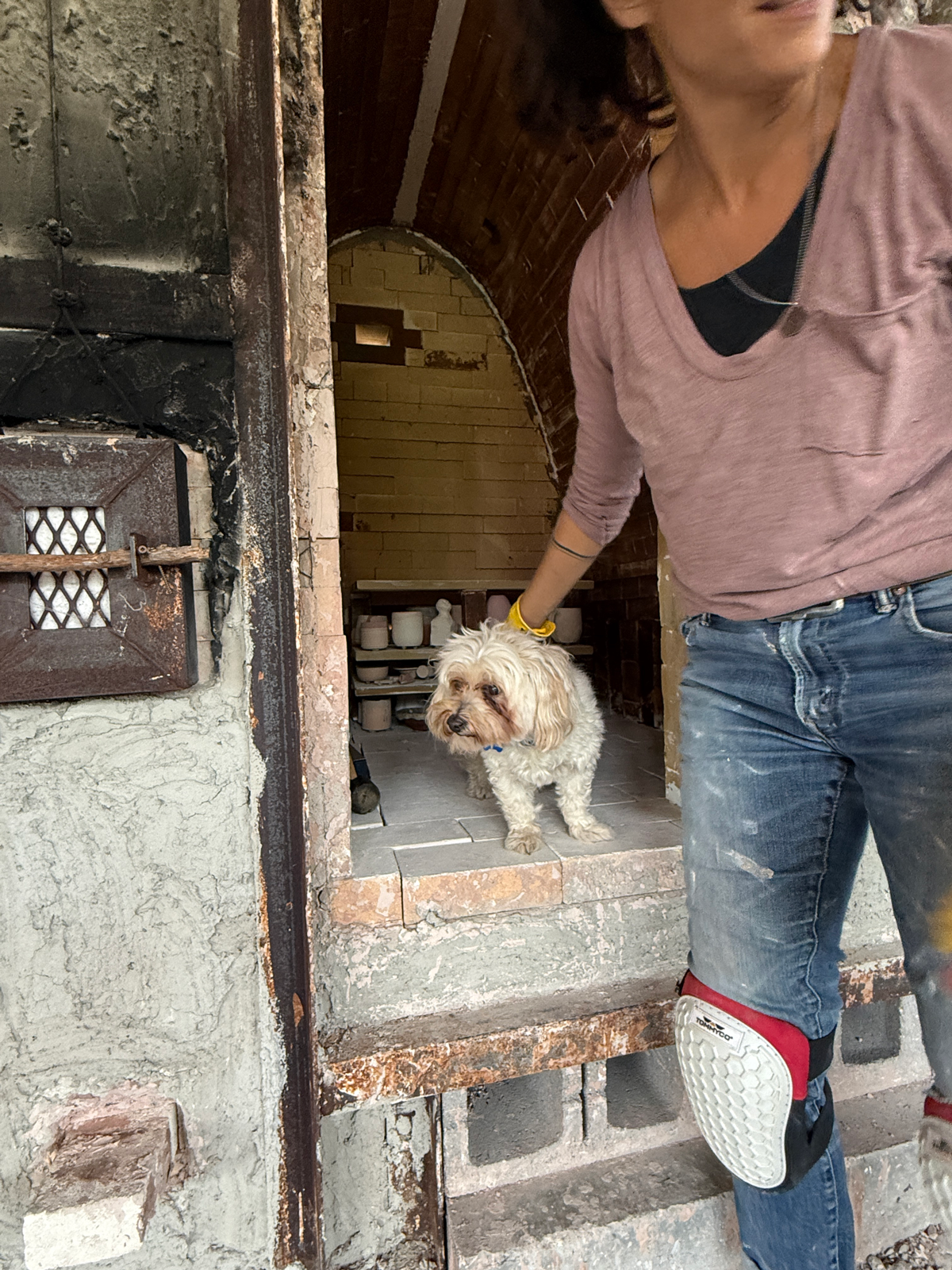
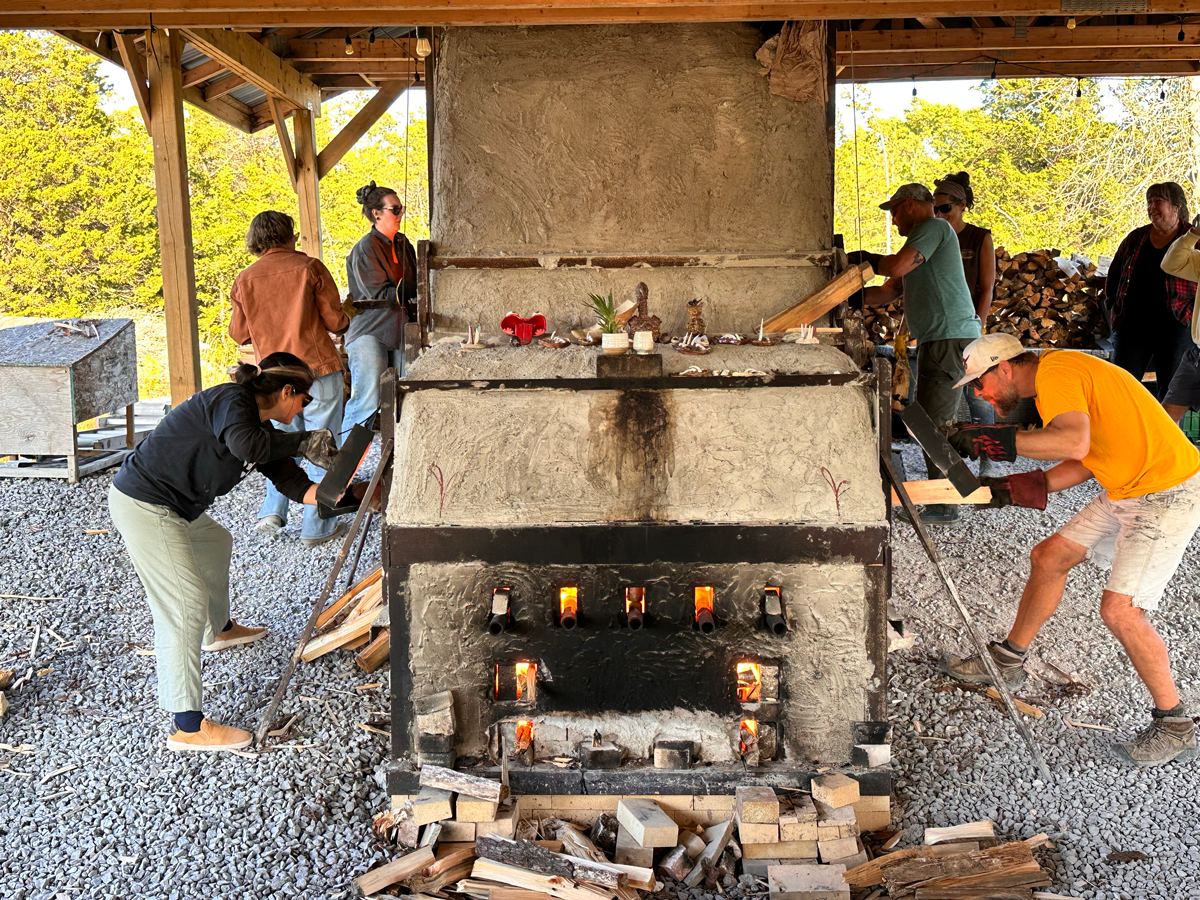
Miss Alice is a noborigama kiln. She has two chambers. Dawn chooses one chamber for wood firing and the second chamber for soda firing – where soda ash is added to create ash glazing effects. There are so many variables and traditional rituals about wood firing. One thing for certain is that every piece fired is unique. Pending on which chamber, the piece’s placement in the kiln, the temperature, weather, wind speed, how your piece is made… every firing is difference. There’s something magical about that. Ours is the 11th firing. So prior to this day, Alice has been fired 10 times already. I got a sense that there are many things that could go wrong or not according to plan; however, under the careful guidance of Dawn and team, we were never stressed. At least I wasn’t.
Kiln loading is an art in itself
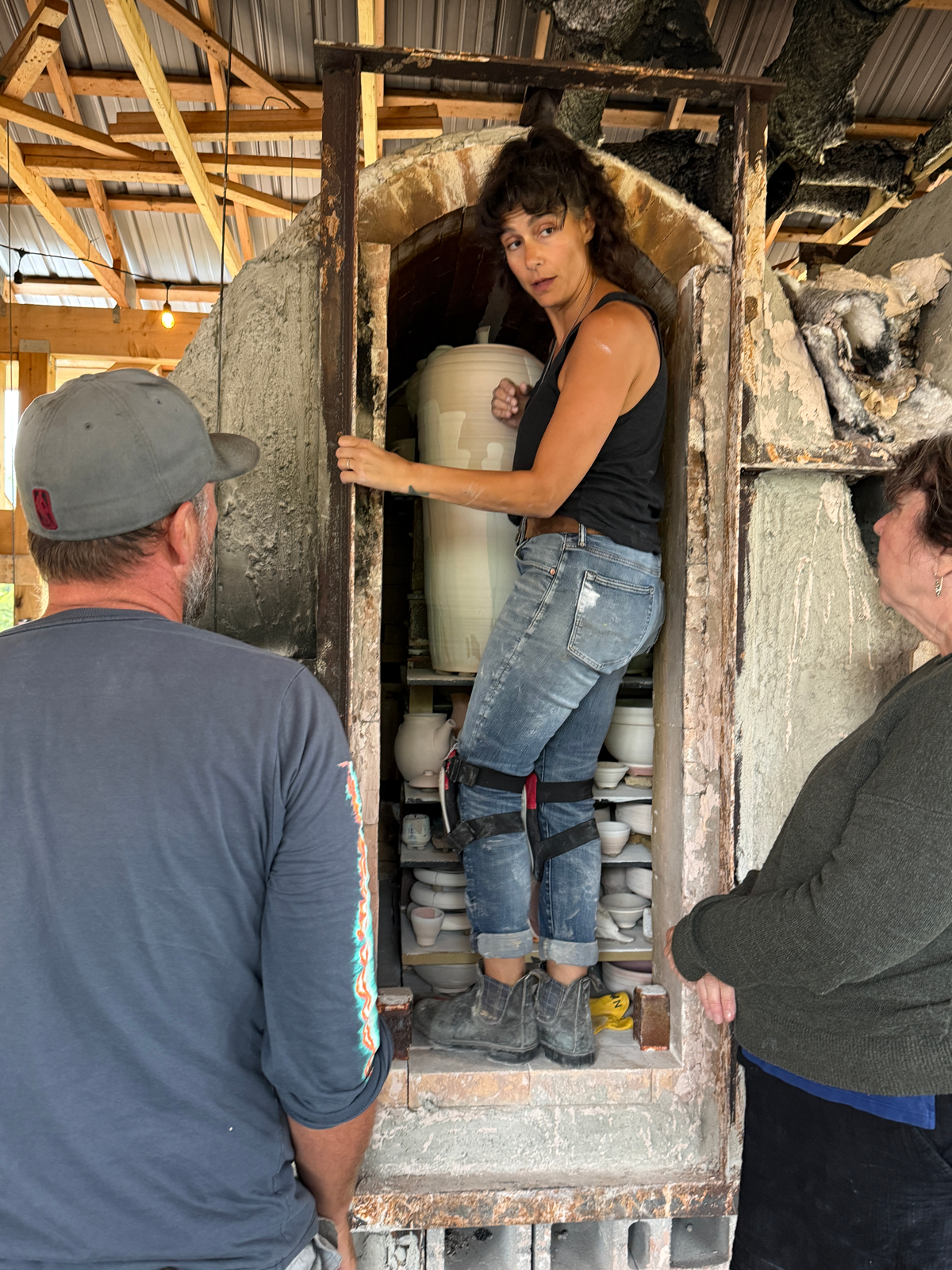
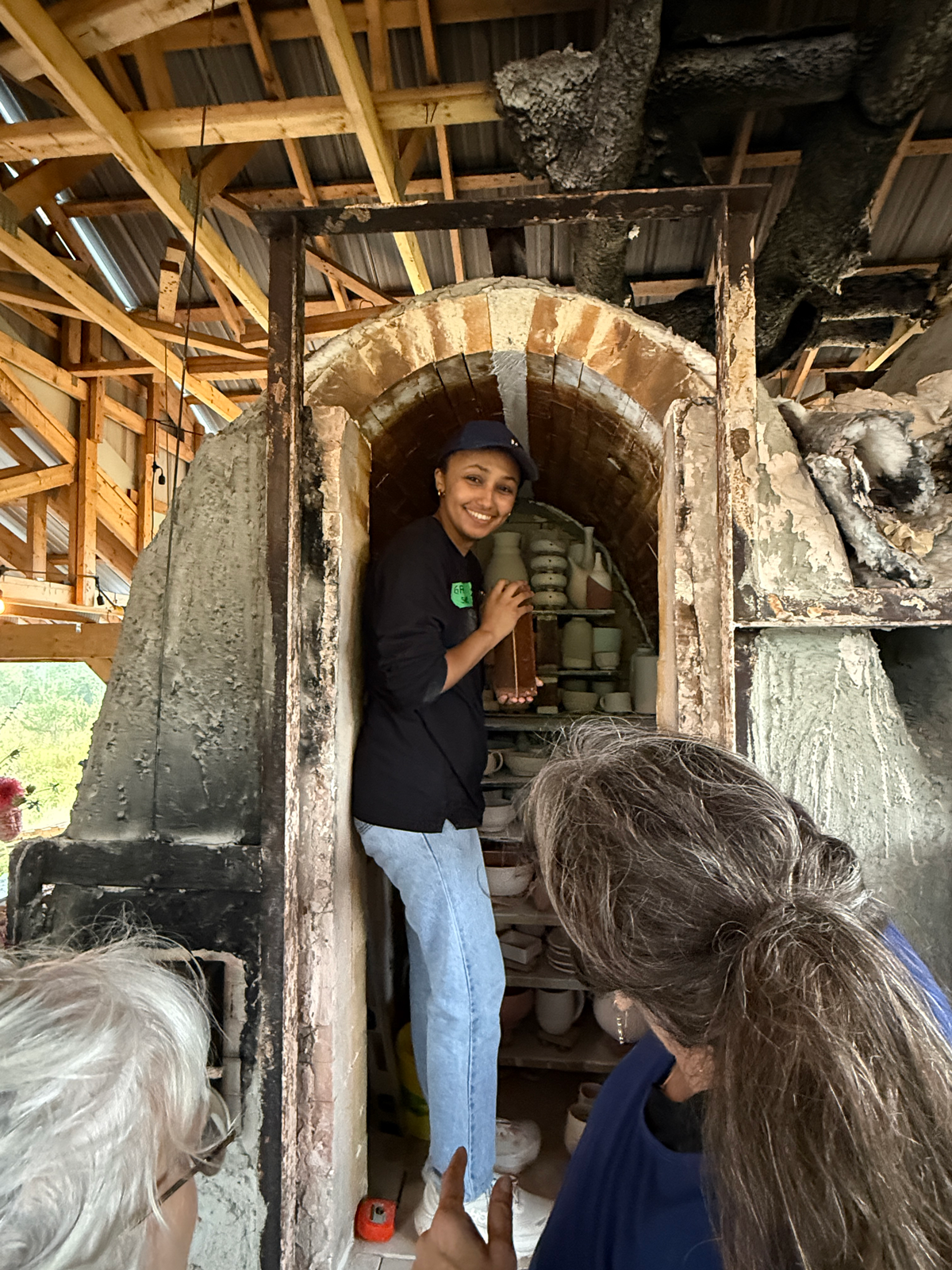
There are so many factors to consider. I am not going to pretend that I know a fraction of the variables. Unless you have your own studio, most of us seldom get to load an electric kiln, let alone a massive wood kiln like Alice. Placement and varying sizes of the pieces are crucial to ensure proper air flow. Each shelve is meticulously measured and levelled to ensure balance and secure placement. Every ounce of care is taken to ensure these precious cargo survives this rigorous journey.
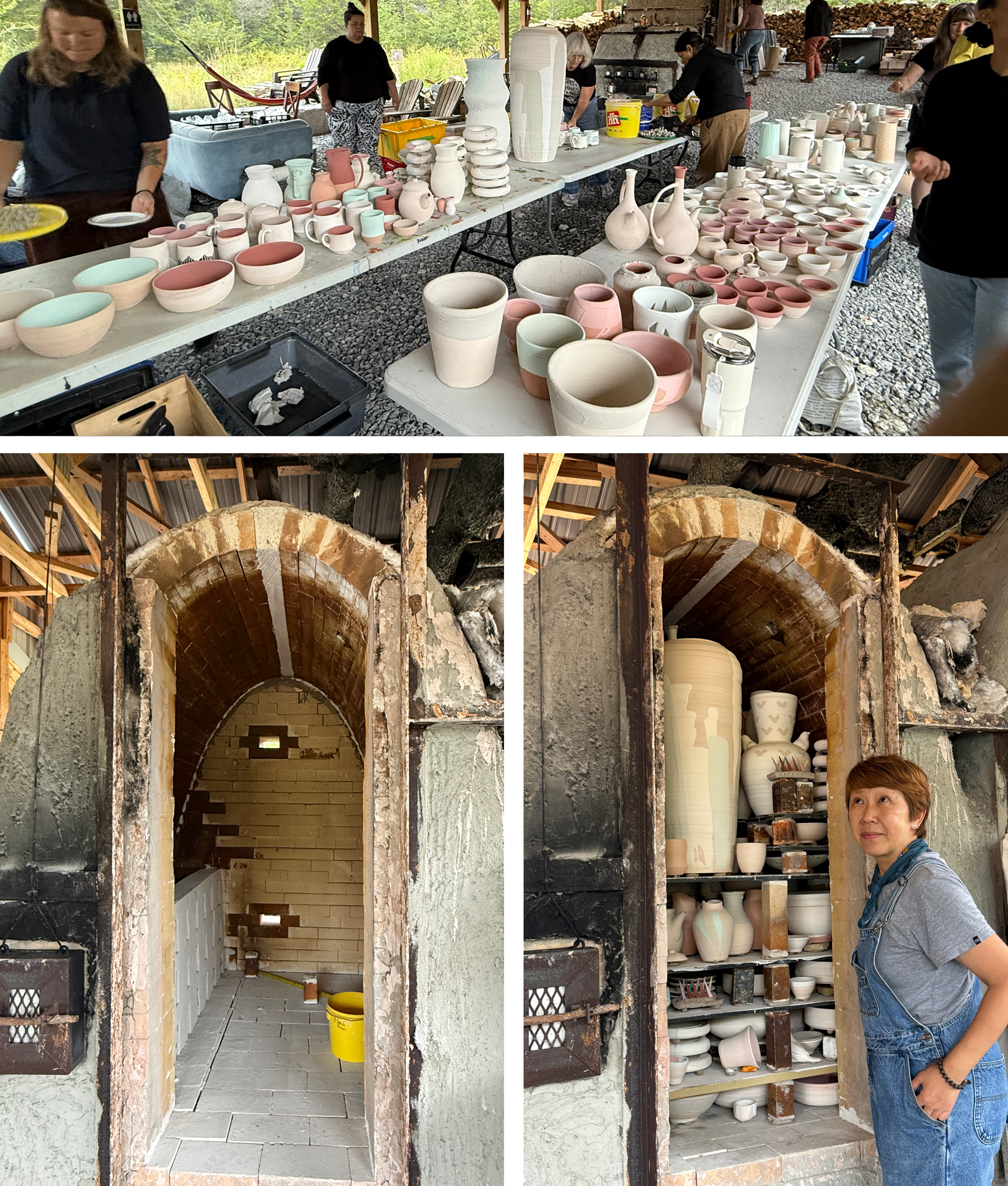
Will it fit?
Spoiler alert. It does and more! There was room left. Fortunately, Ariel had more pieces in car. How amazing is that? The additions ensured well-balanced kilns which will lead to better results for everyone. Speaking of “everyone,” all participants in the process had pieces in the kiln. This created a even higher sense of comradeship. We all had “skin in the game” or more like “pots in the kiln.” So all for one and one for all!
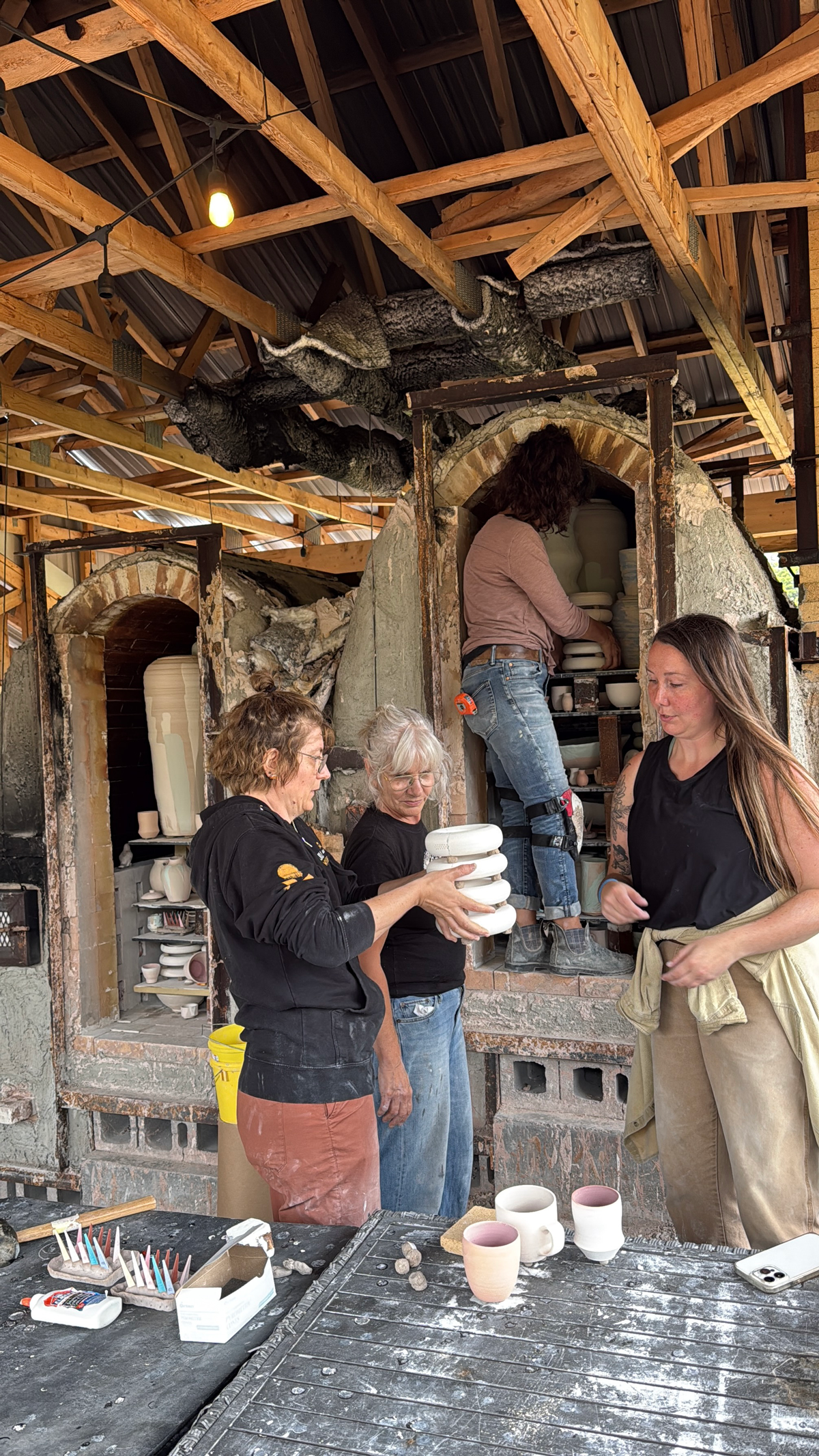
We built a wall
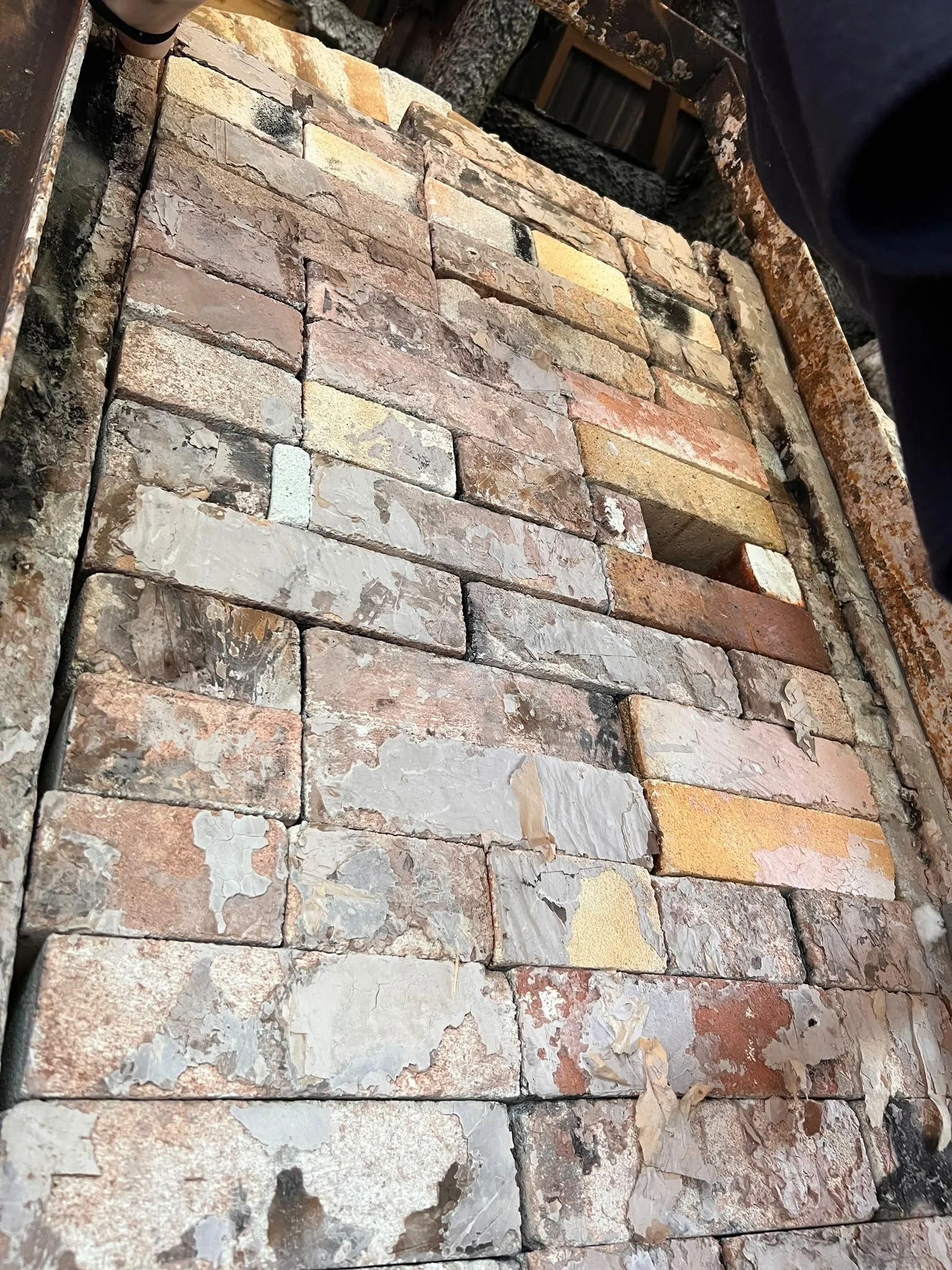
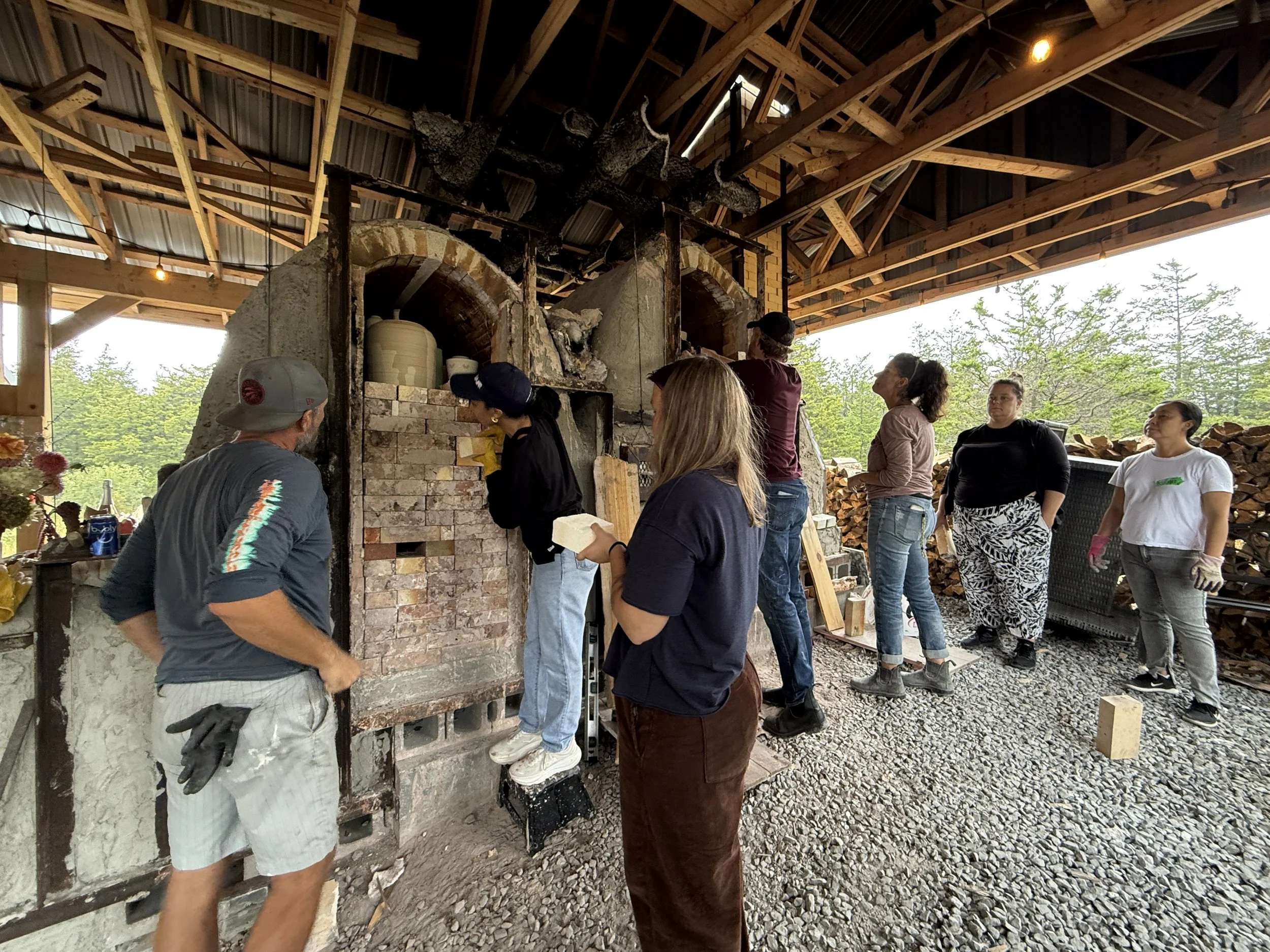
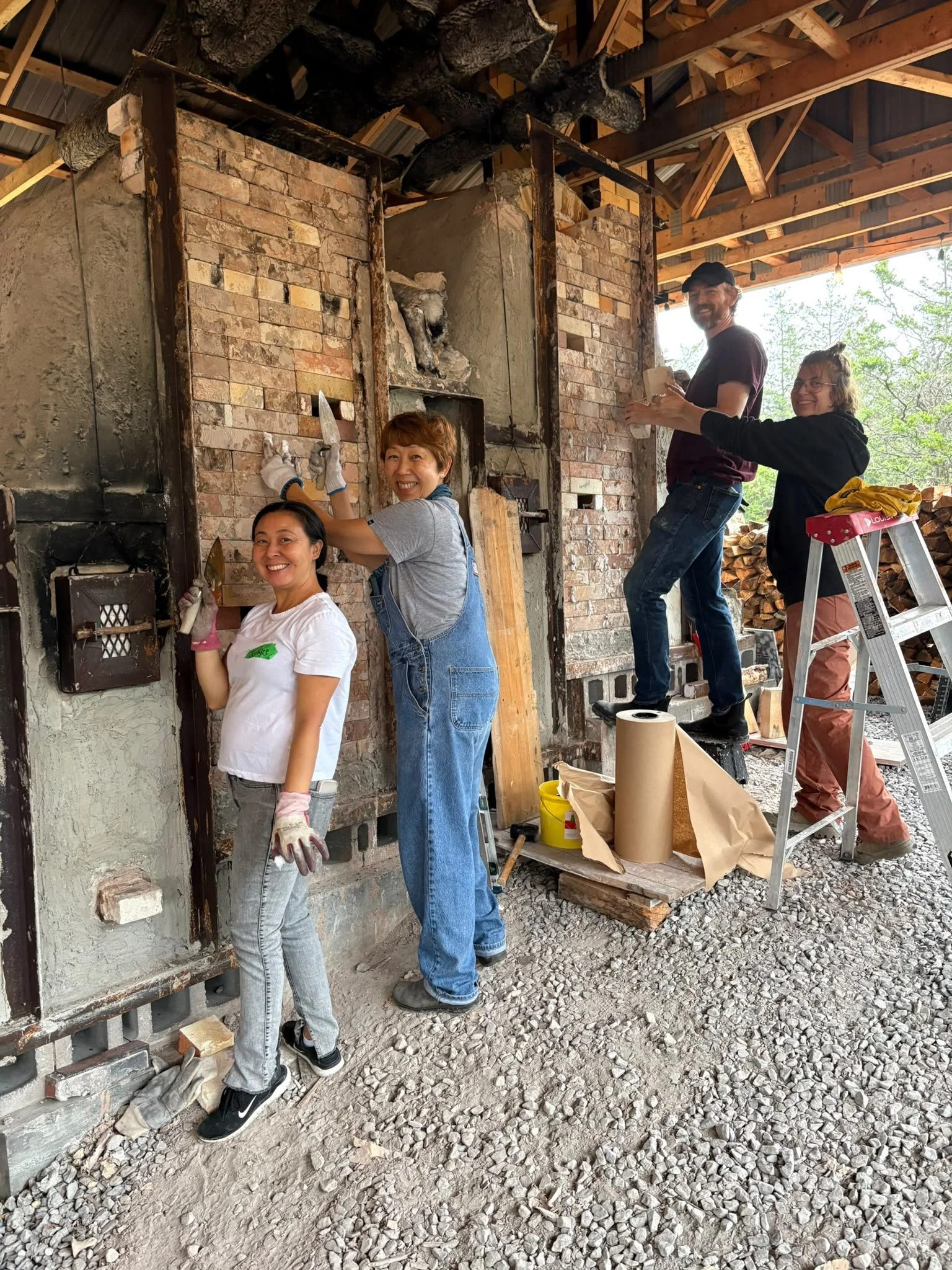
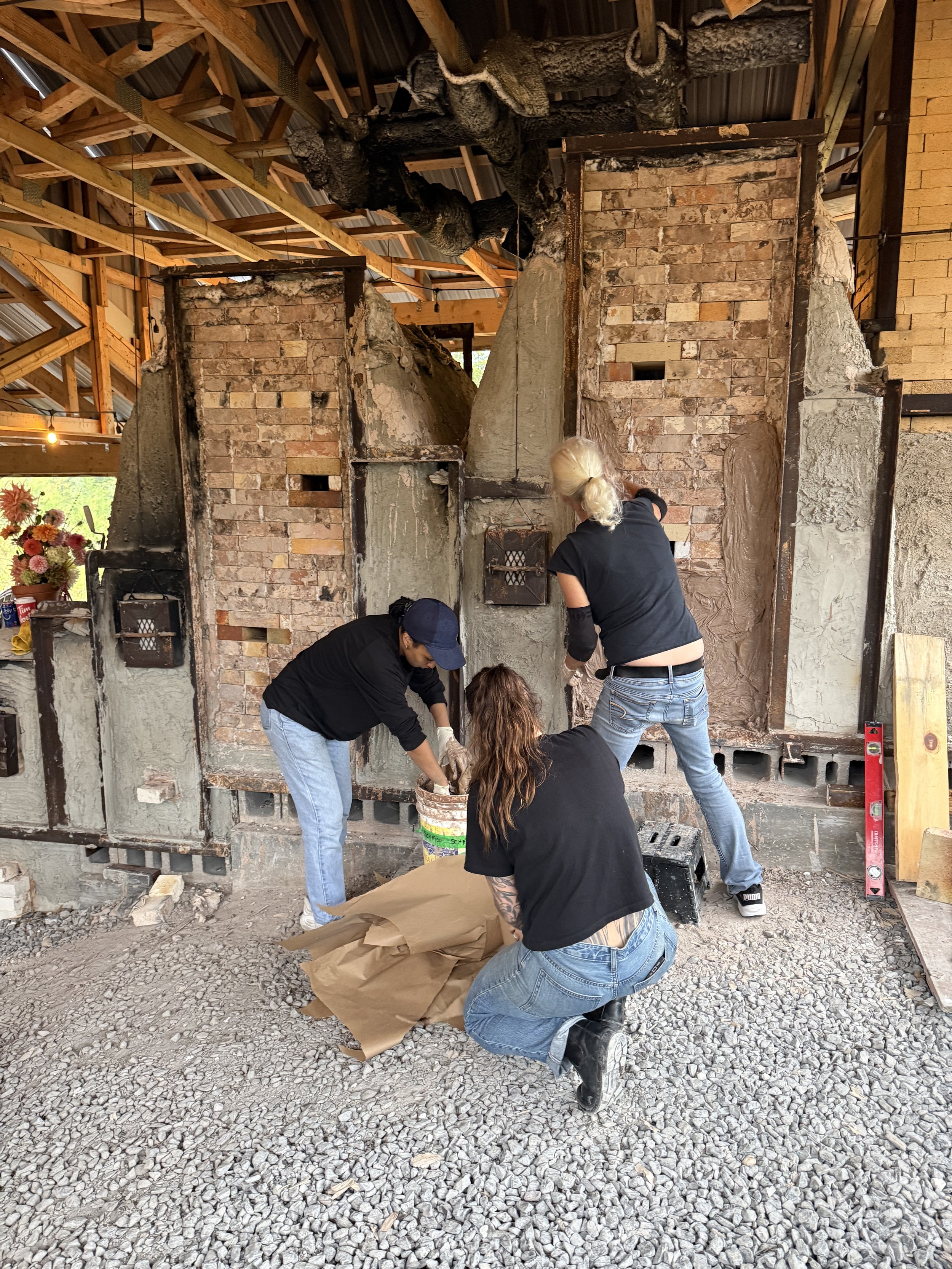
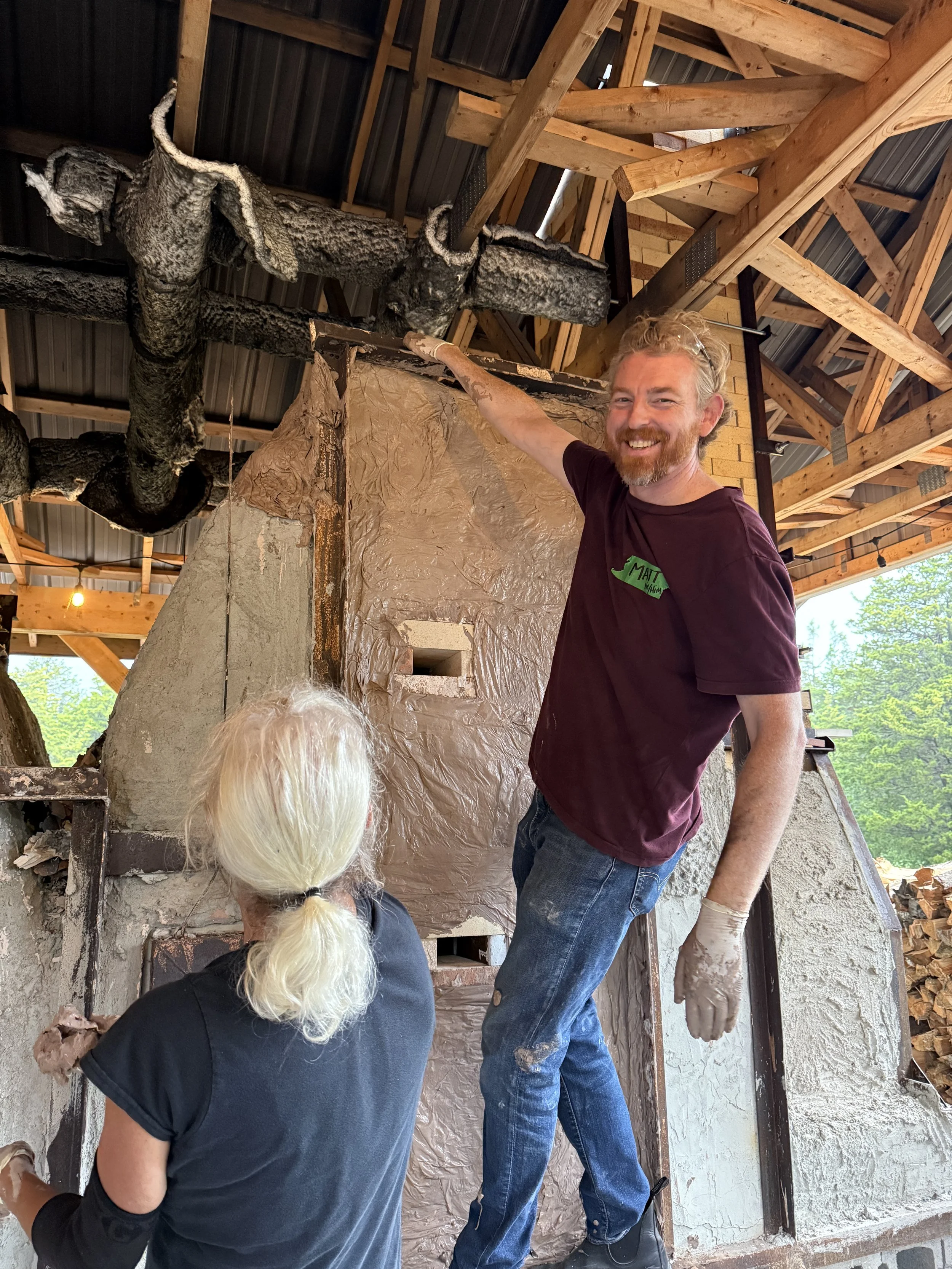
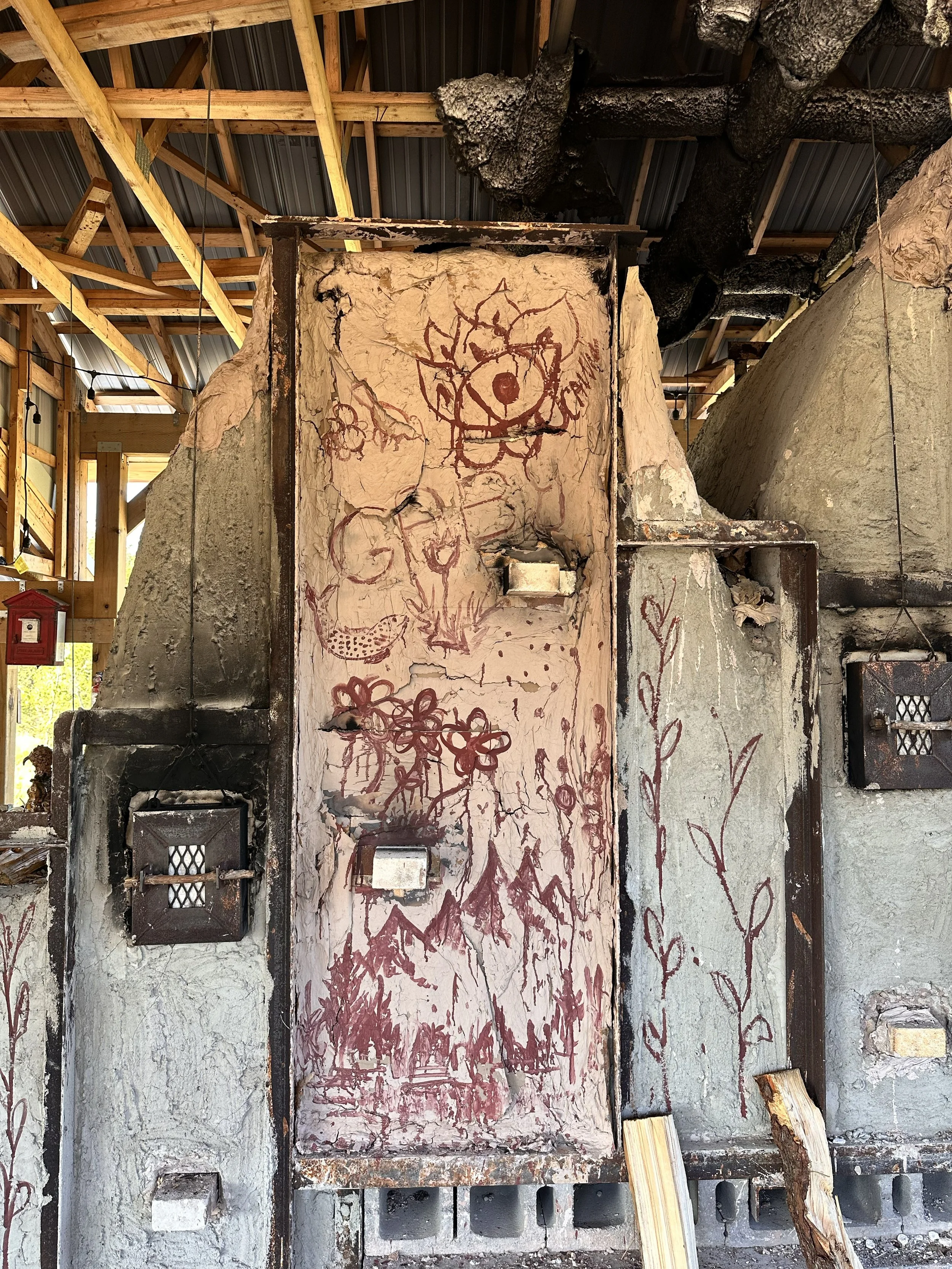
After hours of pottery Tetris, both chambers are bountifully loaded. Guided by Jay, the potters masoned-up and we helped brick up the kiln. Fun fact… There is no mortar holding up the interior structure of Alice. At such high heat, the cement would simply just melt. So it is held together by sand and the expertise of master kiln designers.
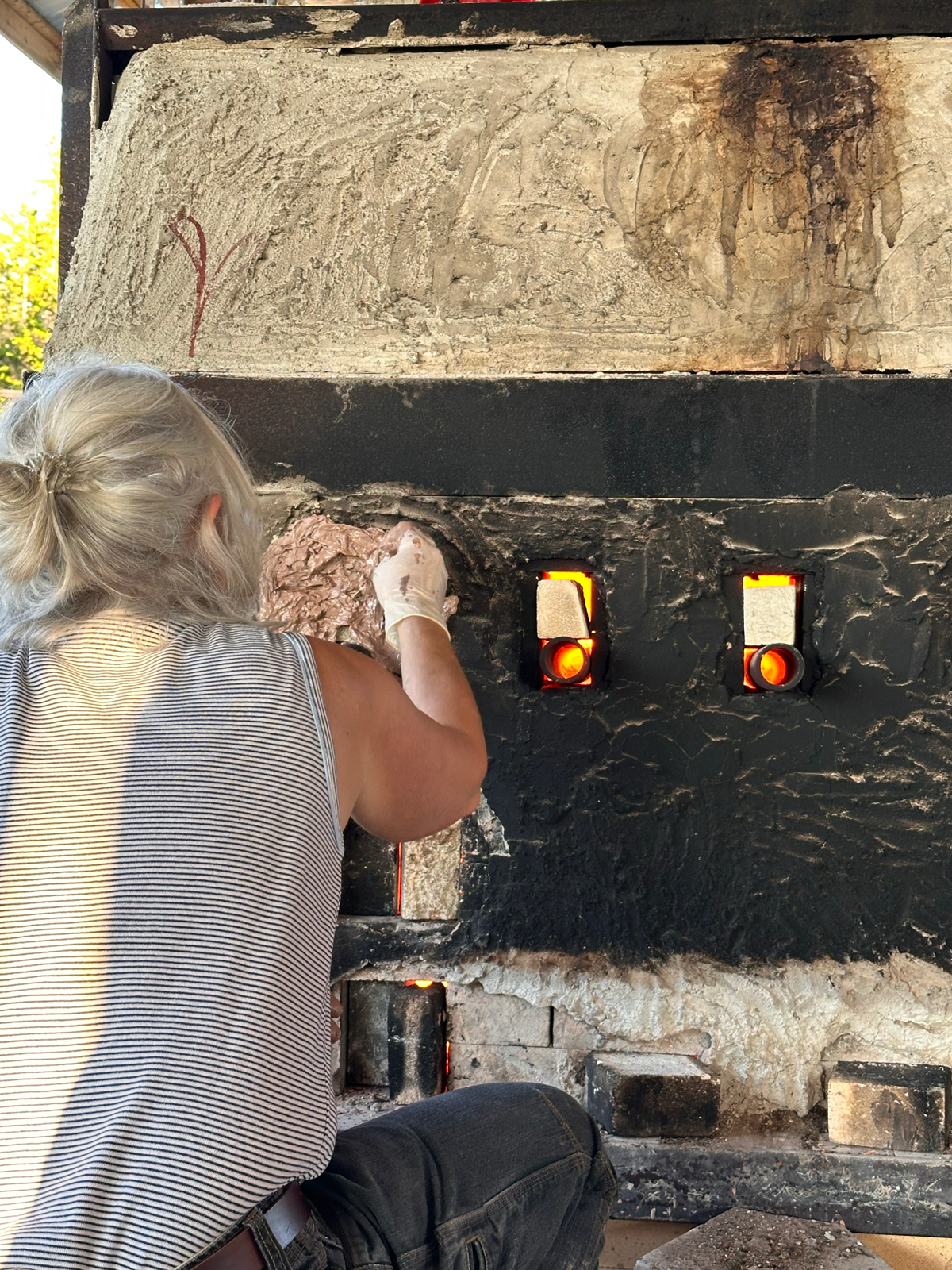
To brick up the walls to the two chambers, we used two different types of bricks. One set for the interior walls, that is high heat resistant and the second layer that is heavier. How the bricks are laid is methodical. They need to be strong and air tight. So after the brick work is complete, we filled the gaps with a heat retardant wool fiber. Wait… and there’s more! The last step is “schmooing”. Sheets of kraft paper soaked in “schmoo” – a liquid clay mixture (secret recipe!) – were plastered over the brick walls to ensure Alice’s chambers openings are air tight.
Kiln Lighting Ceremony
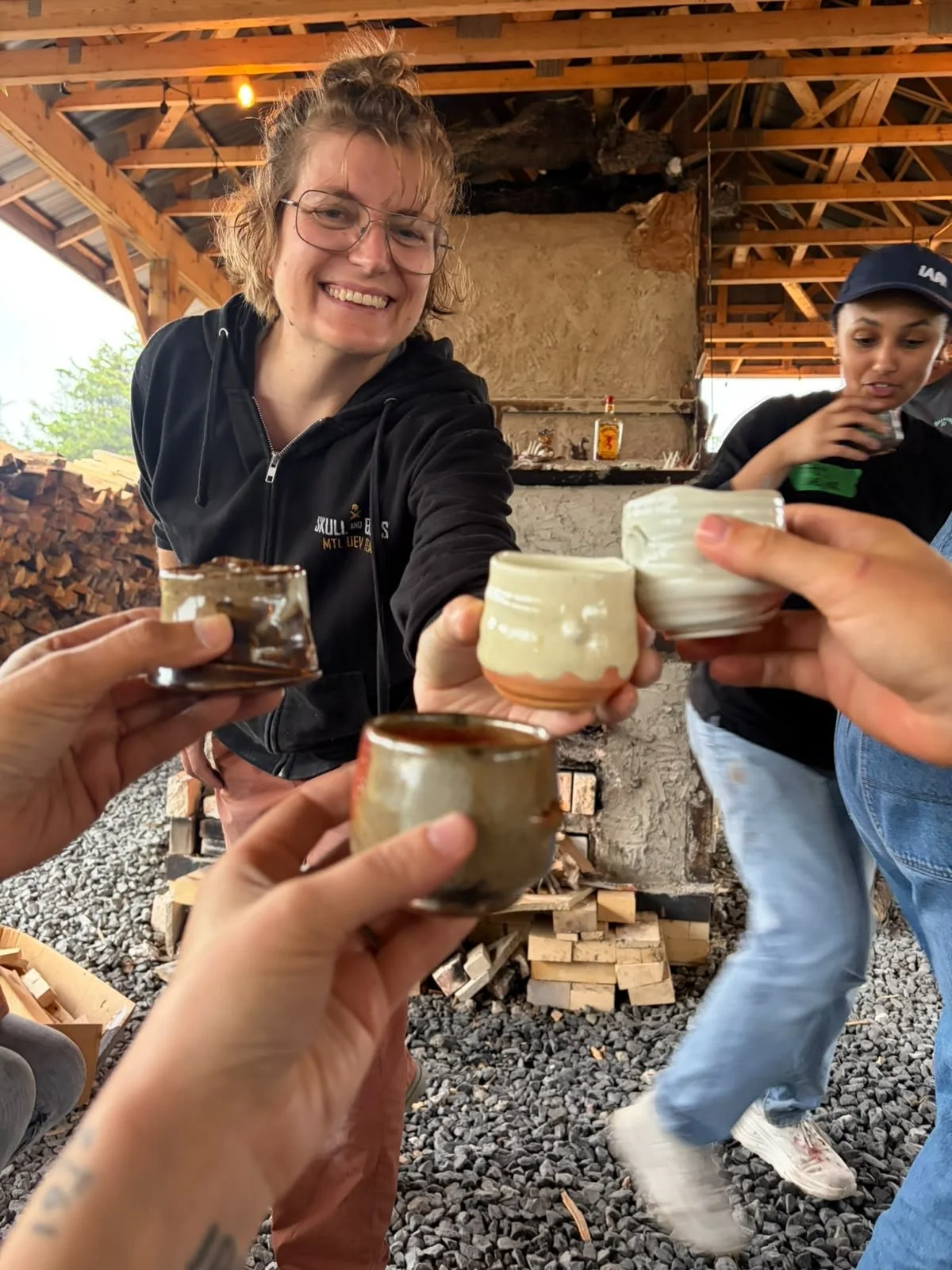
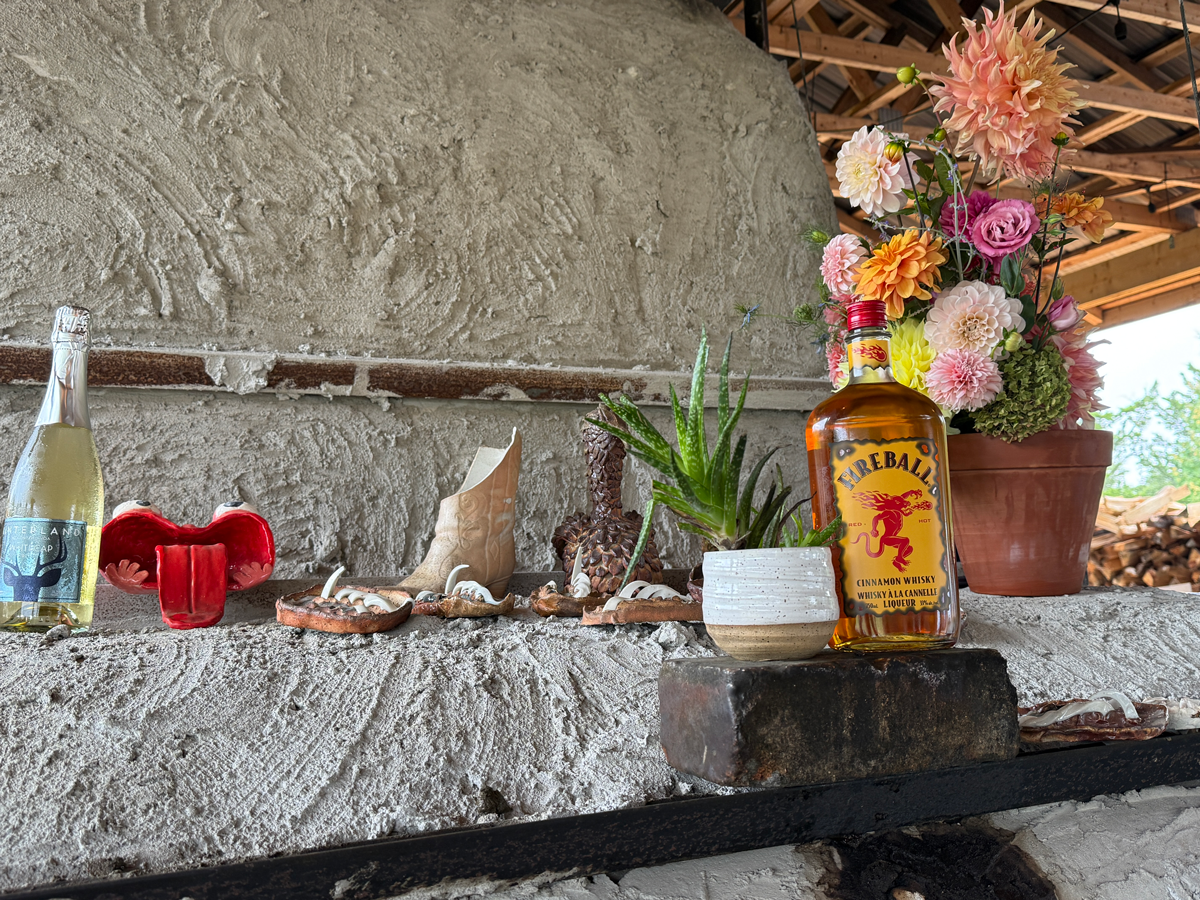
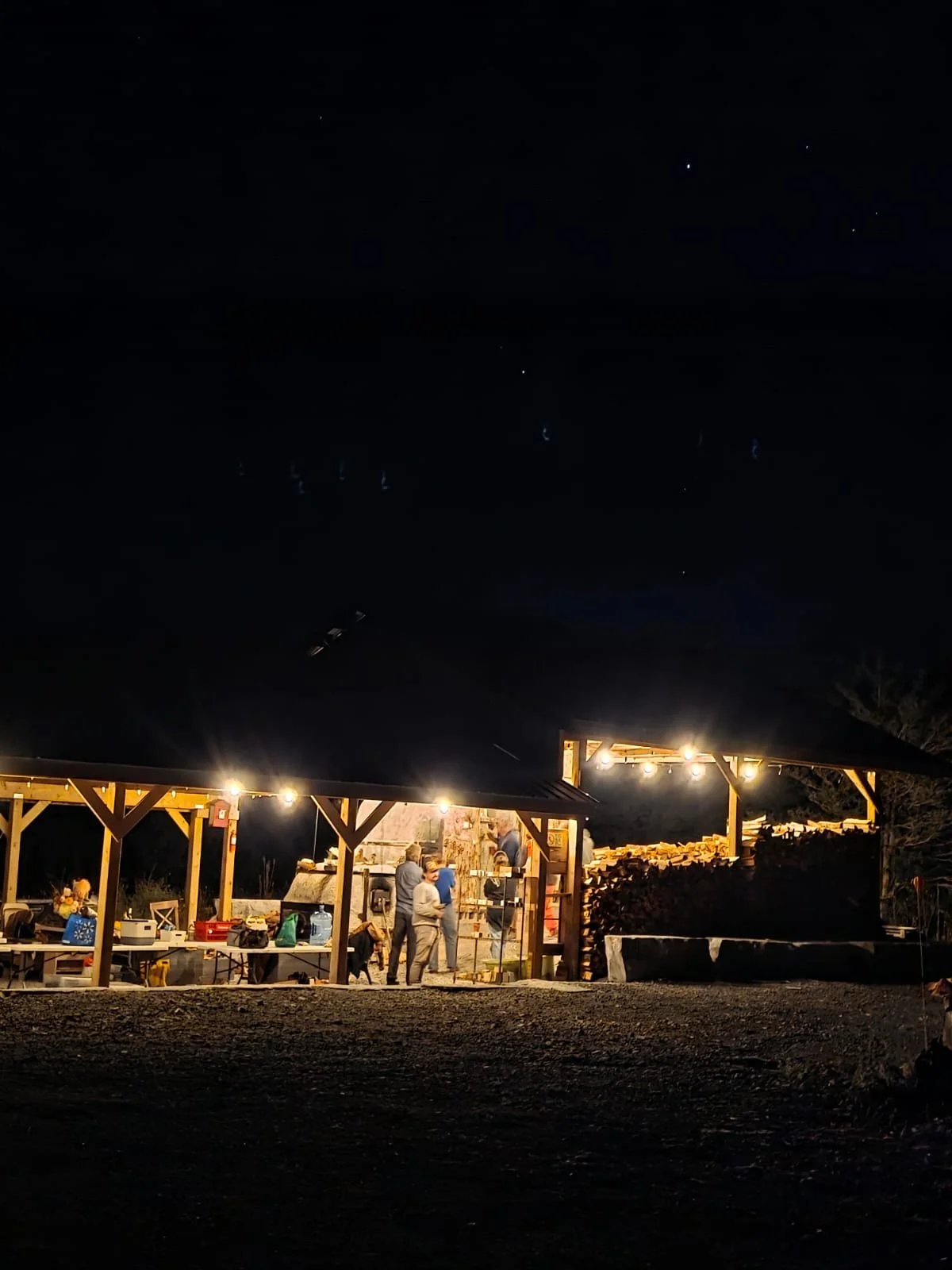
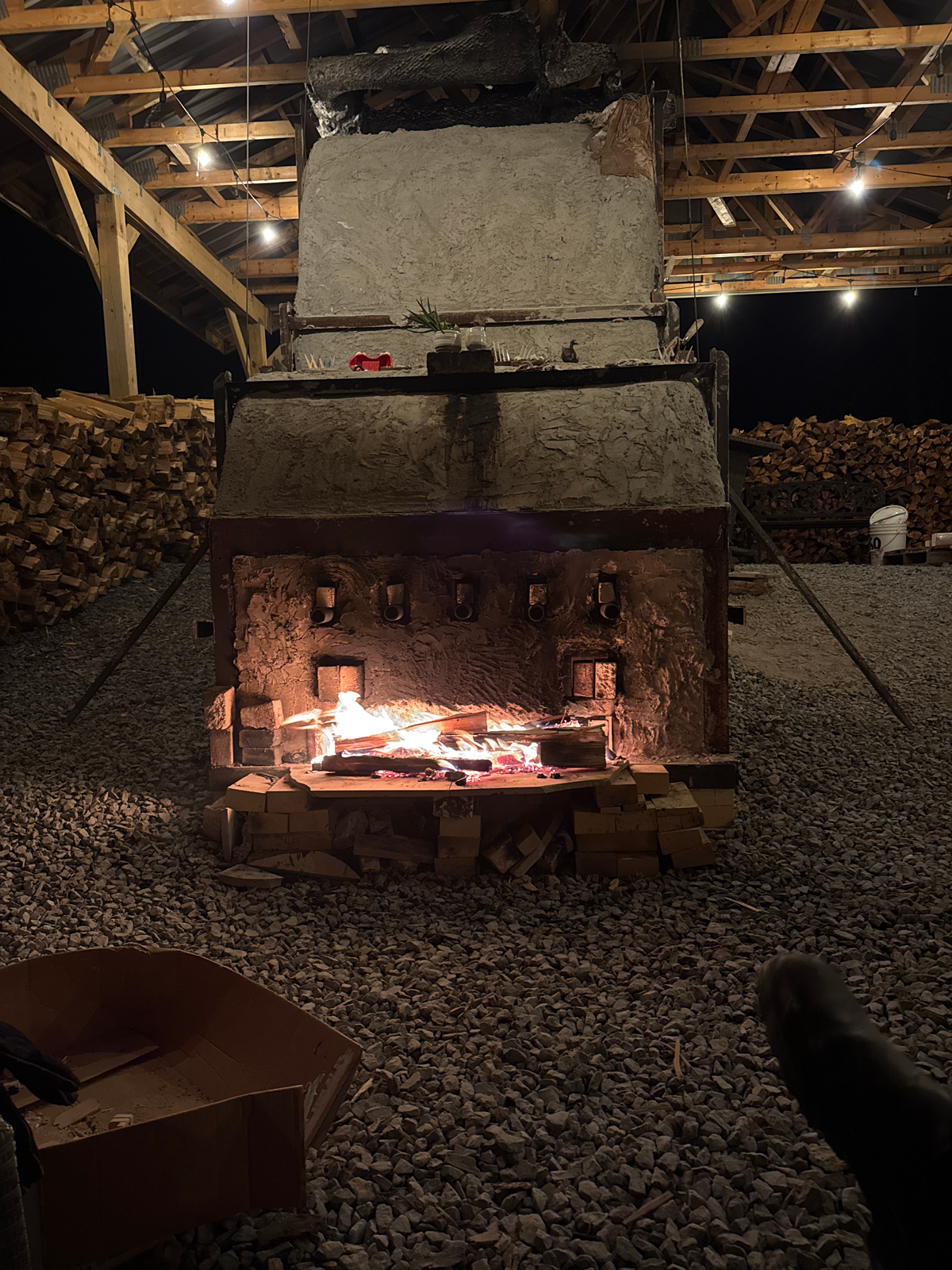
Dawn gave a lovely speech to kick off the ceremonial kiln lighting. We toasted Alice and prayed the kiln gods will be kind and bless our firing. There was sheer giddiness in the air. Note that this is the “pre-fire.” The goal is to let the fire burn to pre-heat the kiln and get the kiln interior dry and toasty. The actual wood fire box will not be lit until at least 8 hours later. I was on the first shift where we kept an eye on the exterior fire. It was a windy and rainy night. Felt like sitting by a cozy fire place. First shift was quiet and calm. We got to chat and find out more about each other. There was no shortage of conversation when you have a group of passionate potters. Before I knew it, it was midnight and the second shift potters have arrived!
Days 3 & 4 - The Wood Firing Proper
Calvin loading the kiln like a pro. He kind of remind me of a train conductor here? Choo choo!
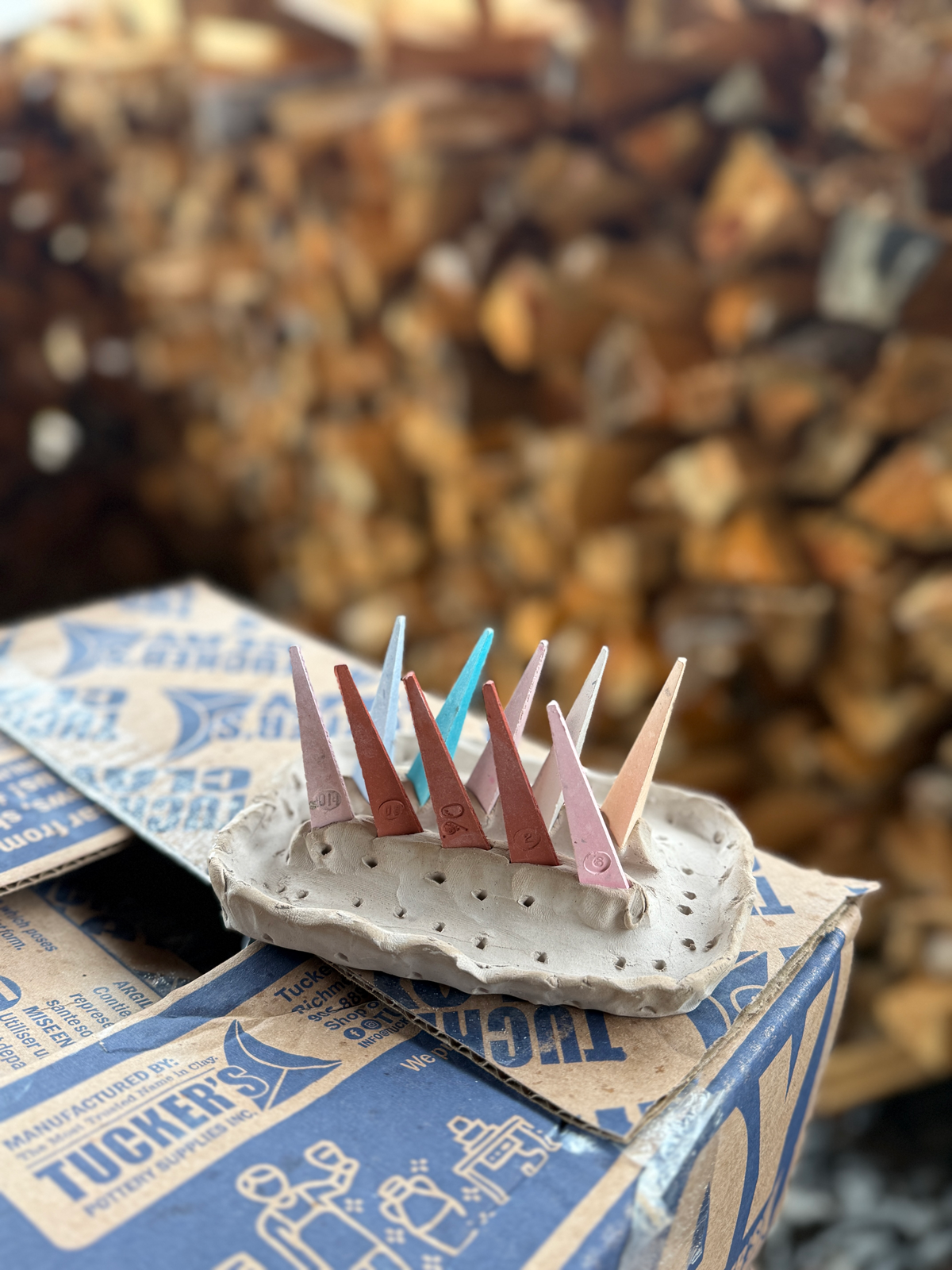
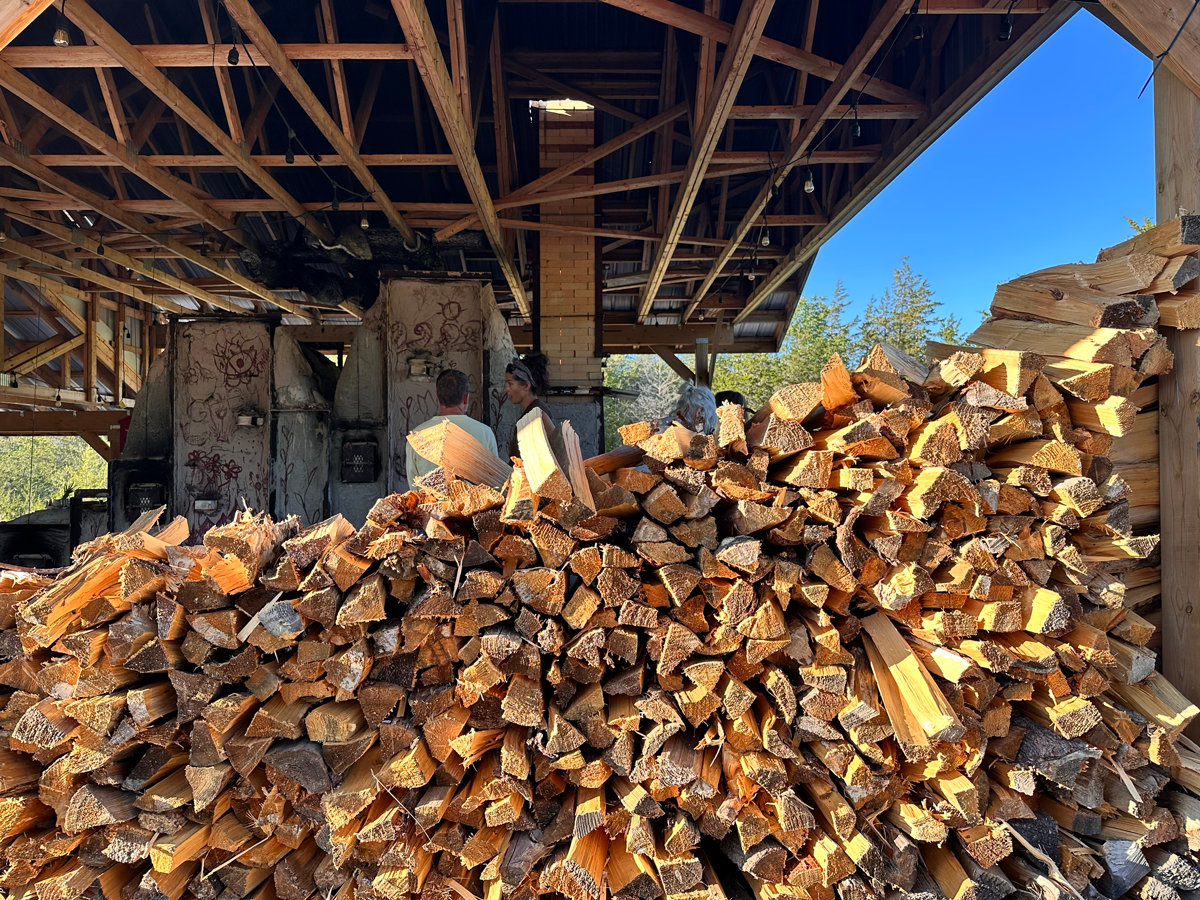
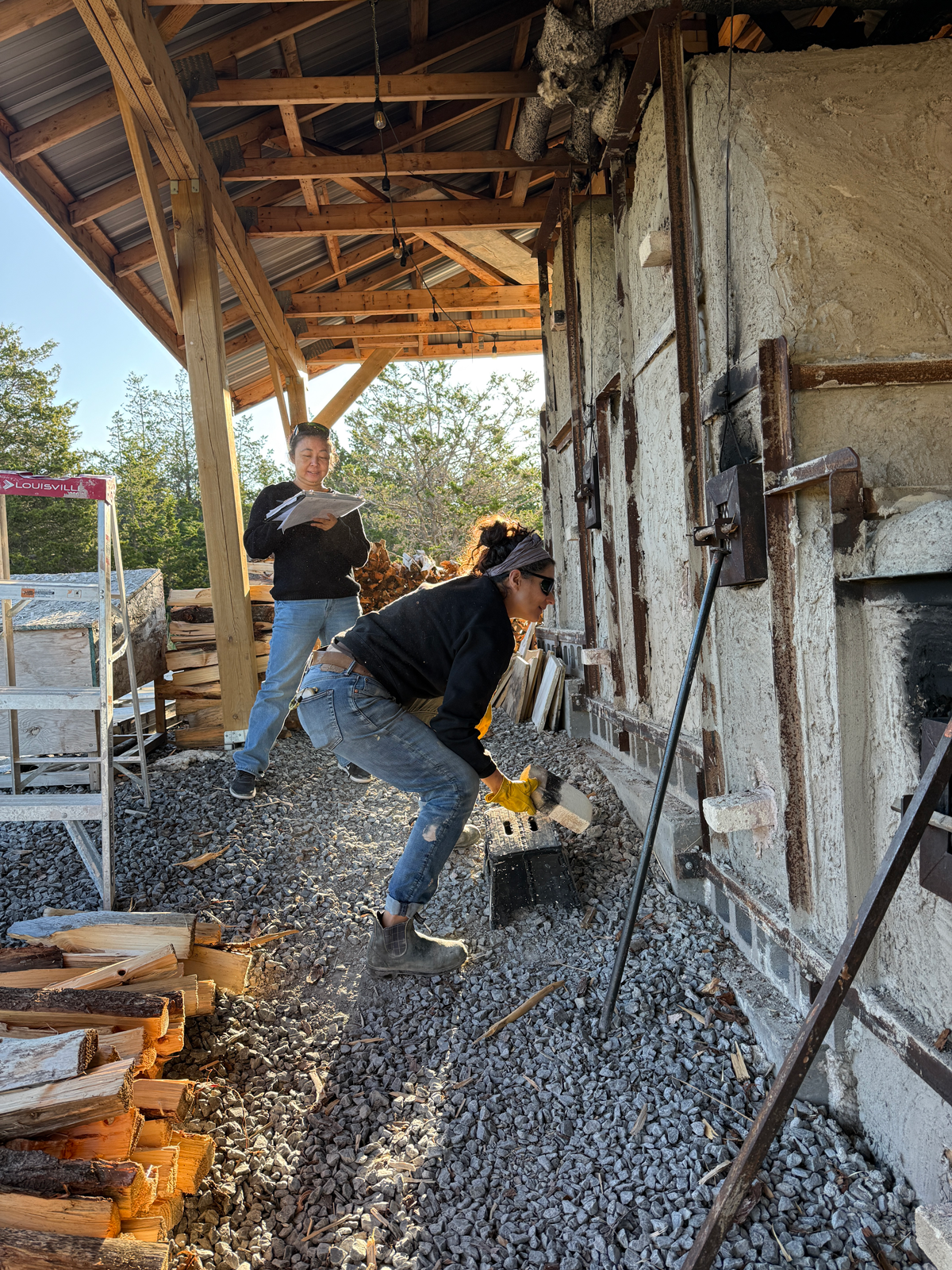
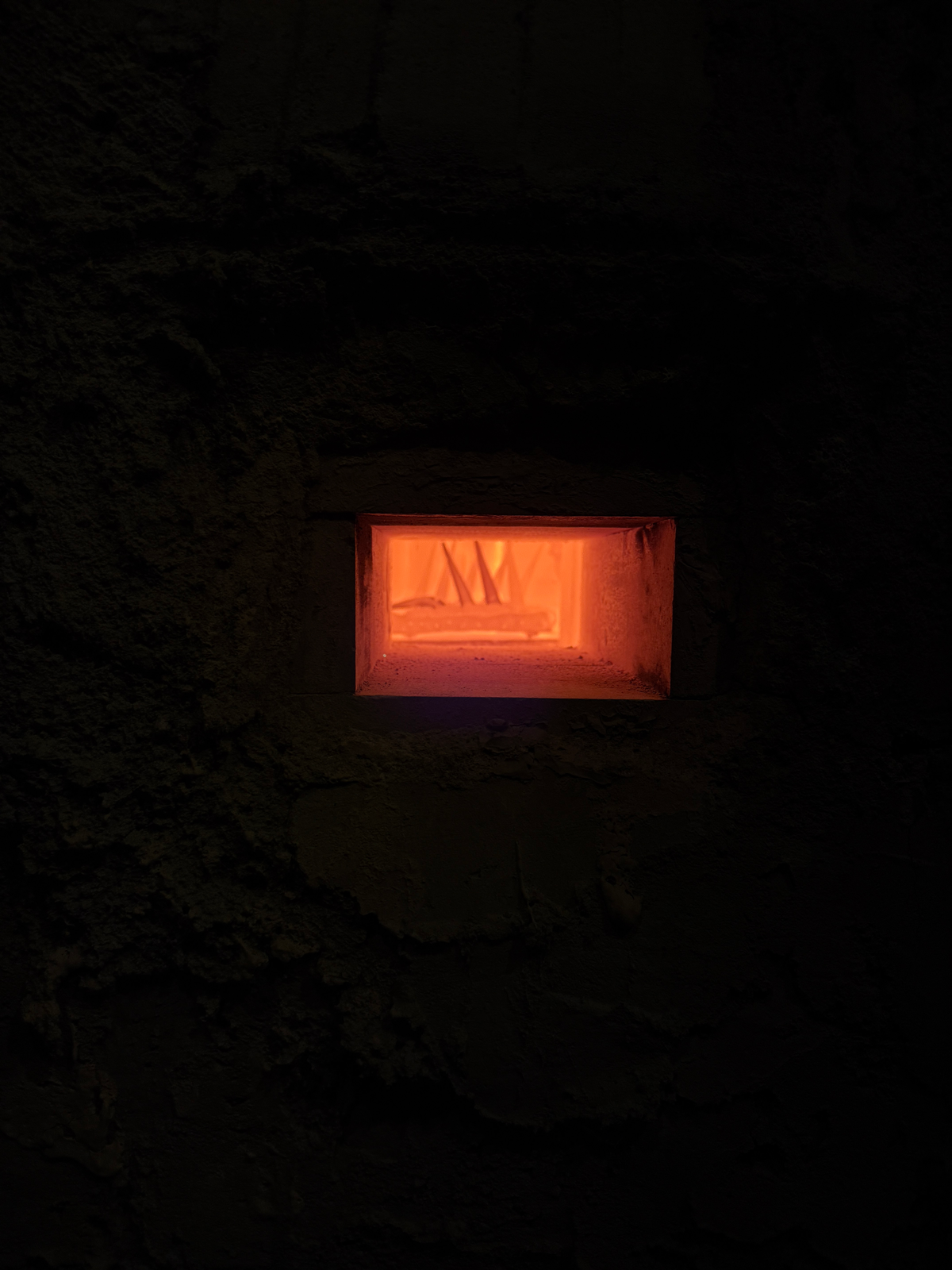
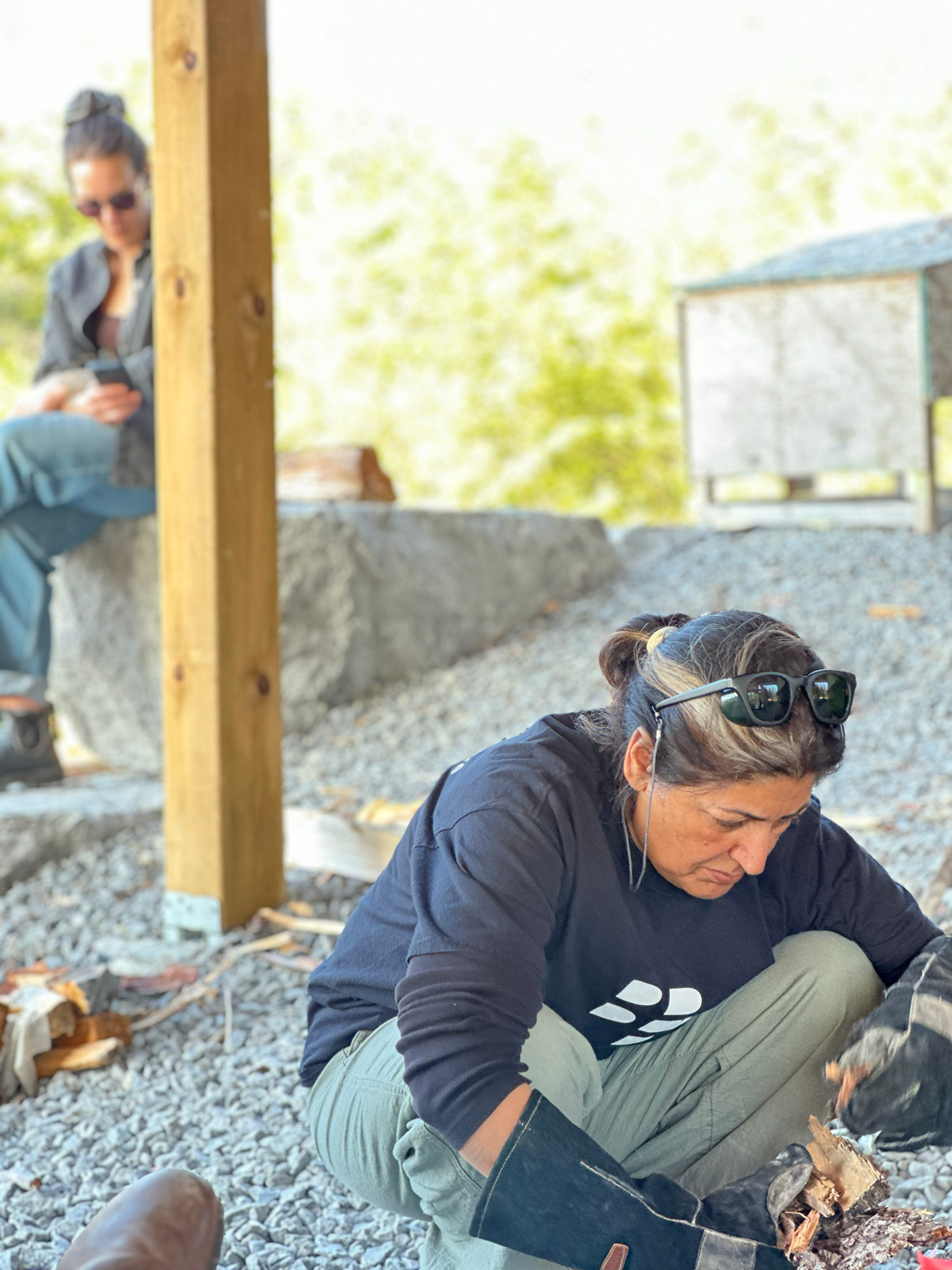
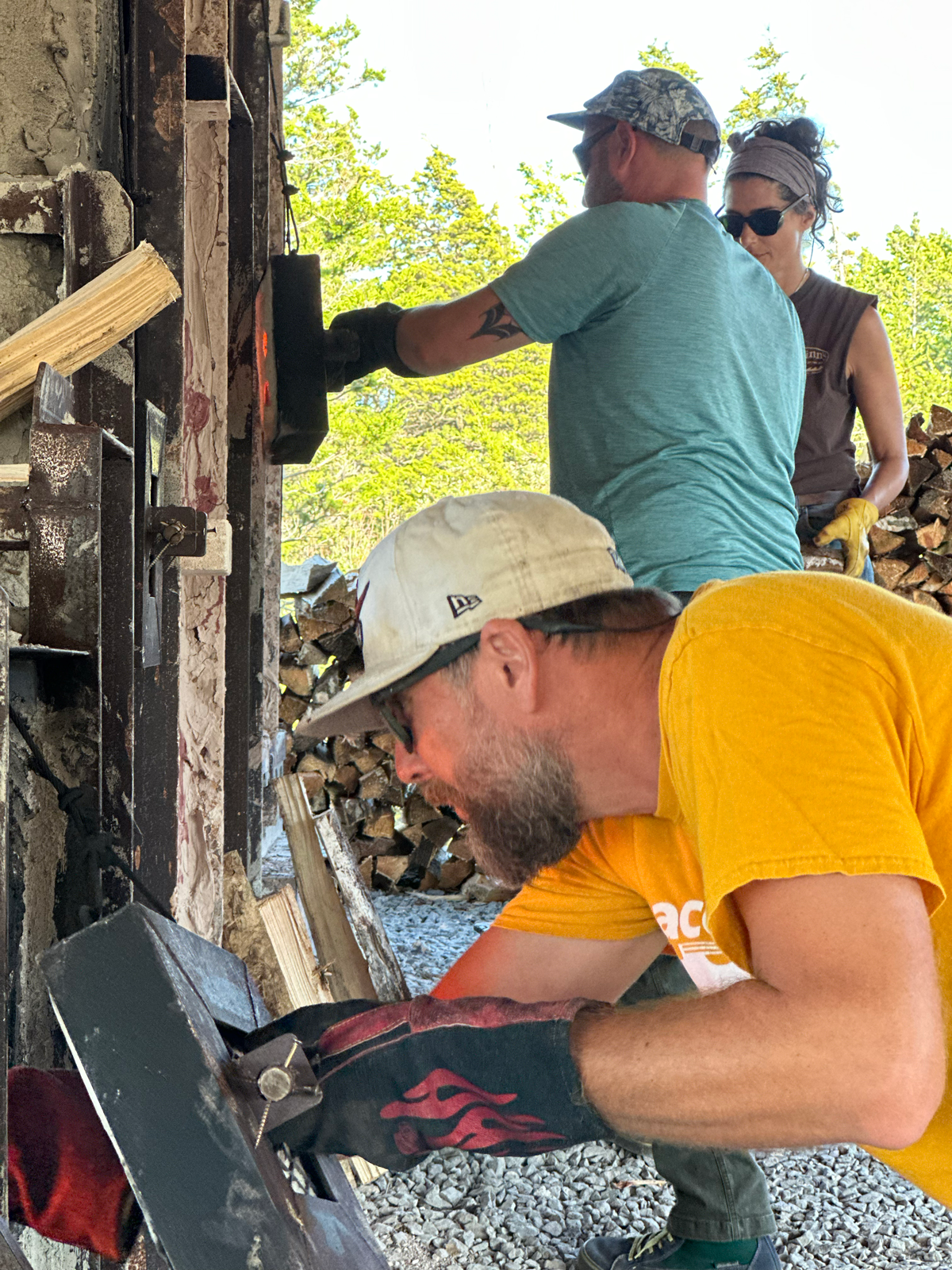
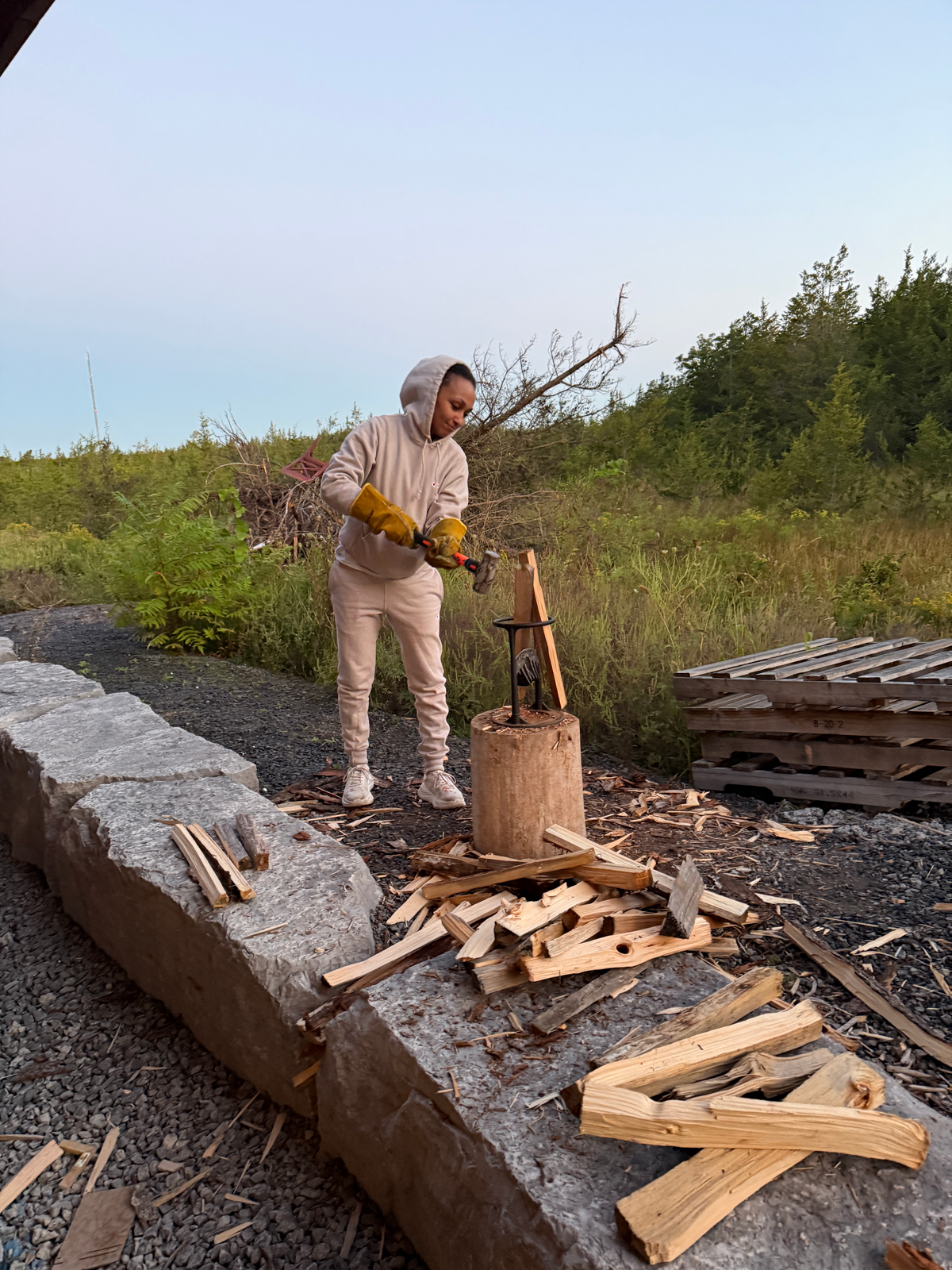
During the second shift the wood box was lit and the proper firing began. Now the exterior and wood box (for the first chamber) are monitored for temperature. The increase can’t be too quick so the fire is carefully tended. Under the experienced hand of Dawn and the guides, we followed a rhythmic schedule of when to add wood and when to check the cones. It’s a slow start that ramps up to an amazing crescendo. The next time I was on shift, the wood chamber was burning bright. We were adding wood every 5 minutes and cone checking every 30 minutes. In between time, which was short, we restocked wood. In addition to masonry, lumber jacking skills are now involved. Not to mention logging the progress. Compared to the first shift, things were jumping! The six hours went by so quickly. The next time I came back, the frequency was up to 3 minutes between each wood loading. Both chambers were going. There was basically no time to pause and just constant fire feeding. Our goal was to get to cone 11. Around that critical moment, Dawn added the soda ash to the second chamber. The soda will create ash marking on the pots that creates a totally different effect than the wood chamber.
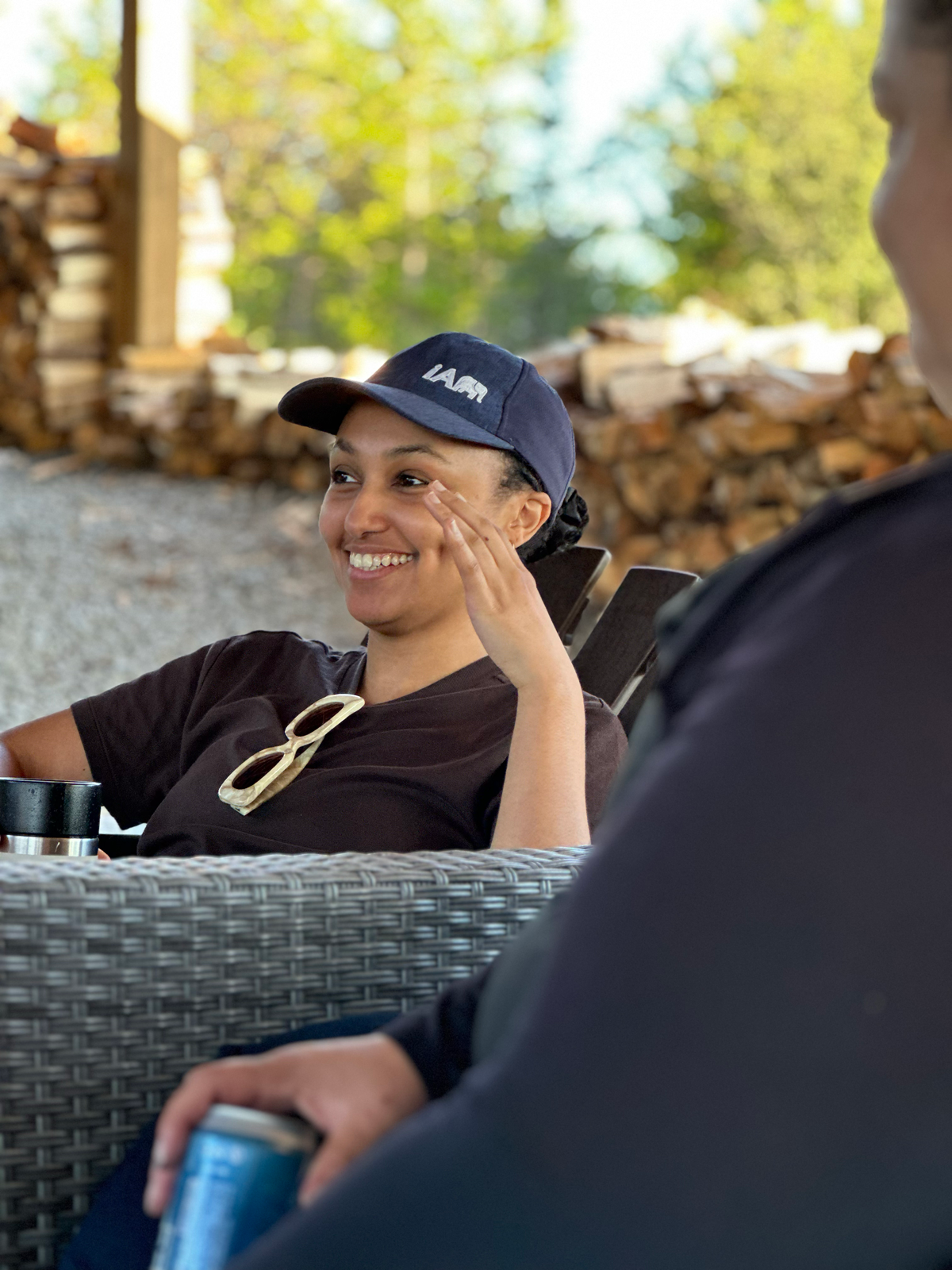
Friends and family came by to say hello, bring us snacks and good company. It was very social. Never a dull moment. The county is absolutely in September. Beautiful sunsets and sunrises, pending on which shift you were on.
Friday afternoon, the end of Day 4, cone 11 has been reached. Dawn declares the firing is complete. Now the kiln is left to cool and we wait. Ideally, it would take at least 48 hours for the kiln to cool completely. However, because of our schedule, we will regroup on Sunday morning (or Day 6) for the kiln opening and unload. Saturday is rest day where everyone can catch up on sleep and/or tour the lovely Prince Edward County. On Saturday night, we were all invited to Dawn and Jay’s home for a home cooked dinner. It was a fantastic gathering. By now, we are all friends and have spent many many hours together. Partners are welcome which made it even nicer. It’s was so great to meet the family of the other potters. My theory that potters are the nicest people has been proven true over and over again. By the end of the evening, we had started planning next year’s firing.
Day 6 – Unload Day, aka Christmas Morning in September
Cool video of the soda chamber taken by Gaby.
On Sunday morning, all the potters gathered at the kiln. The excitement is off the chart. Just as how the walls were built, we methodically reversed-engineered and deconstructed every single brick back into its pile. This ensures the smooth running of the next firing. I really like the intention. Not sure what to expect. I am full of optimism. Reminding myself to enjoy the moment, the process, the people and the experience. Once the chambers were open, all the beautiful work revealed, gasps all around. There’s also a great sense of relief.
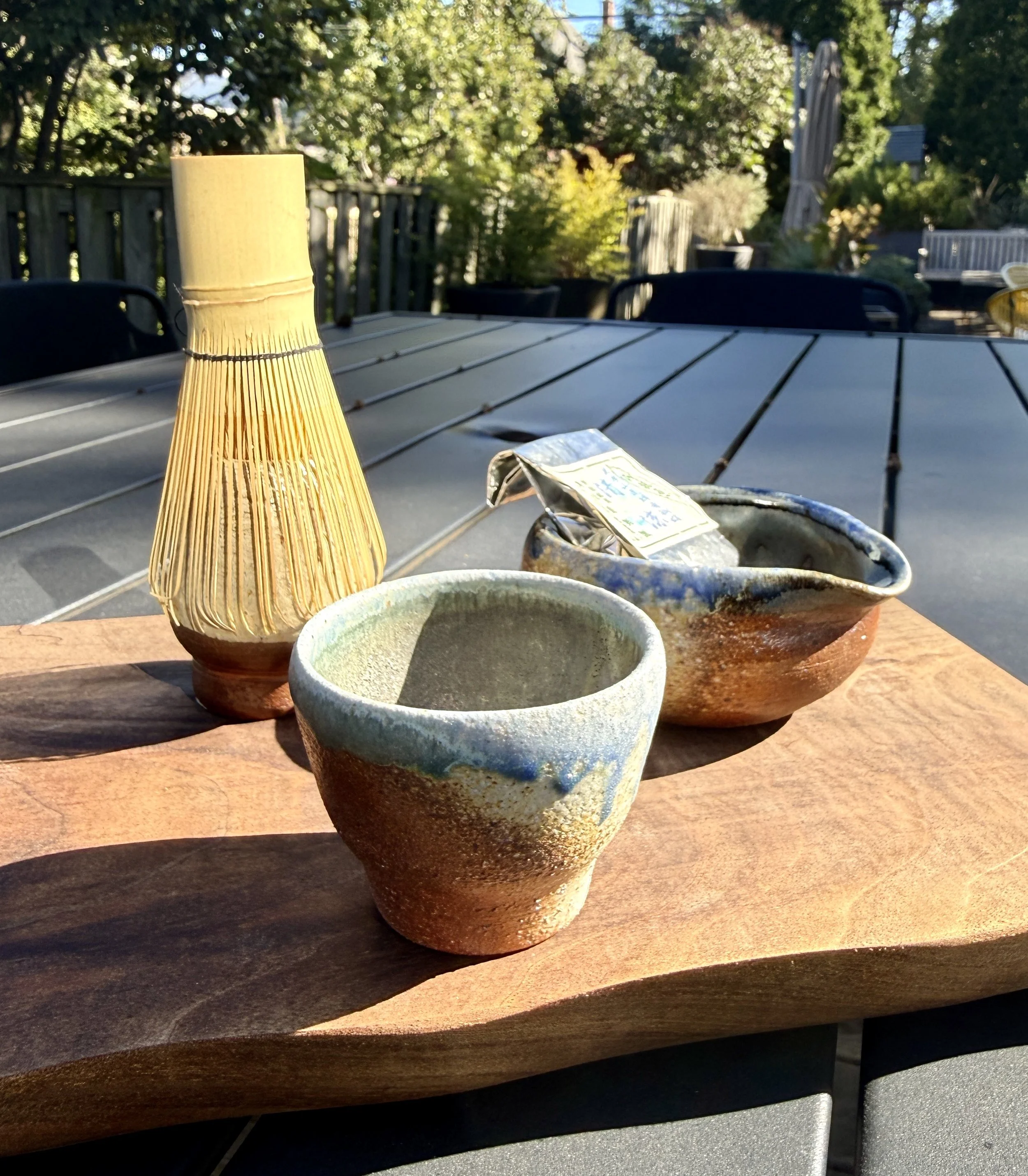
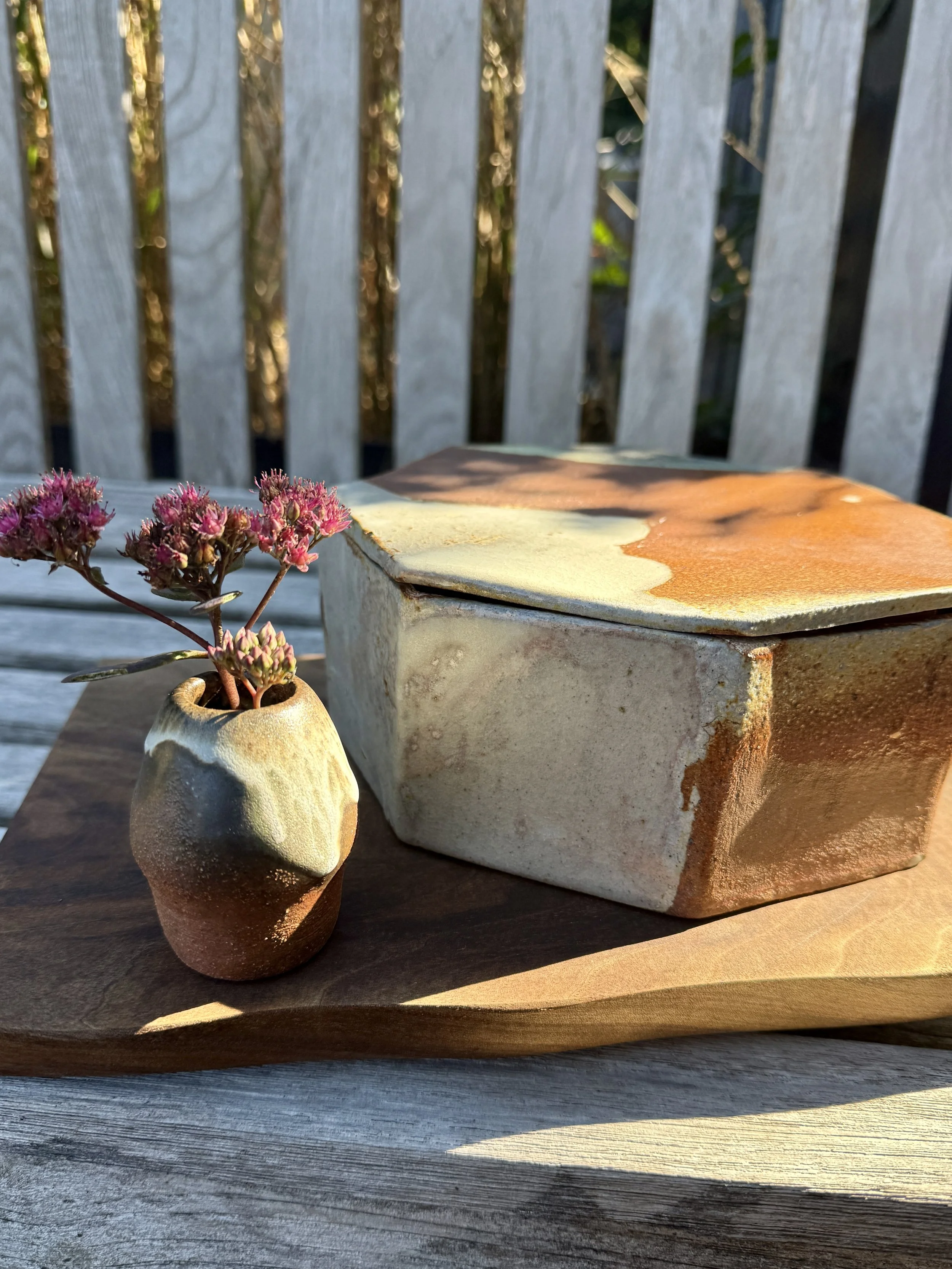
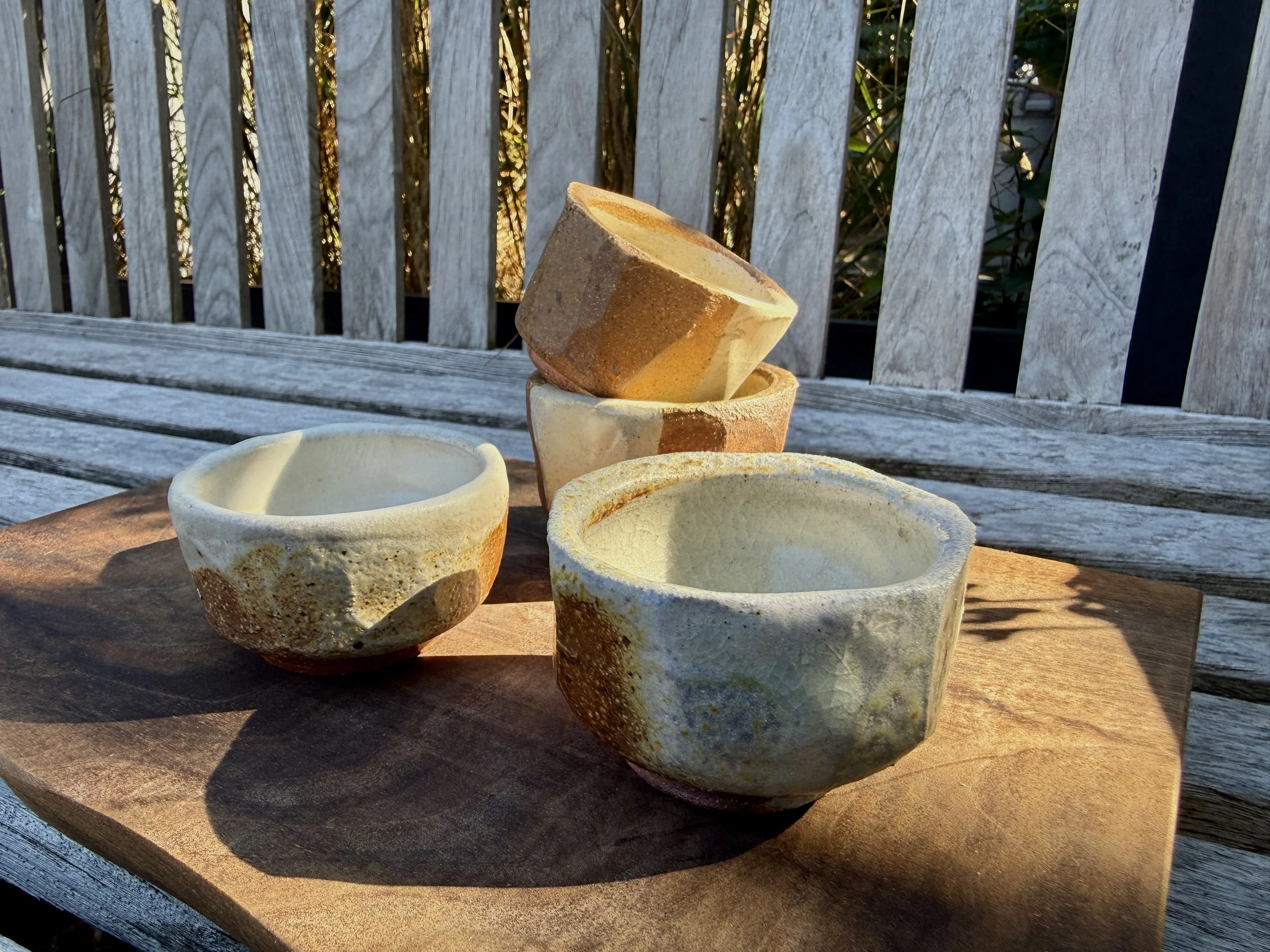
As a first time participant, I reflected on the journey thus far. Feeling so fortunate to be a part of this group. It’s been a while since I felt the joy of collaboration at this magnitude. Remembering way back when I worked on larger projects and how satisfying when the magazine, campaign, event, etc launched. The sum being greater than its parts is hard to explain in writing. Everyone contributed to this harvest. Each individual’s touch affected the outcome of every single piece of work. The most magical part is that none of it can be replicated exactly the same, ever again. So each pot holds its own story and history. That’s the magic of our art.
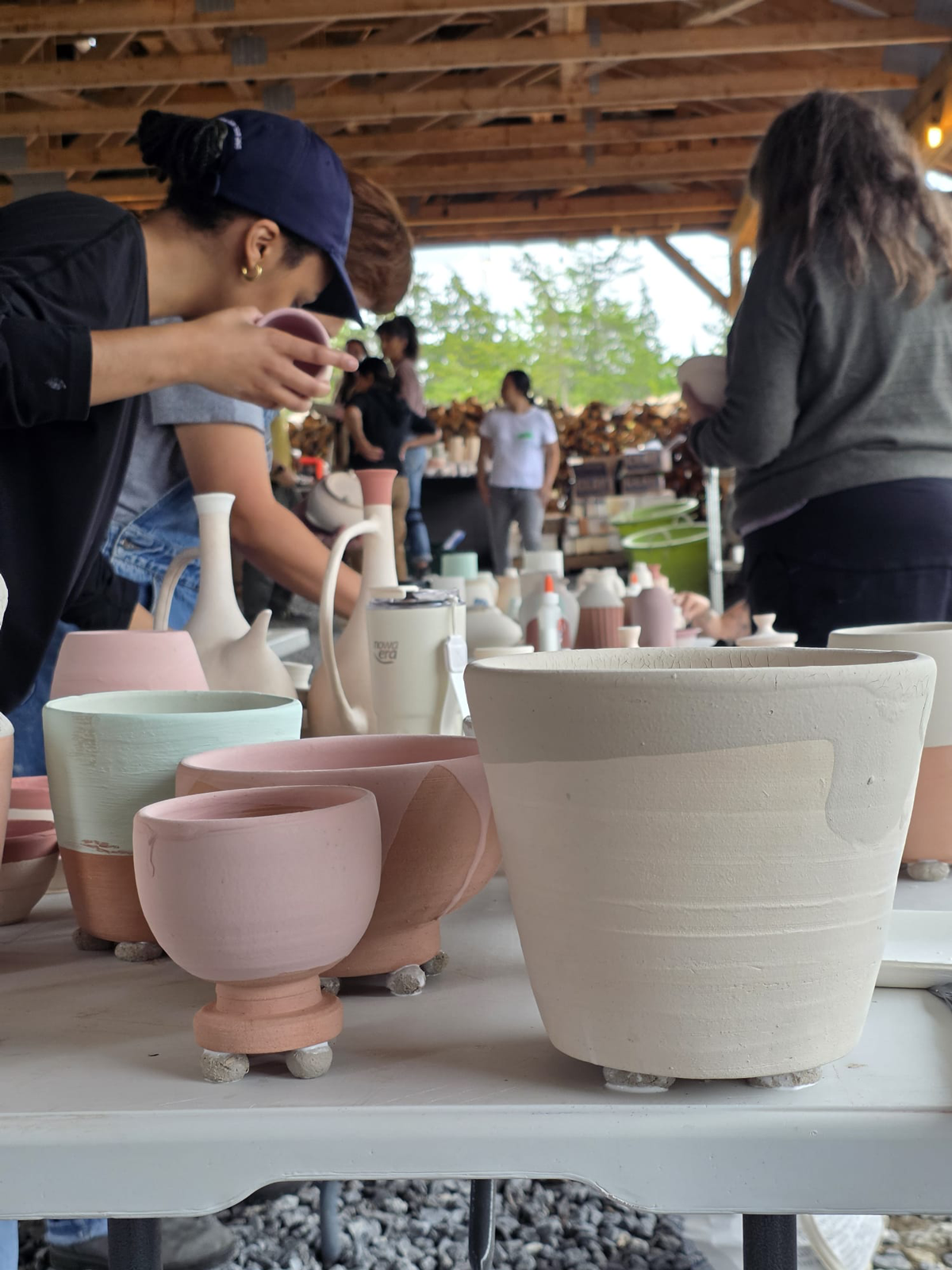
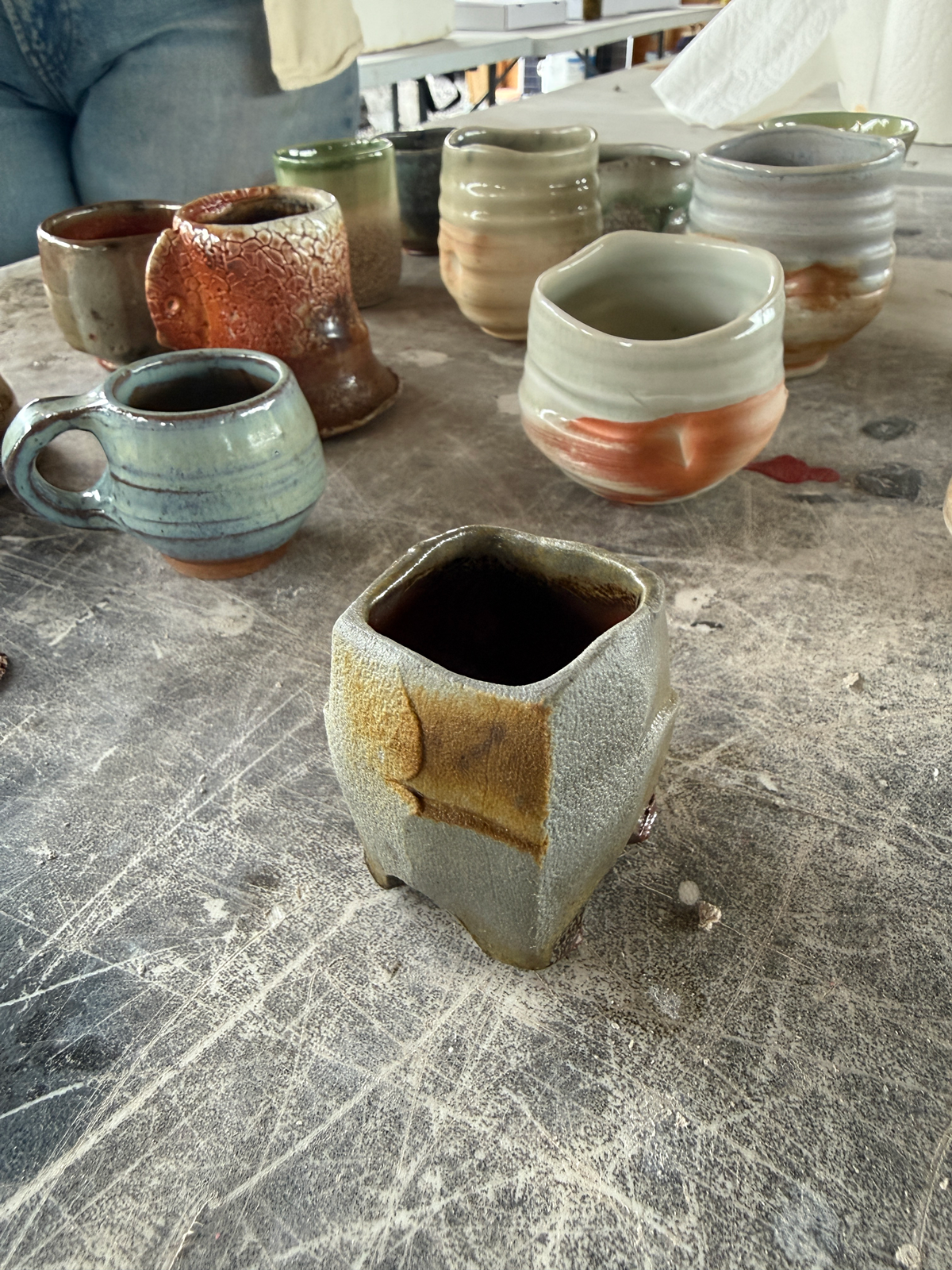
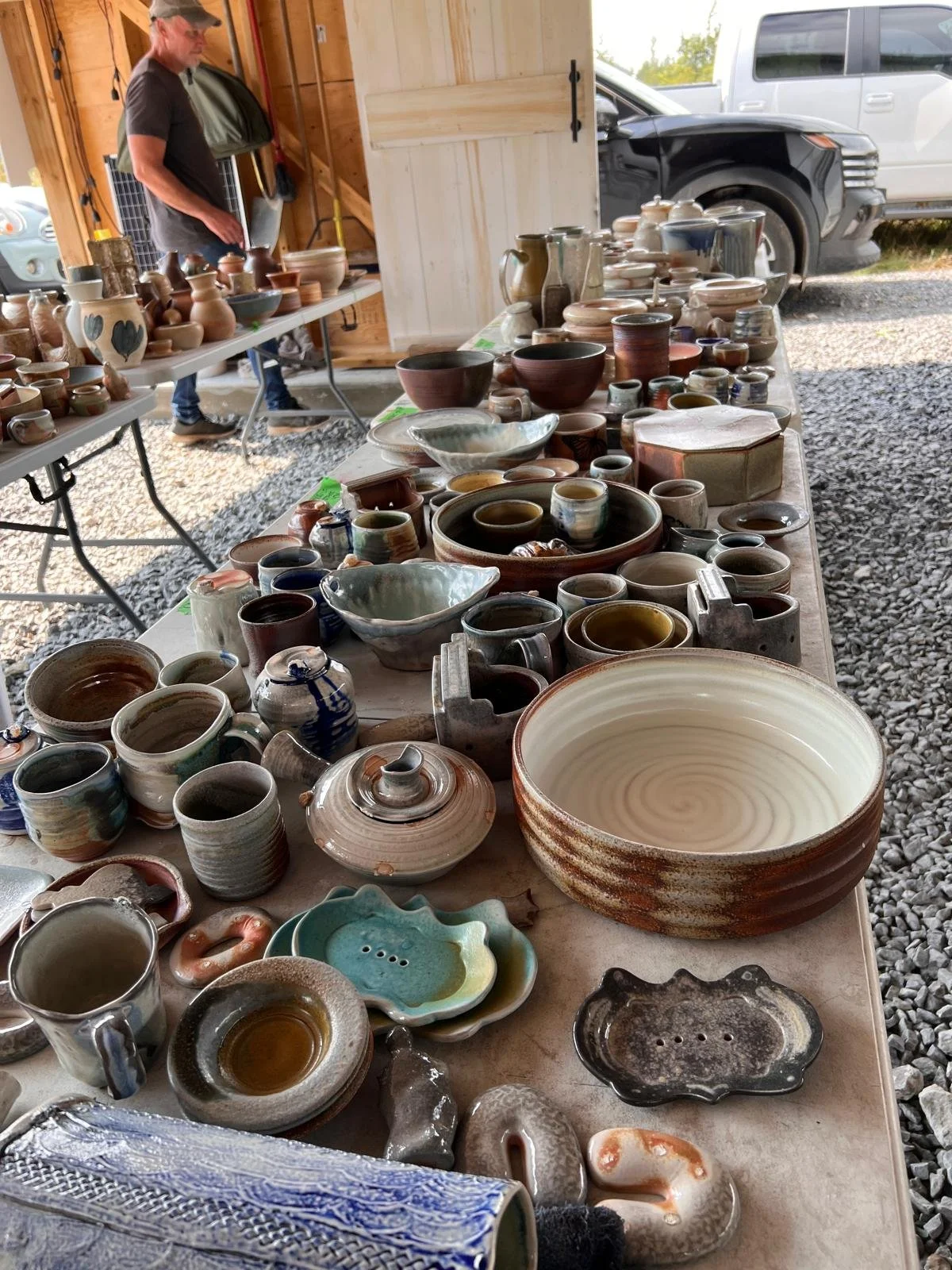
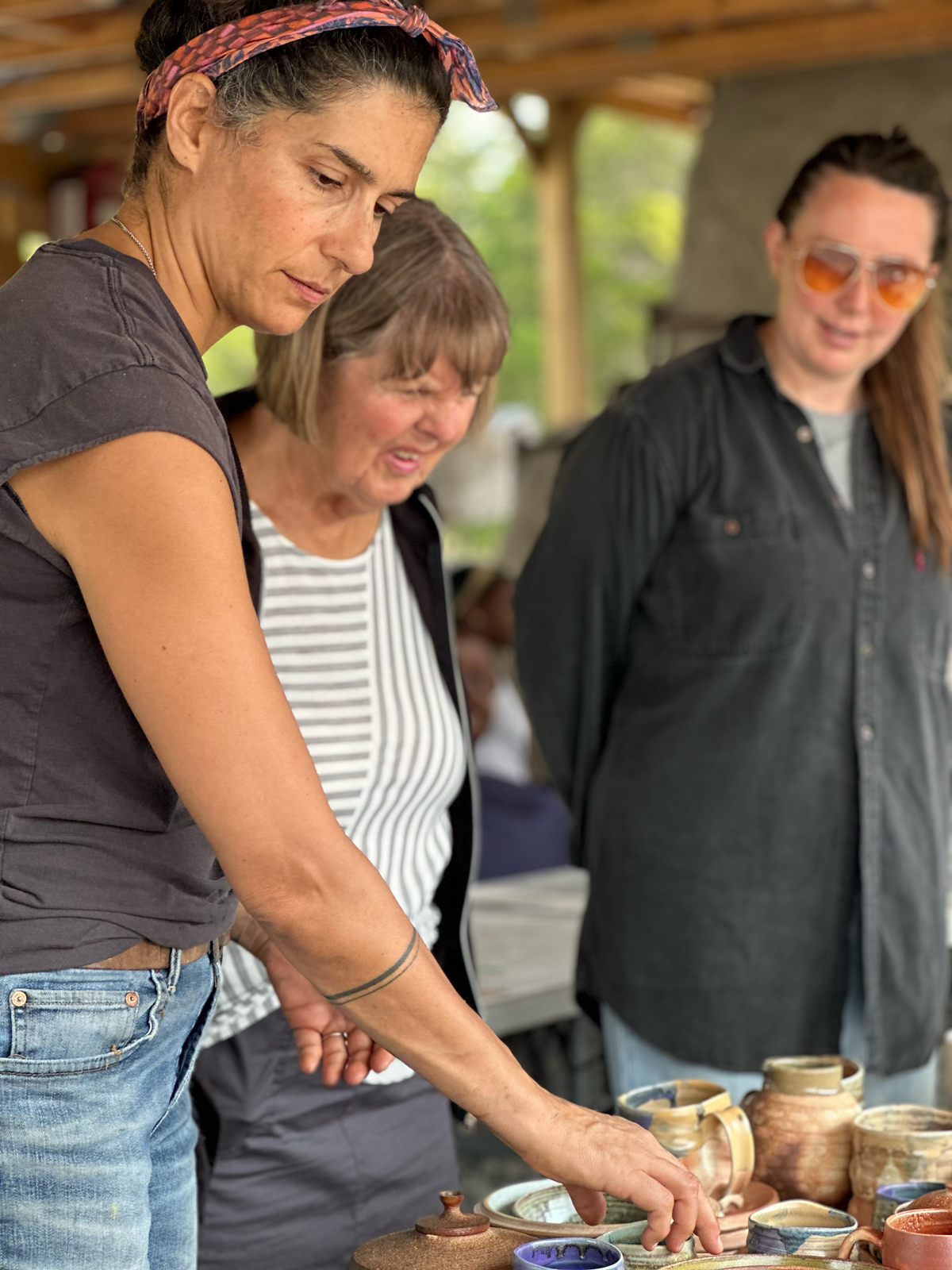
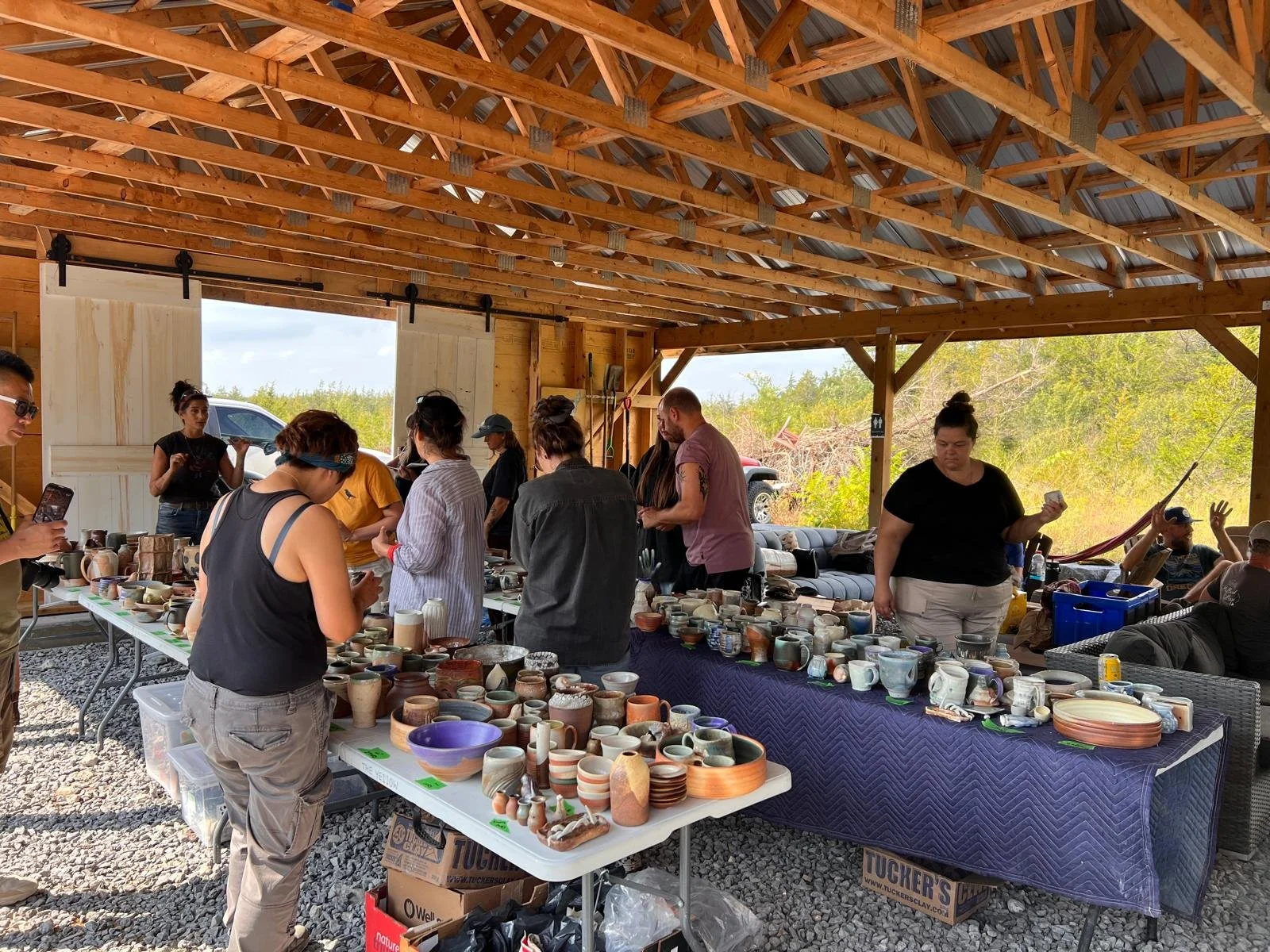
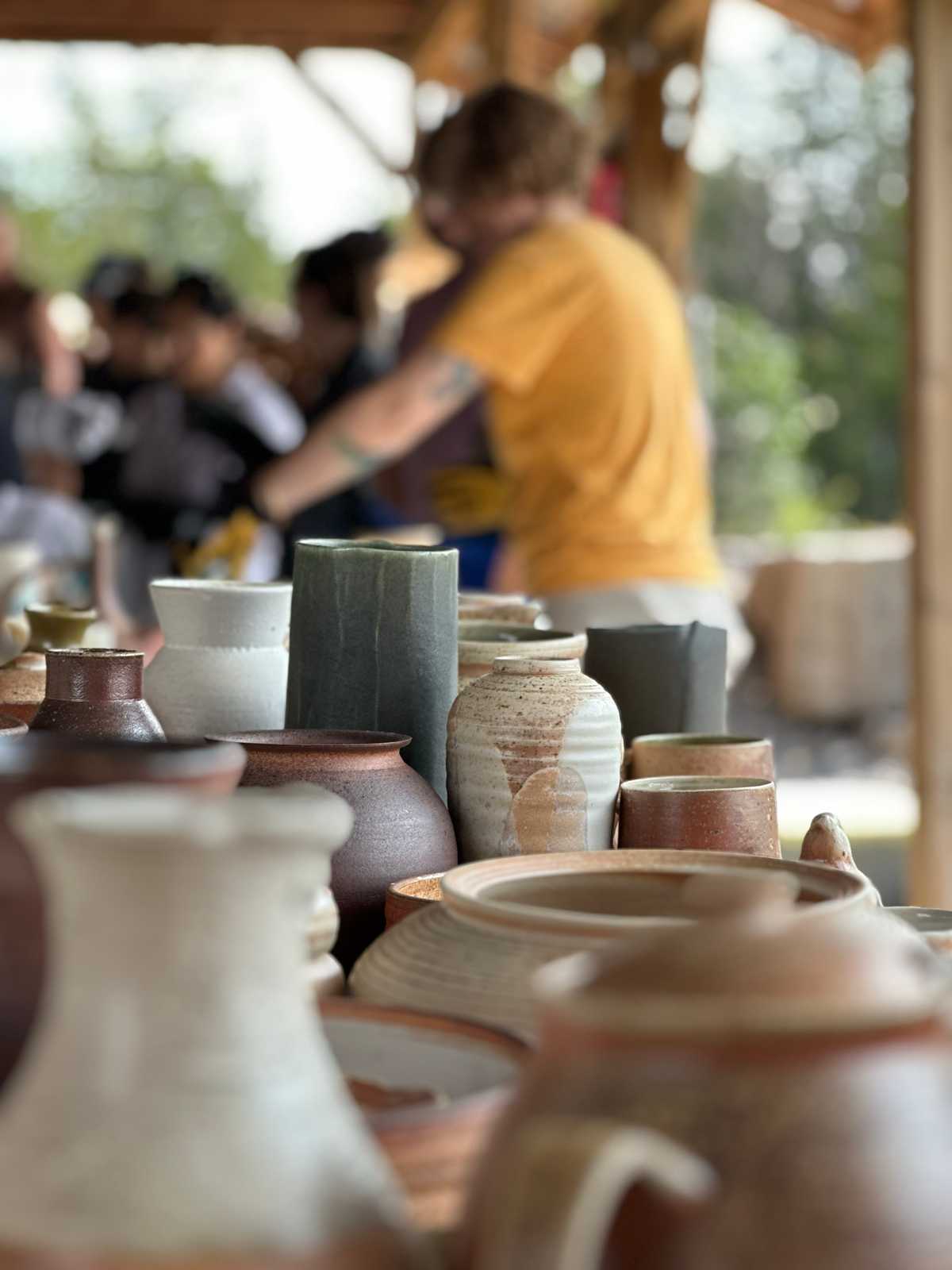
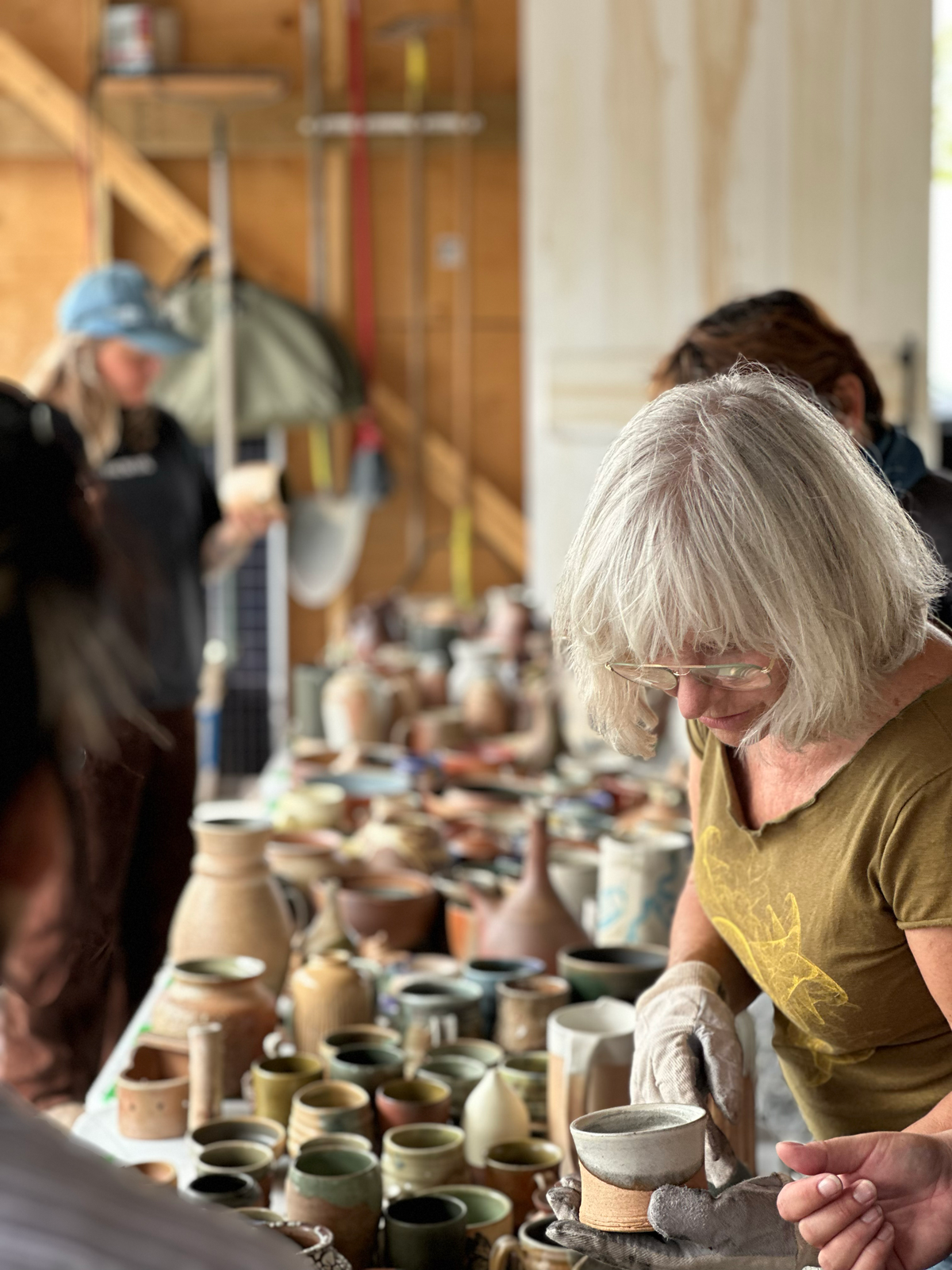
The ritual of unloading is greatly appreciated. Using the same tables that previously held our glazed and fire-ready work, now we refill them with the finished pieces – rounding out the full circle. Potters formed a daisy chain to pass each piece along. Each member gets a chance to hold and admire each piece. Each more beautiful than the next. It truly was a joyful experience: Dopamine. Overload. We would rotate as the shelves clear so everyone got a chance to experience each of the stations.
At the tables or the final destination of the pots, our experienced guide Jenny, held the important duty of organizing and labeling the sections to reflect the position in the kiln. This helps us understand the effects various conditions might have influenced the final fire outcome. I have no previous context but I got a sense that this is a very successful run. We only lost one mug by Ariel. It wasn’t due to the firing but rather an unloading accident. Even the broken mug told its story. We saw how clean and even the walls were and got further appreciation of Ariel’s throwing skills. It seems like that mug sacrifice itself so we can be reminded of all the craft and practice each artisan brought. It was definitely inspirational for me. Ariel’s attitude towards the broken mug resonated with me as well. She was very relaxed and zen about it. I admire that a lot. Also, I thought, because she has such solid skills, she has endless resource to create more.
It seemed like a long time and a blink of an eye simultaneously, much like fleeting joyful moments in life. It’s over before you know it or time stands still when you are doing something you love. Both chambers were cleared and the tables were full. We all took time to walk around and admire each others’ work. Some looked for the pieces they loved from the daisy chain unload to get a closer look. Some traded tips and shared what they learned. I got a sense that expectations were beyond met. Many of my “inferior” pieces turned out better than expected. There were some cracks and lots of crazing. All excellent learning experience for me.
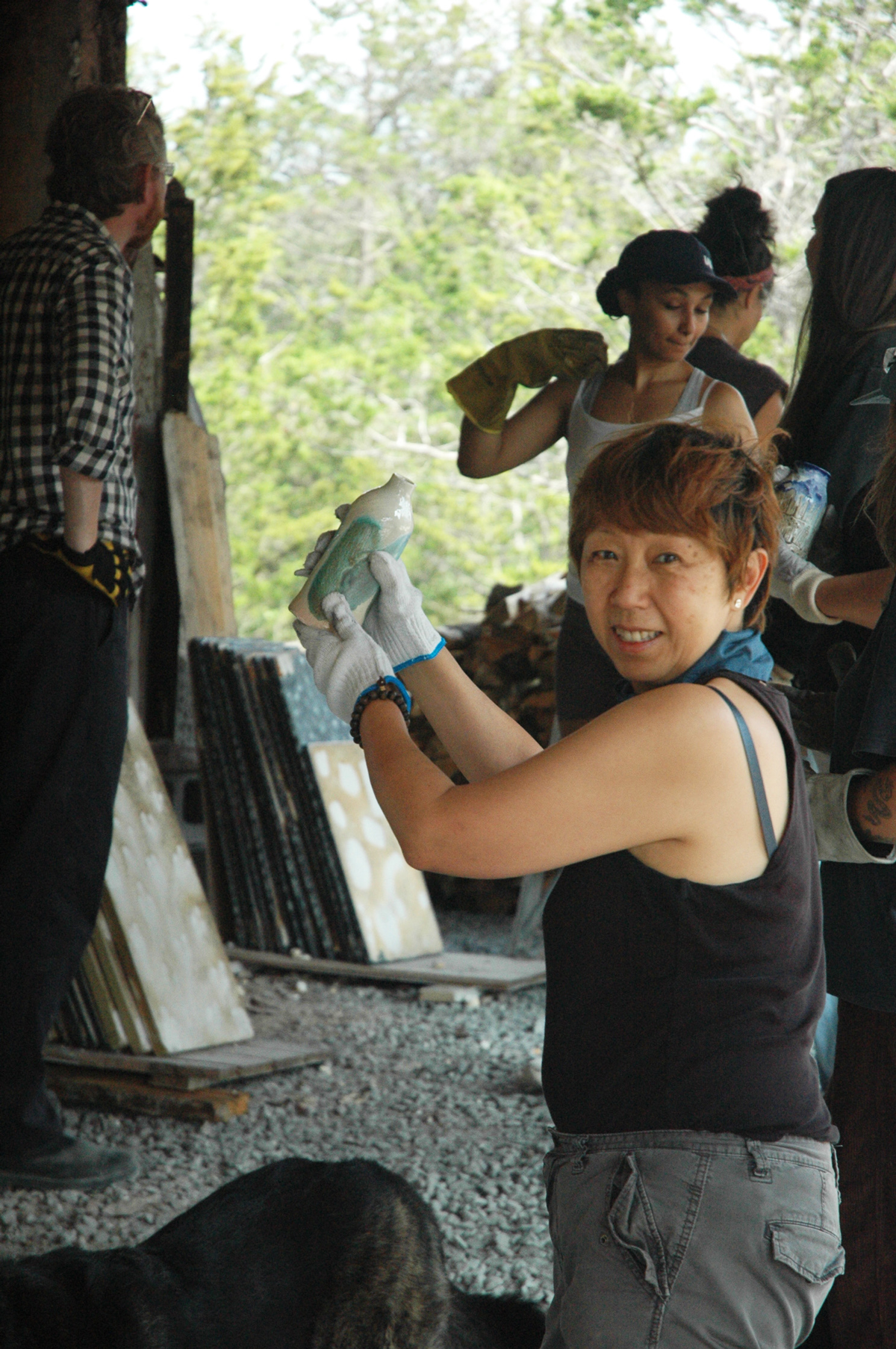
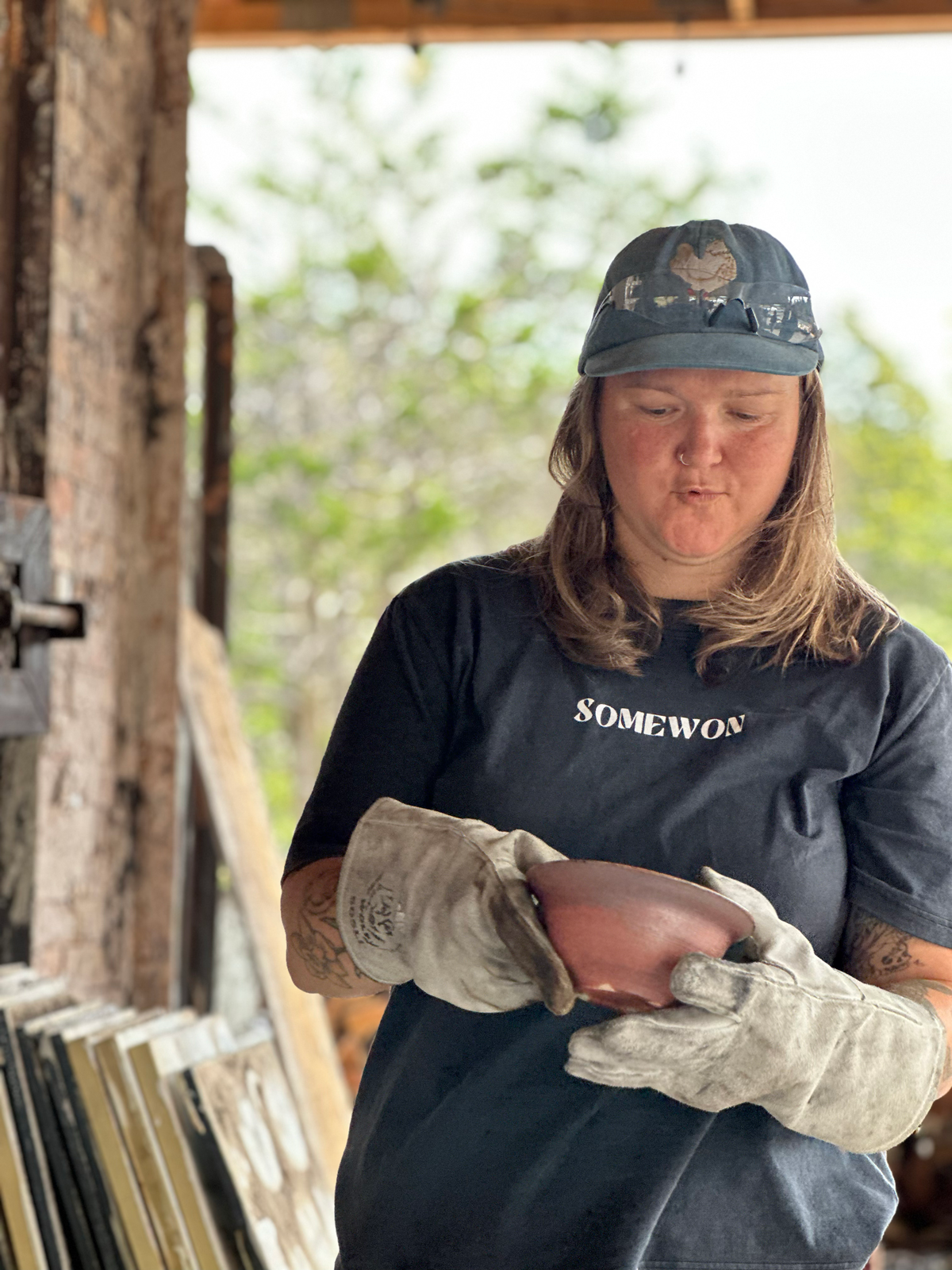
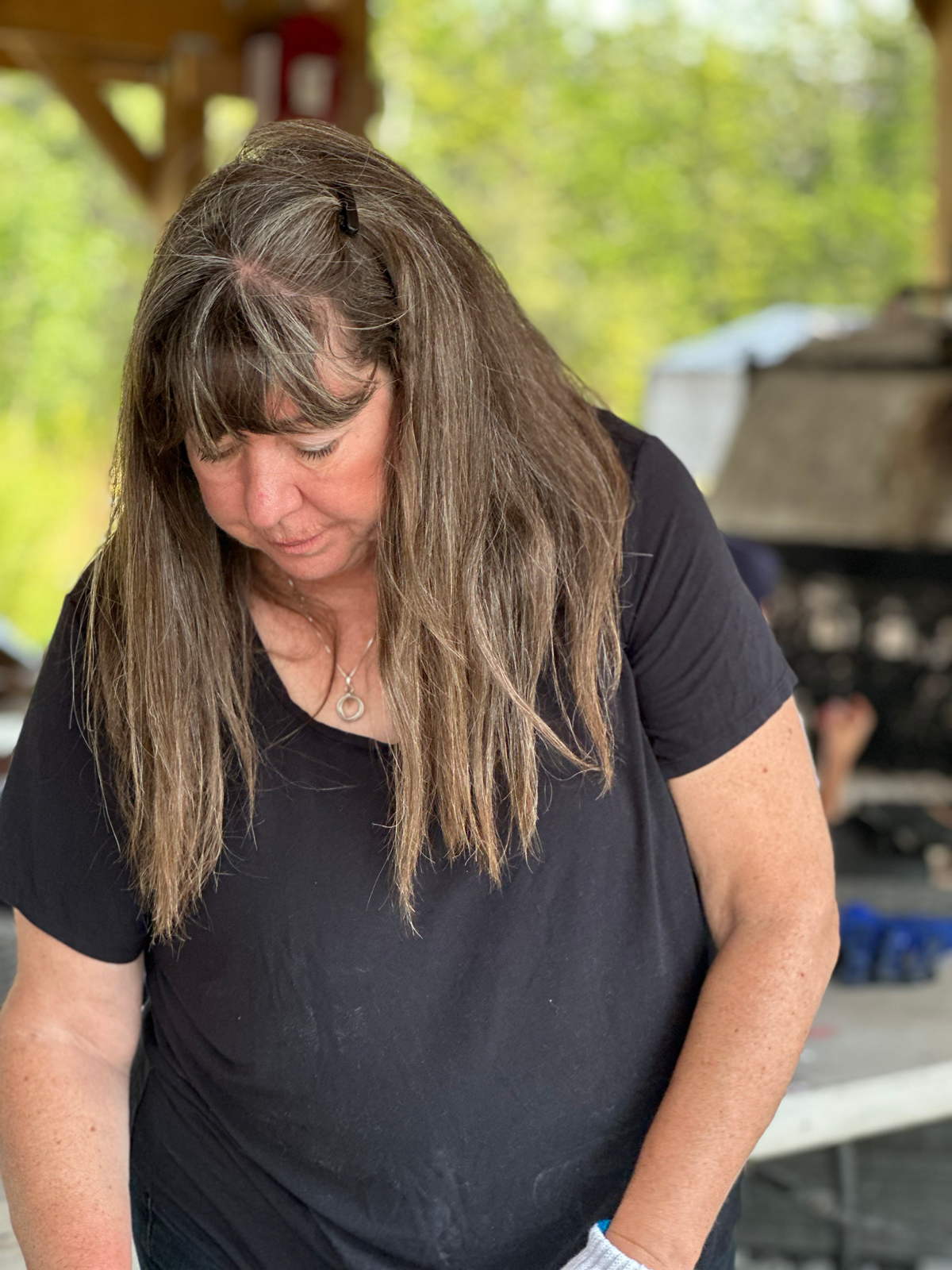
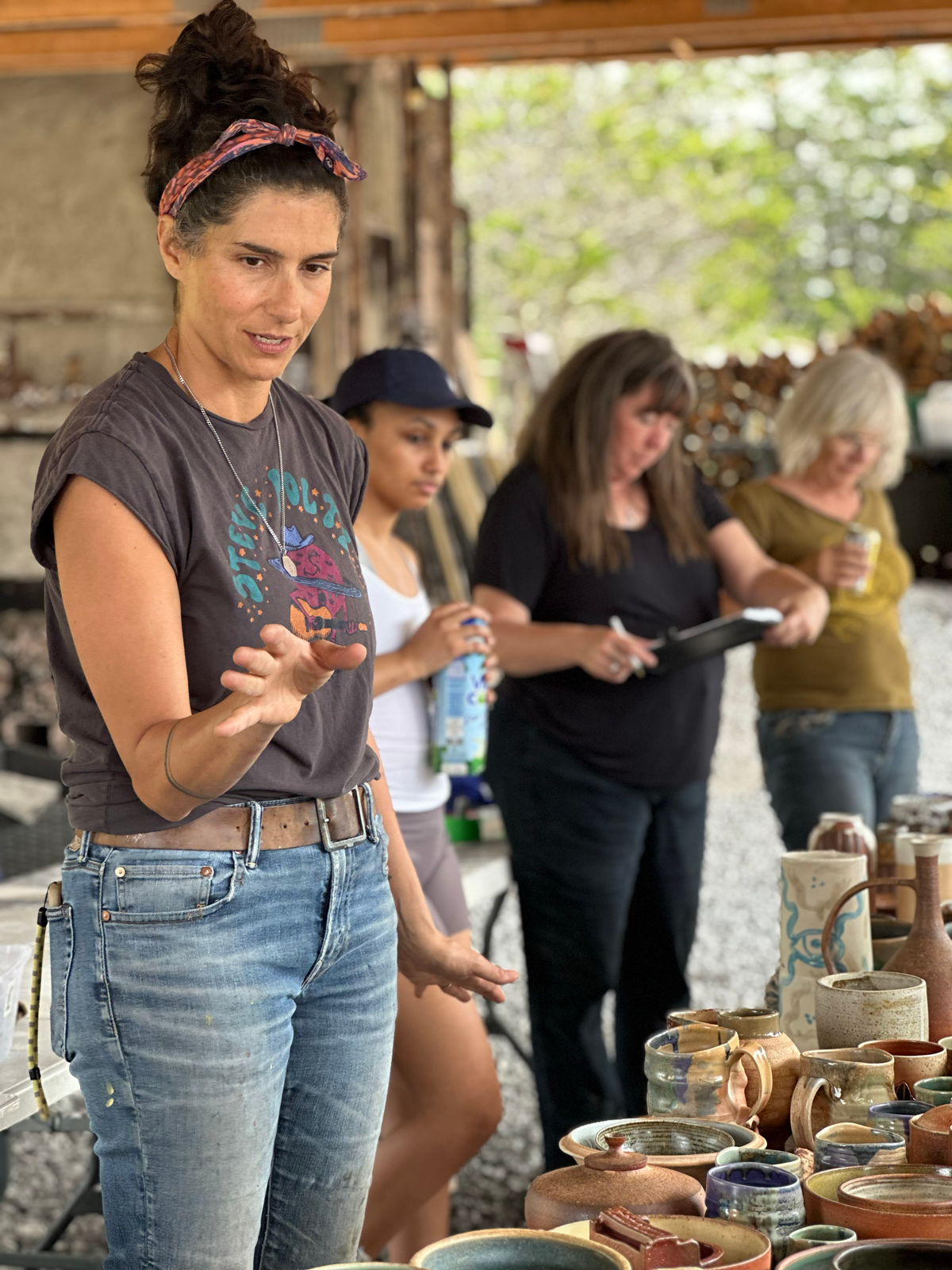
The final touch was a reflective sharing moment led by Dawn. Each potter was asked to select a favourite piece by another maker. We did a show and tell and shared why we loved the piece so much. This might have been my favourite part of the firing. Seeing how the pieces affected others is very touching. Andrea chose a pair of sculptures by Kate. One thing Andrea said still stays with me, “I love these because they make me think about what it means to be human.” To be honest, I don’t know exactly what she meant by that, and I think that makes it more meaningful. The listener gets to think about their own take about “being human.”
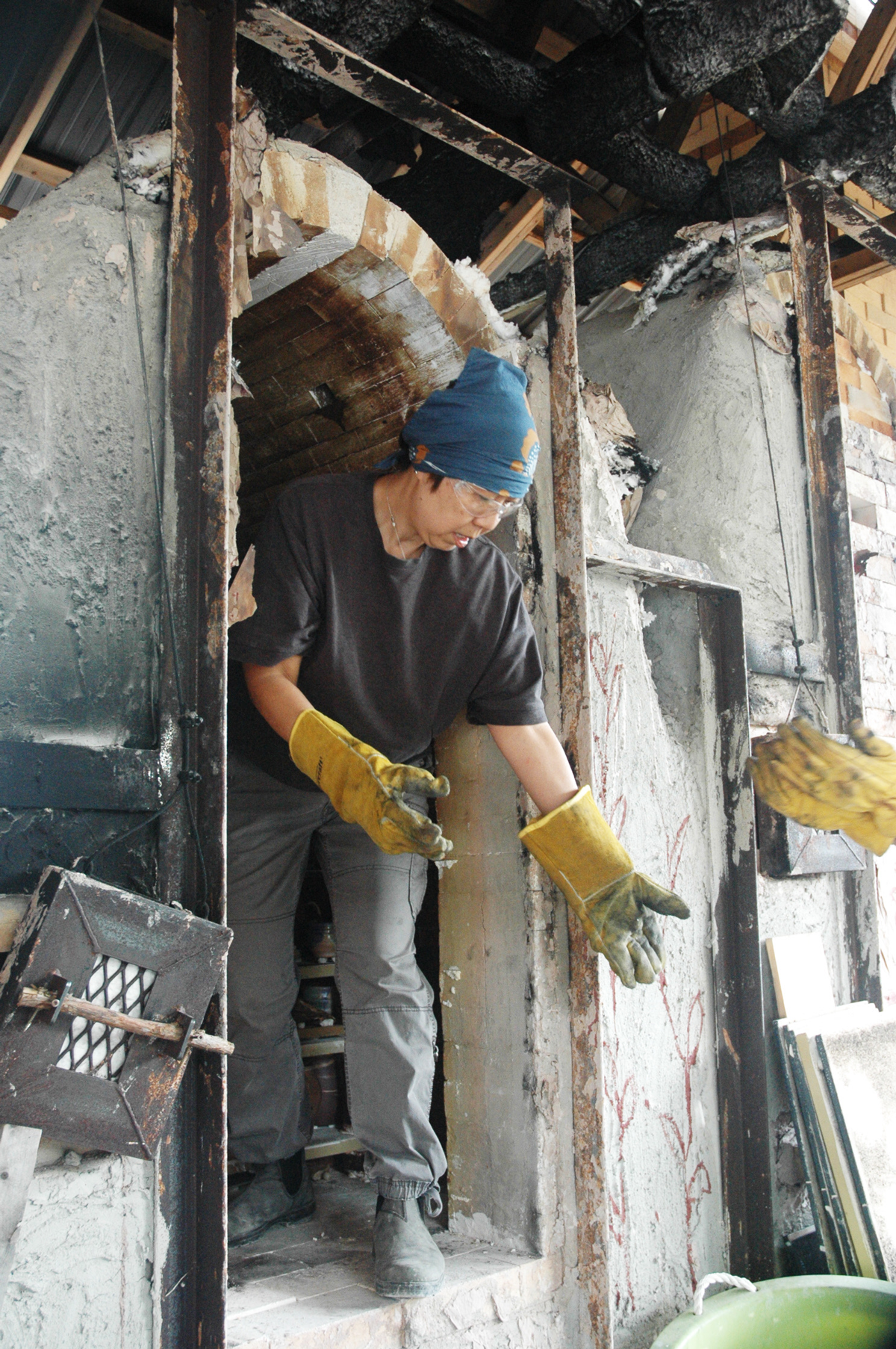
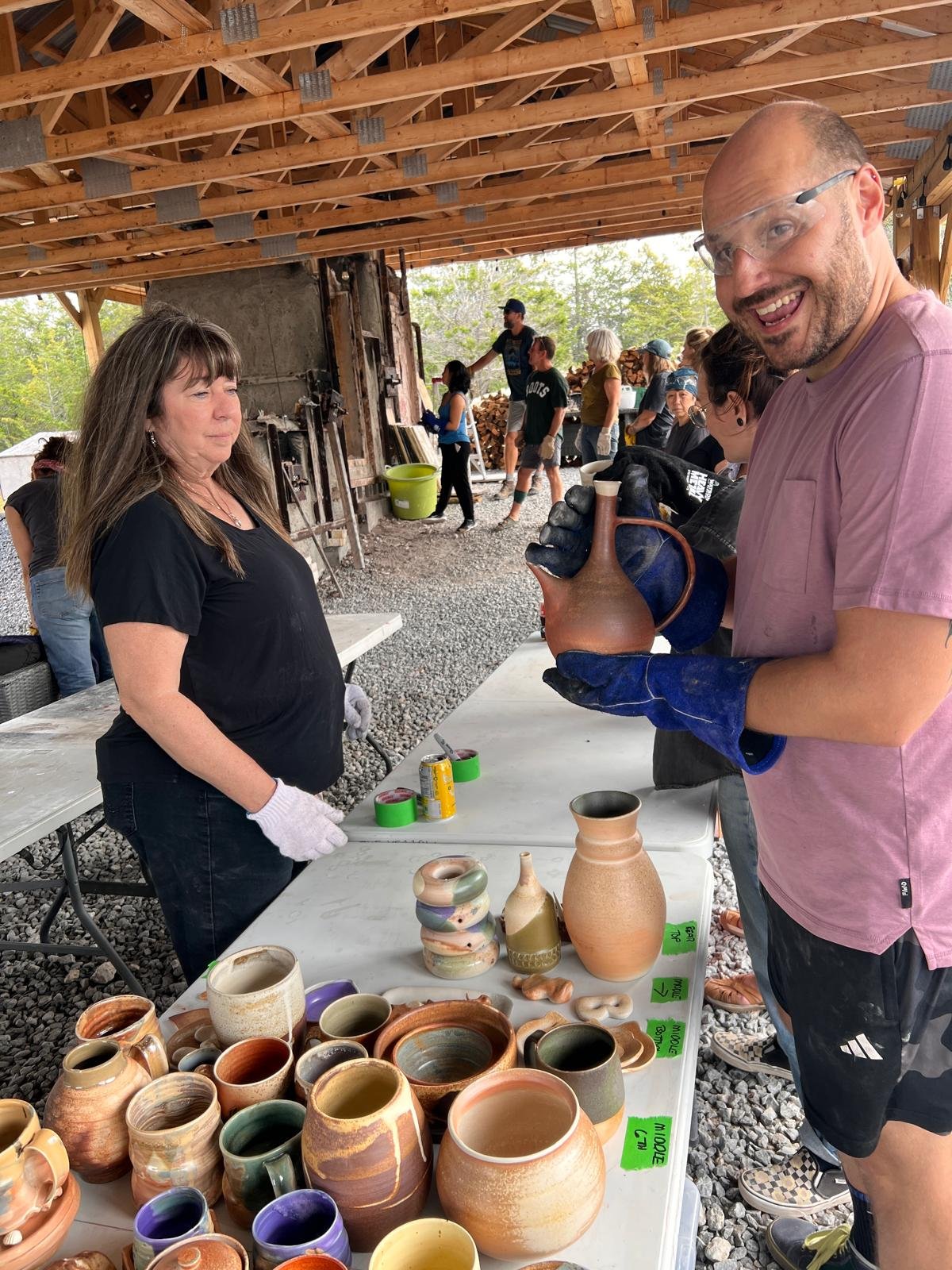
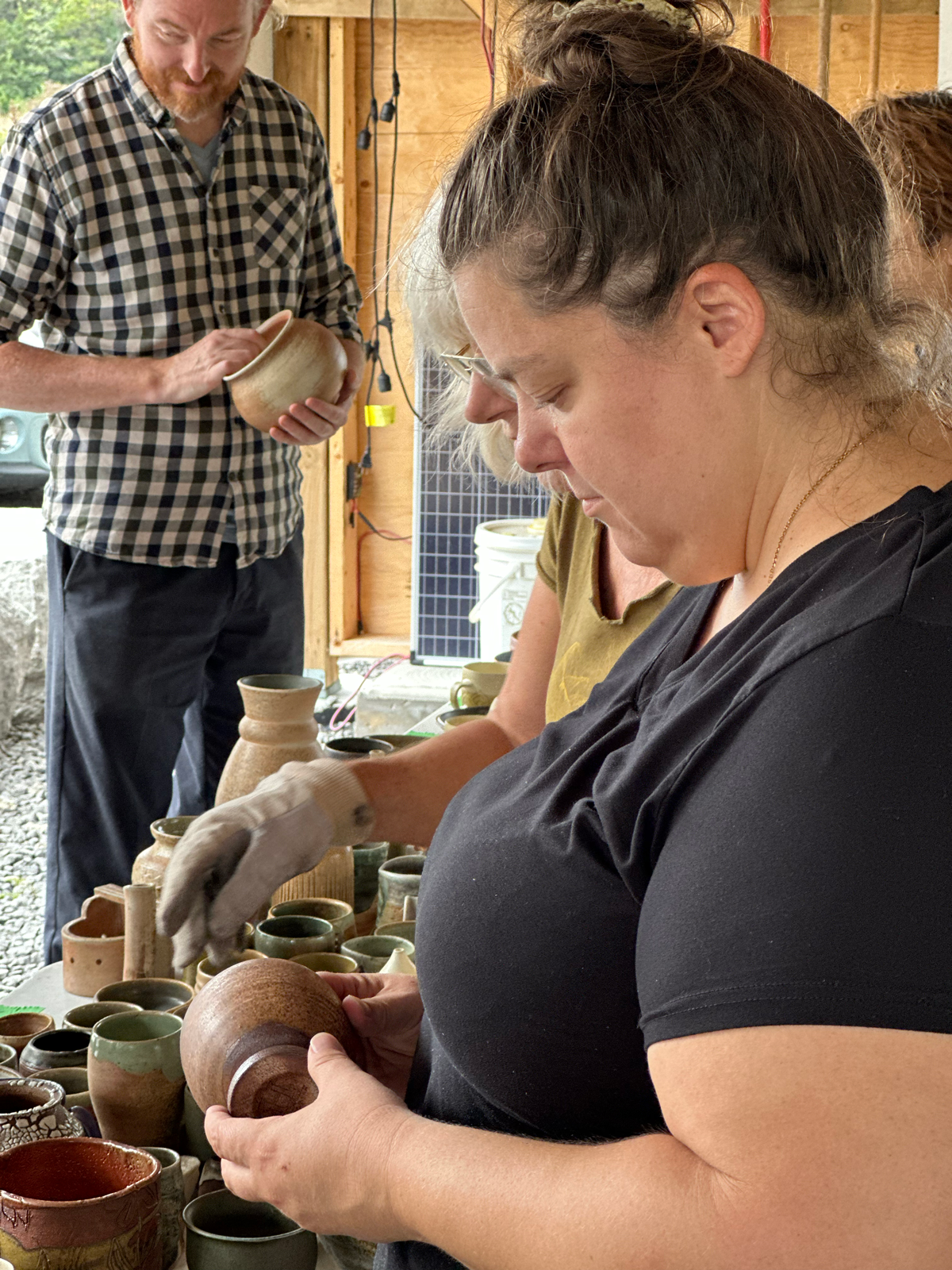
Once the review was done, it was time to pack up and go home. It was difficult to say good bye. I feel like I miss them already. A heart-felt thank you to everyone that worked so hard to make this firing possible.
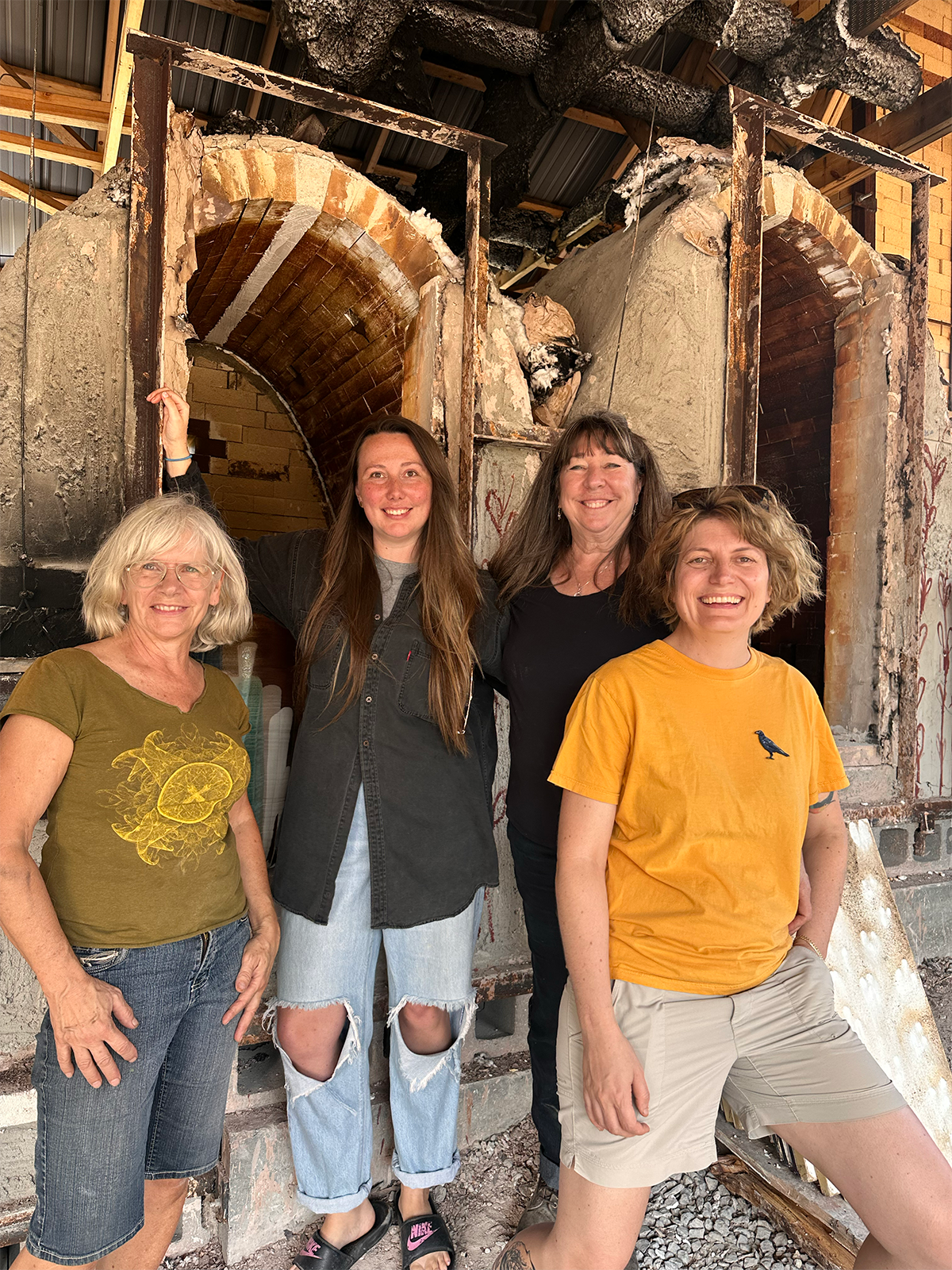
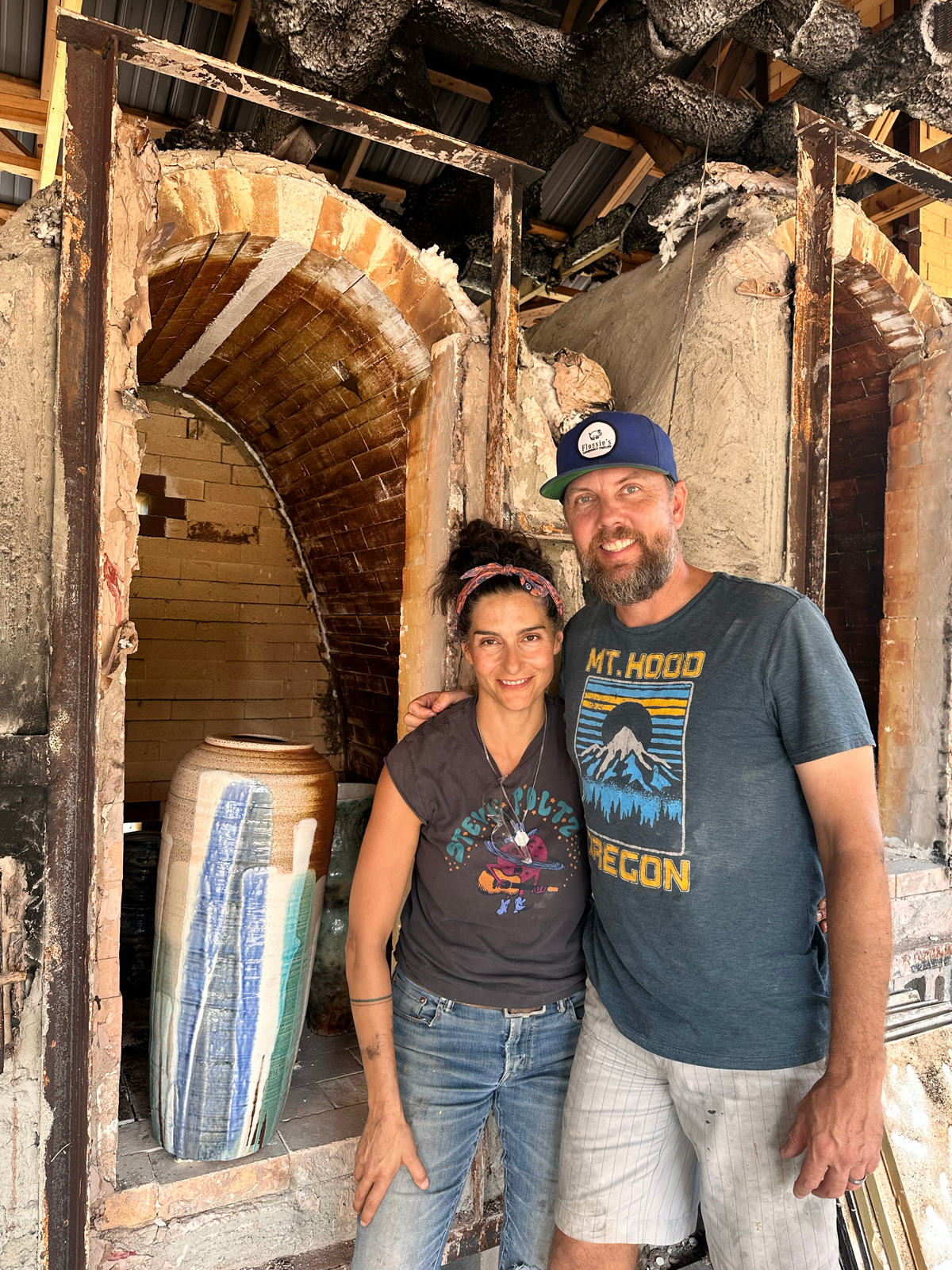
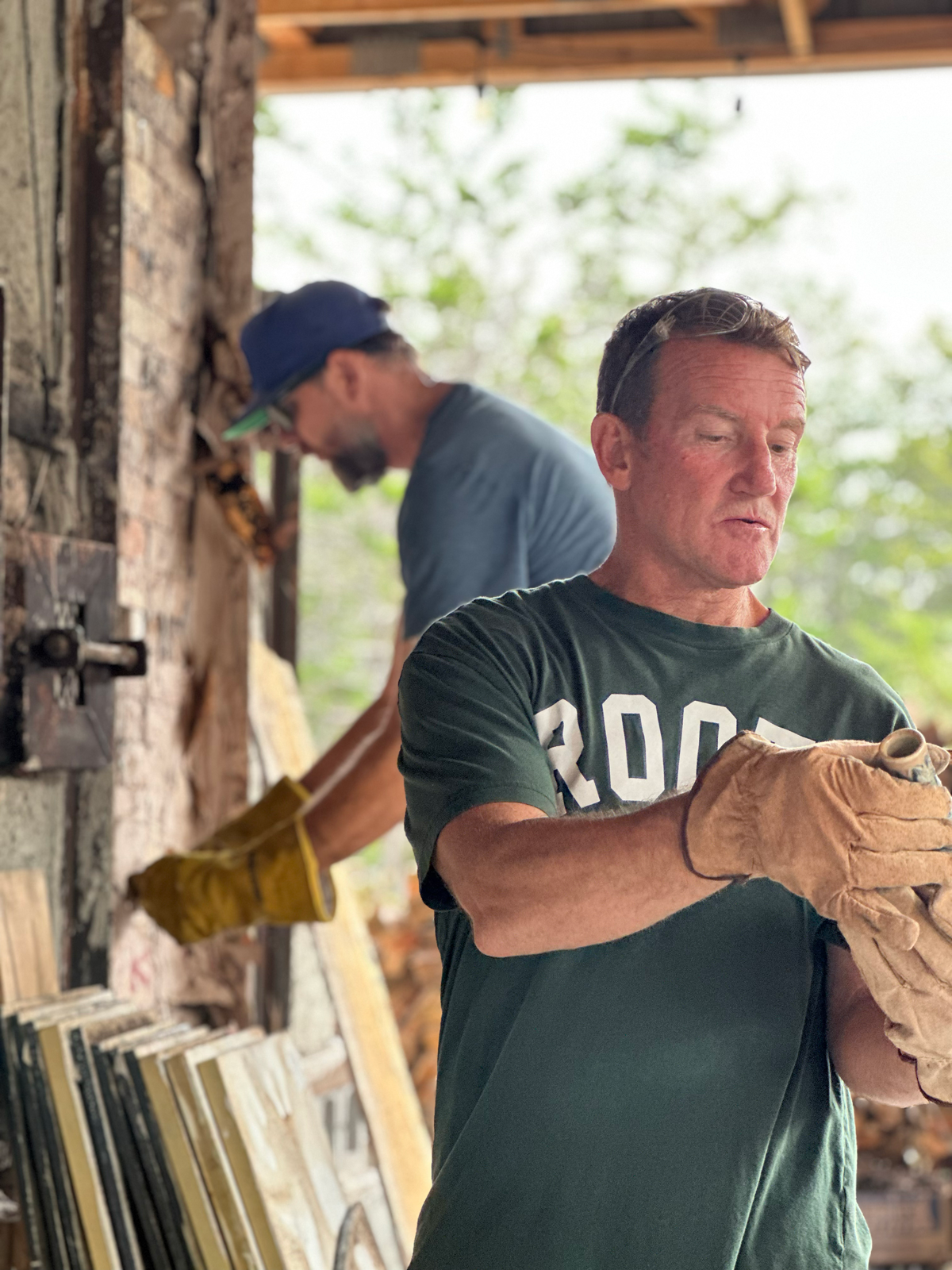
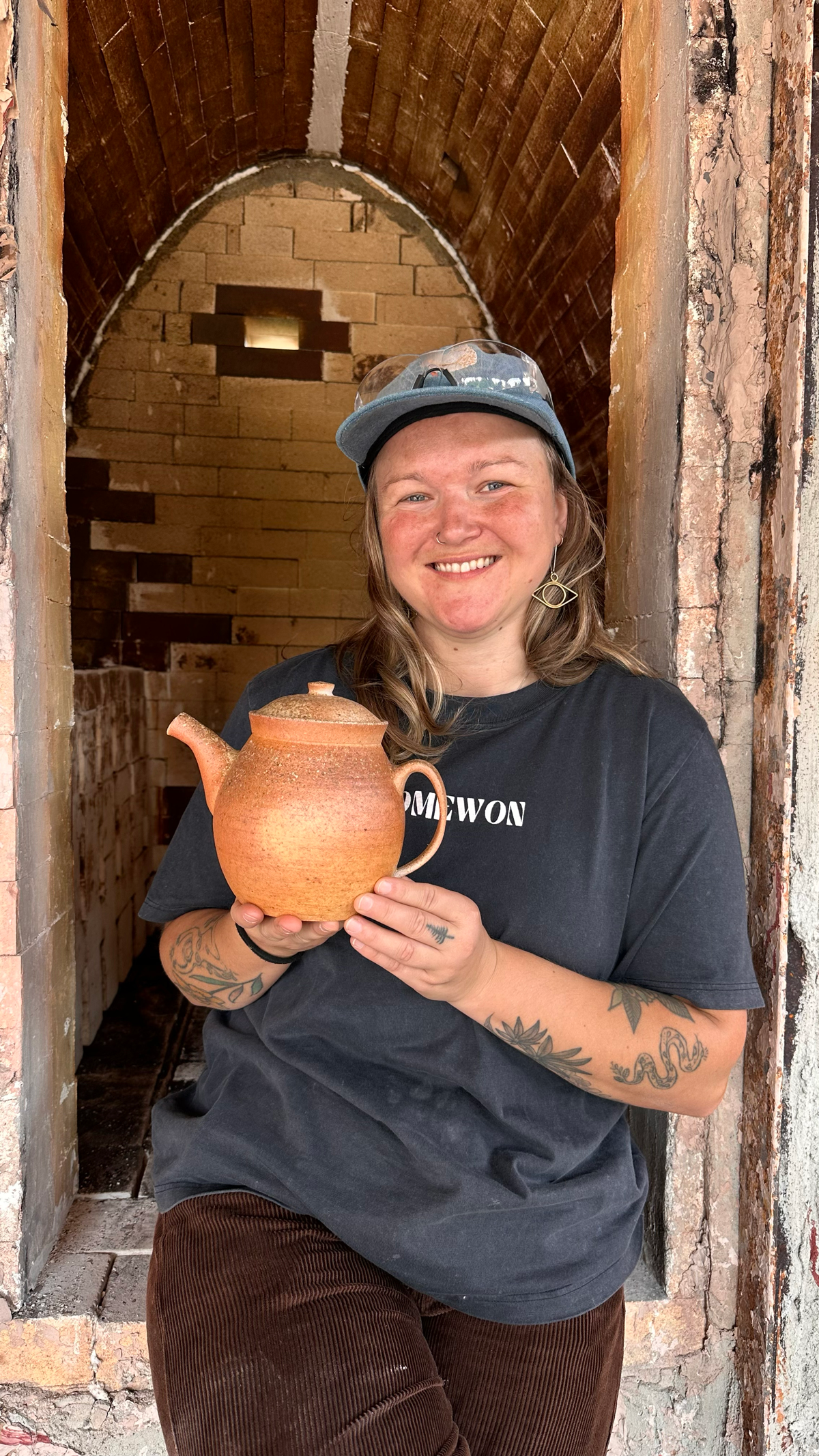
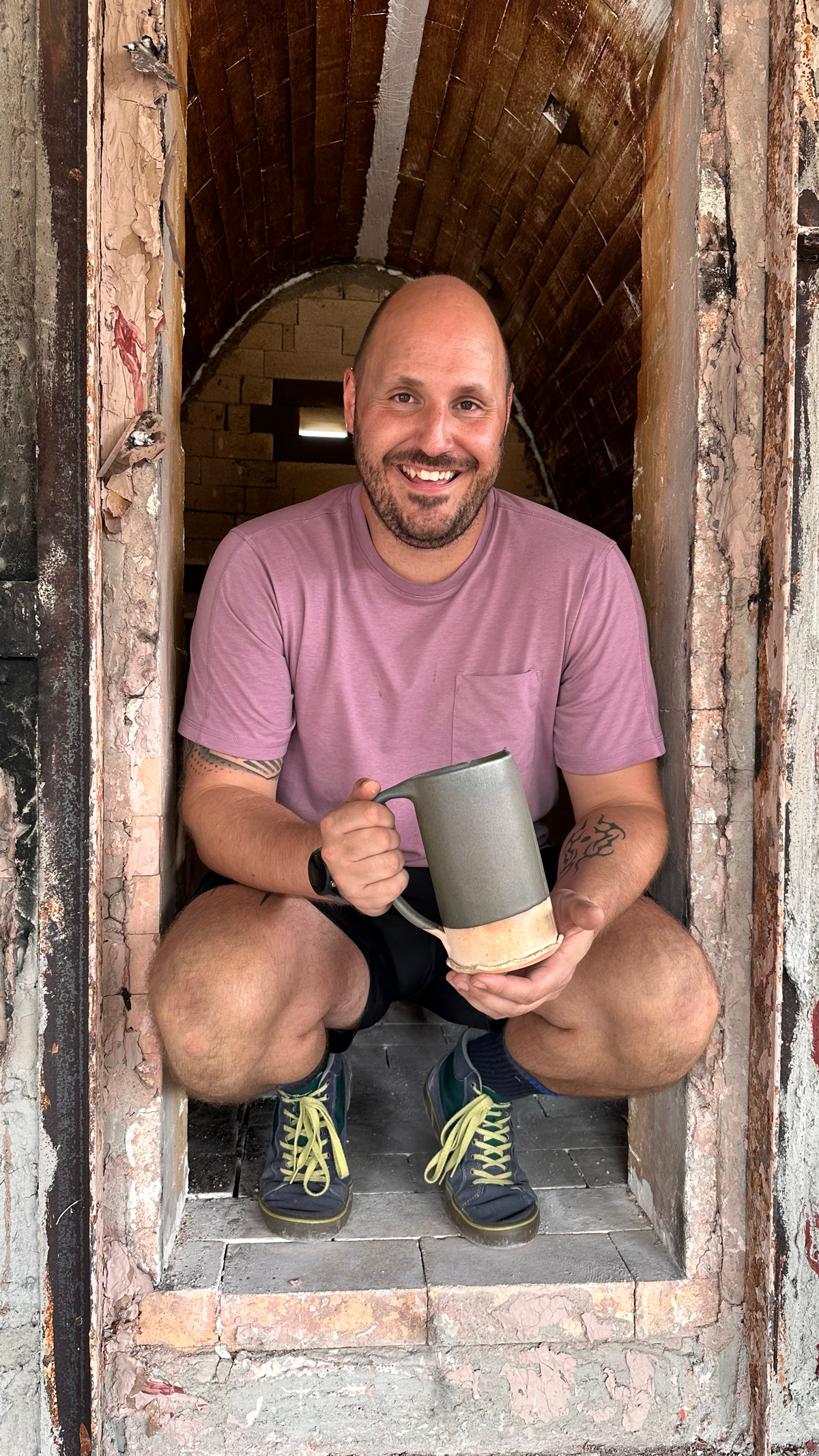
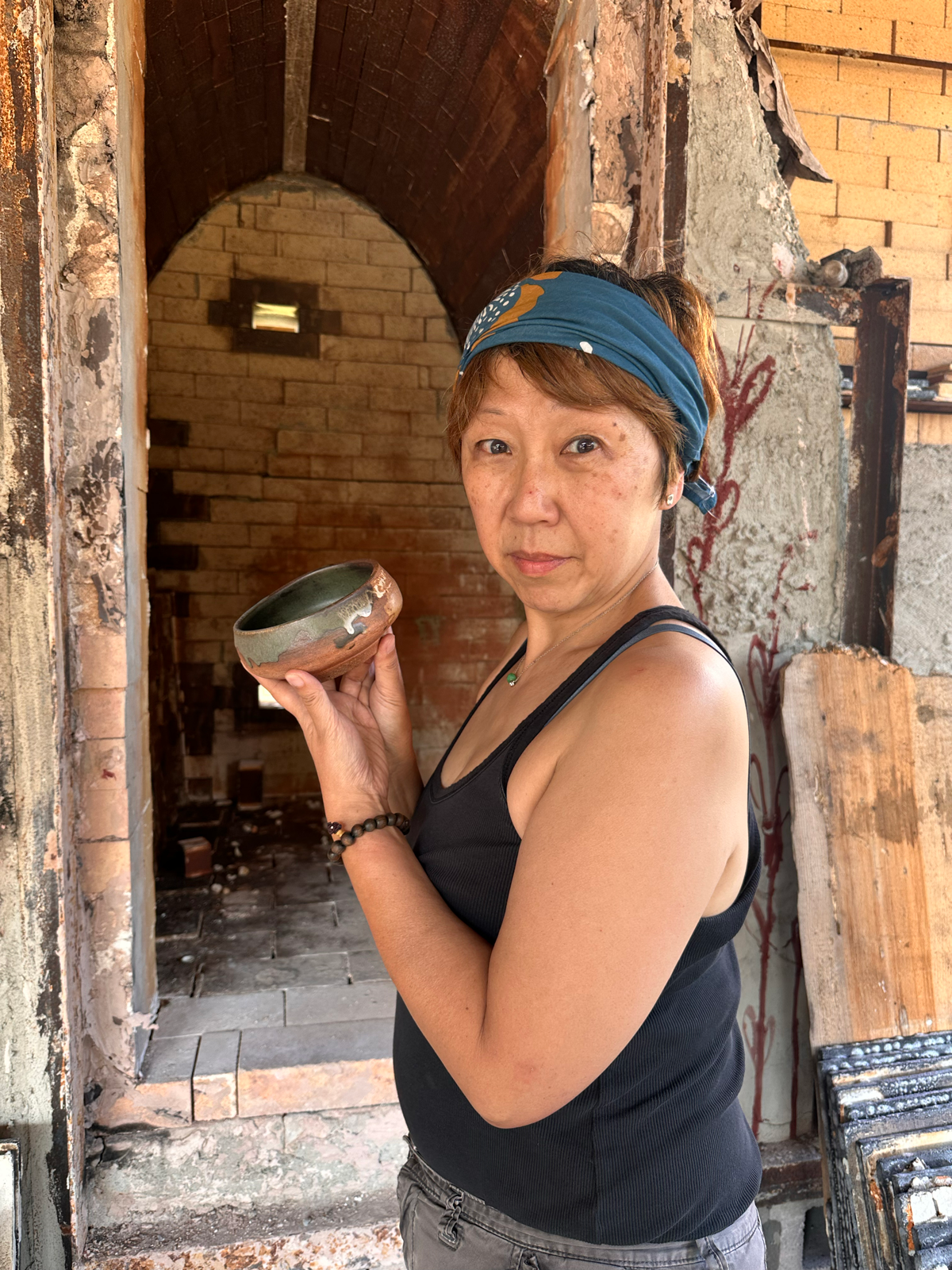
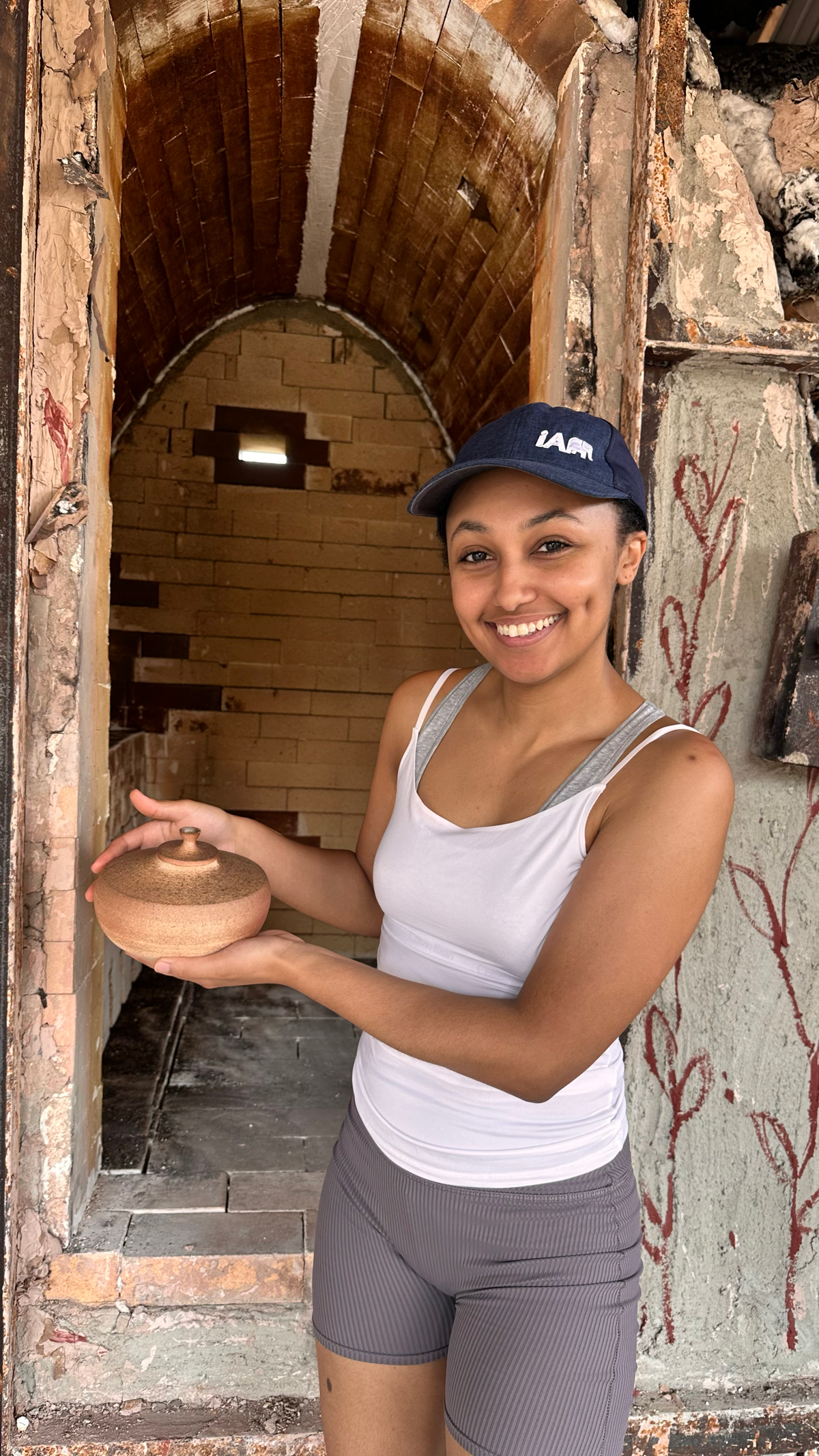
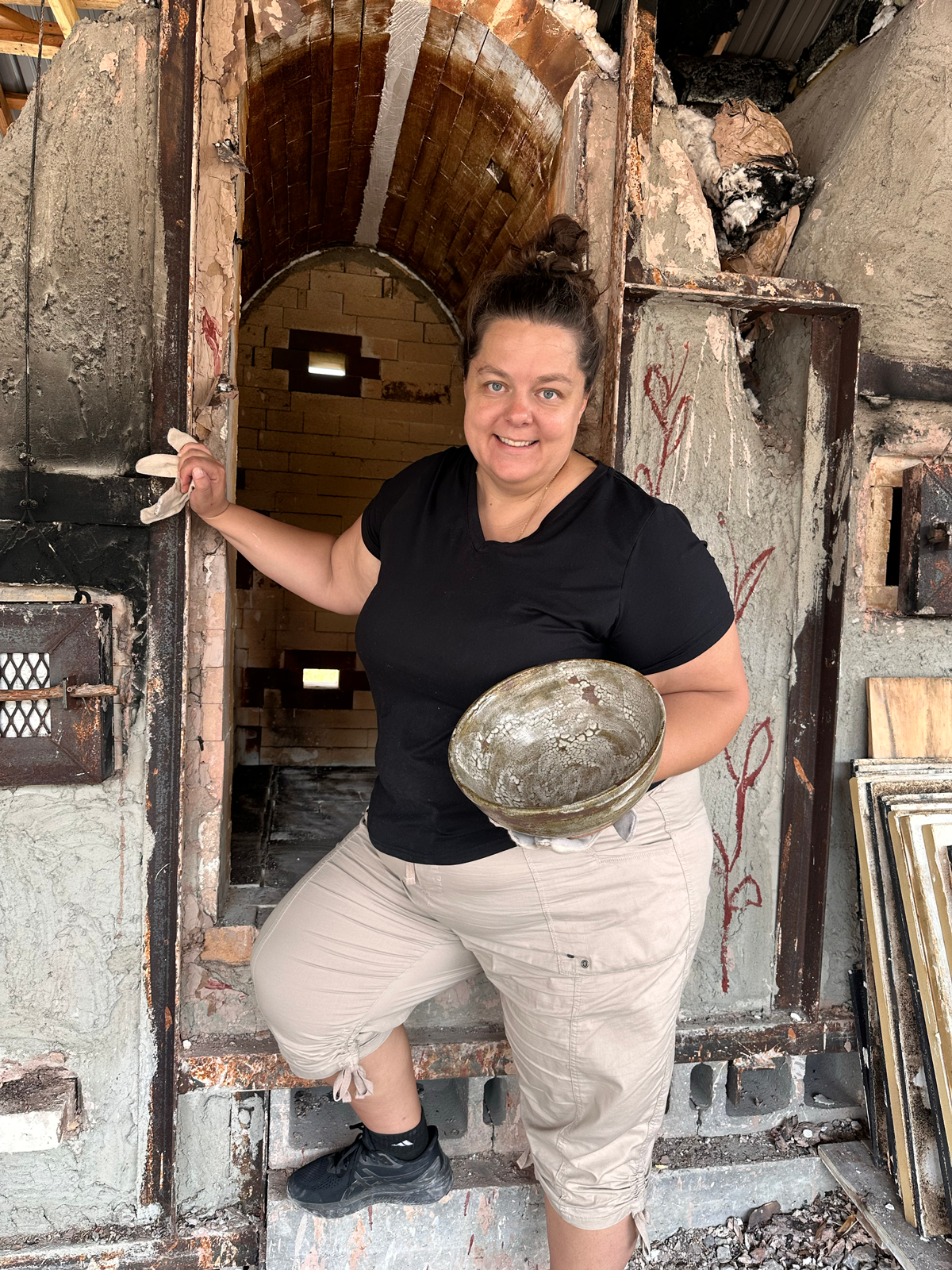
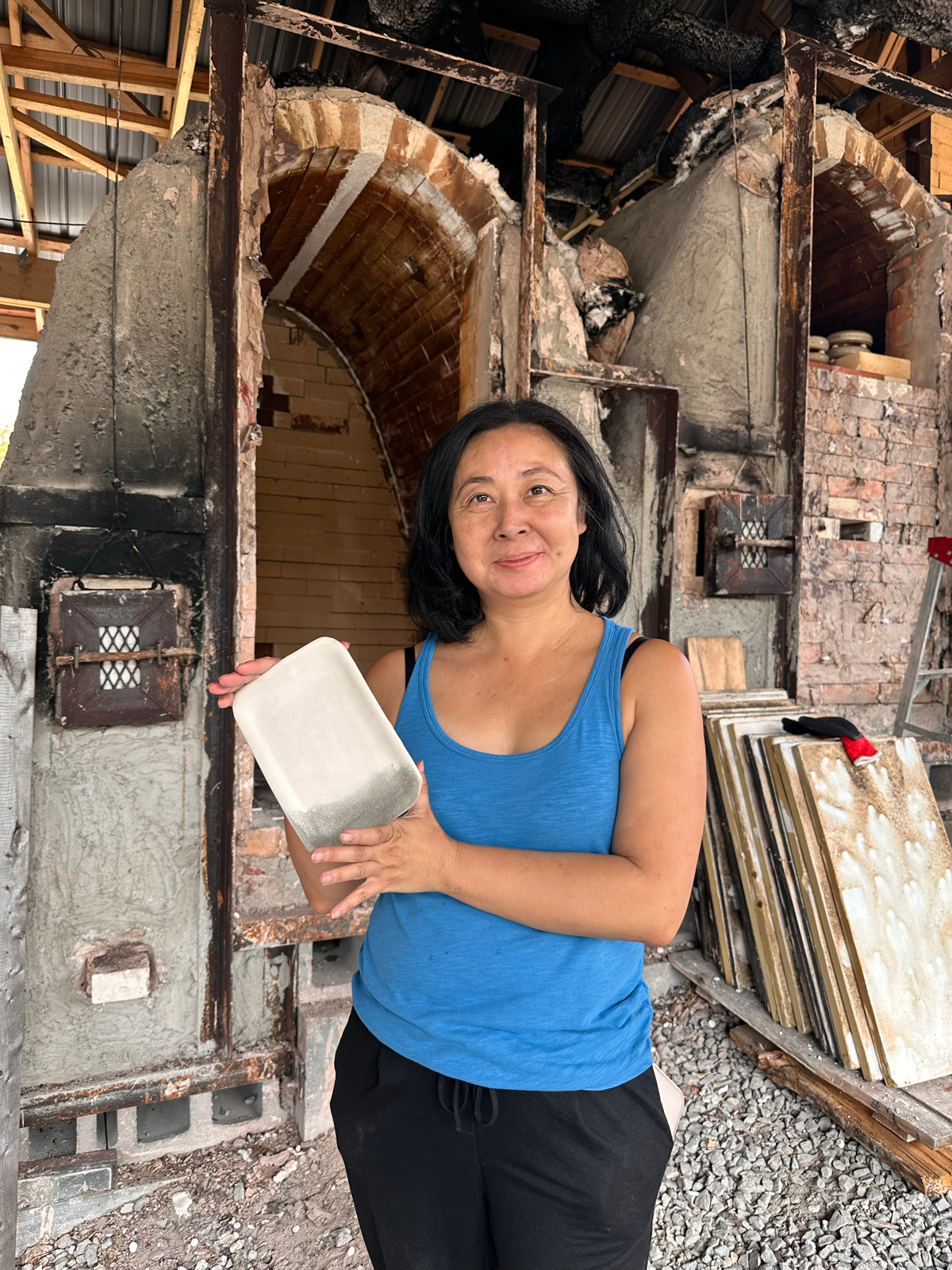
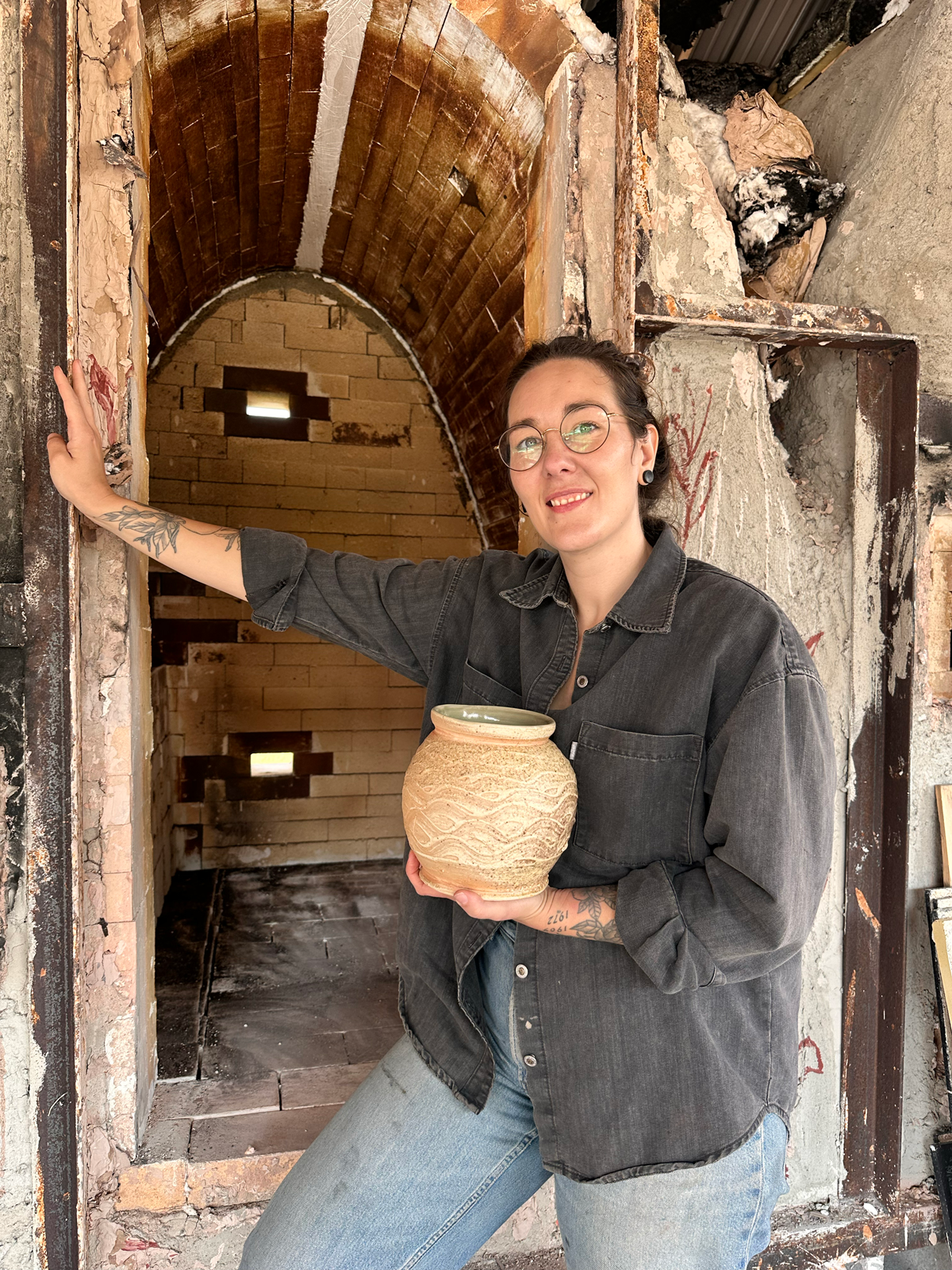
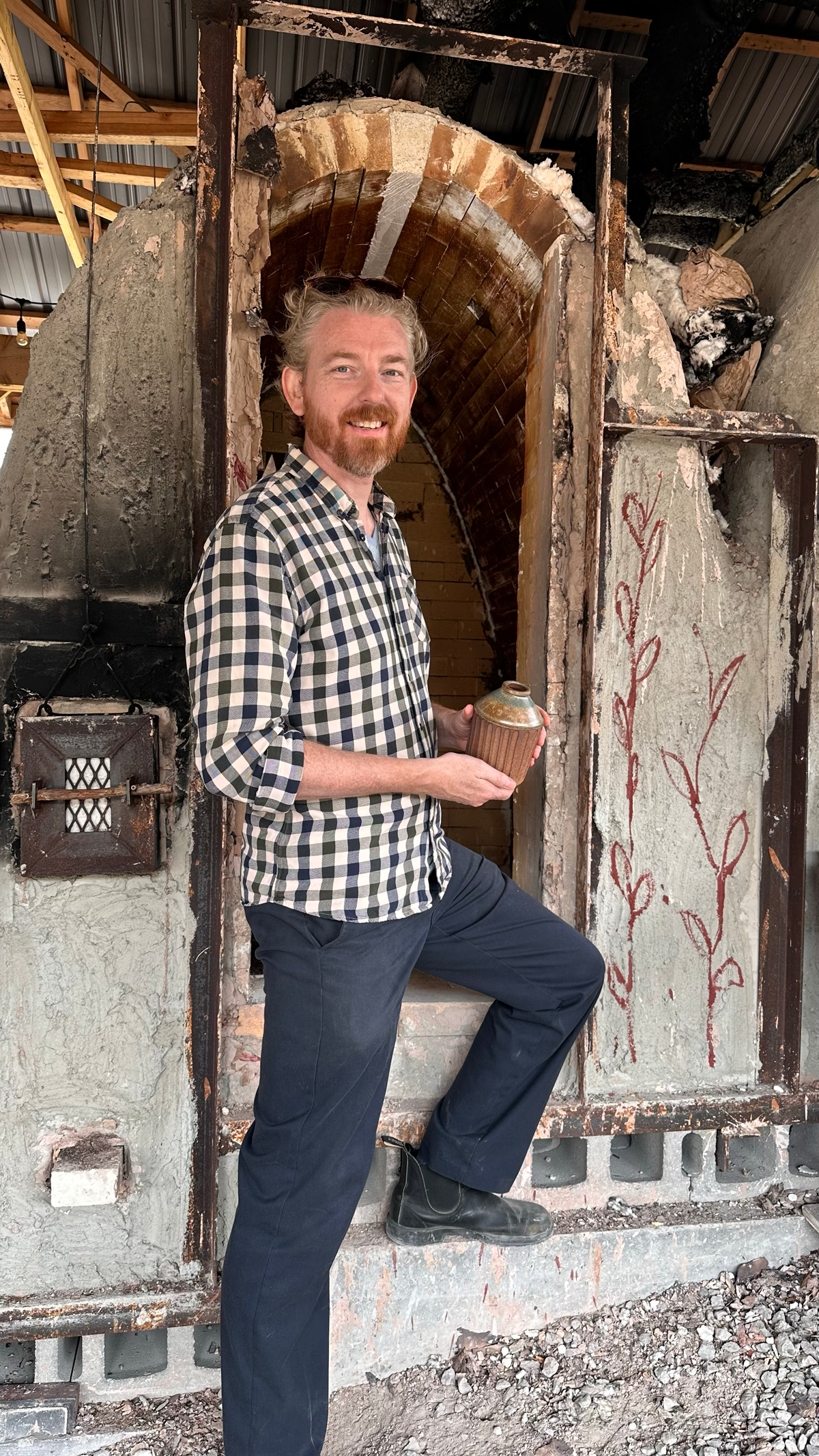
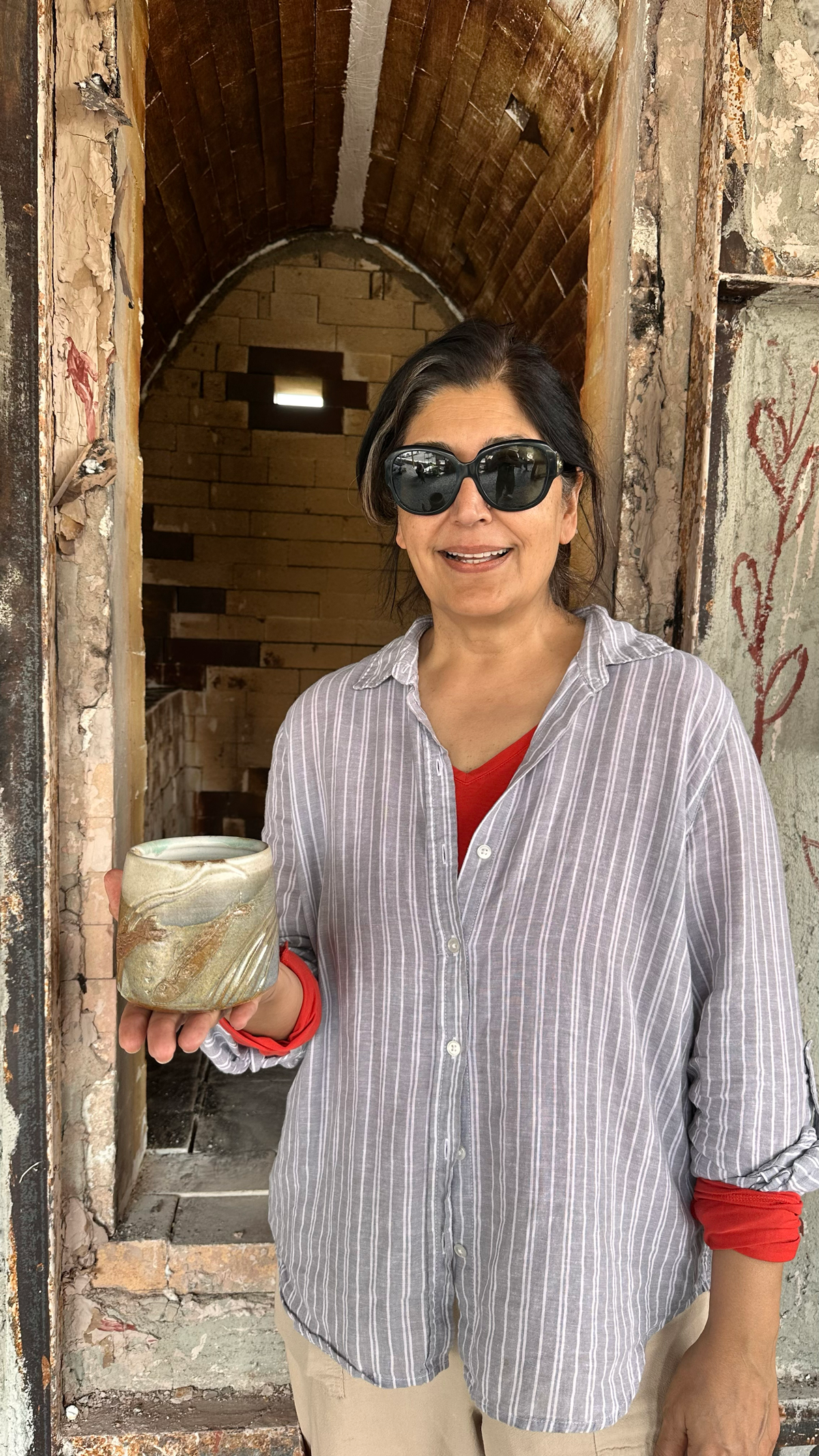
Here’s a gallery of all the potters holding their personal favourite piece…
Several Weeks Later
Thinking back, I hesitated about signing up. I just didn’t think my work was good enough – not wanting to waste such a valuable opportunity. In retrospect, I’m so glad I did. It’s such a luxury and learning experience to be amongst such talented potters. They’re kind and encouraging. Lighting up my path forward. Looking forward to the next time. And Dawn was so right, it’s good to put the work away and then revisit them. This is exactly what I did