
Think Small
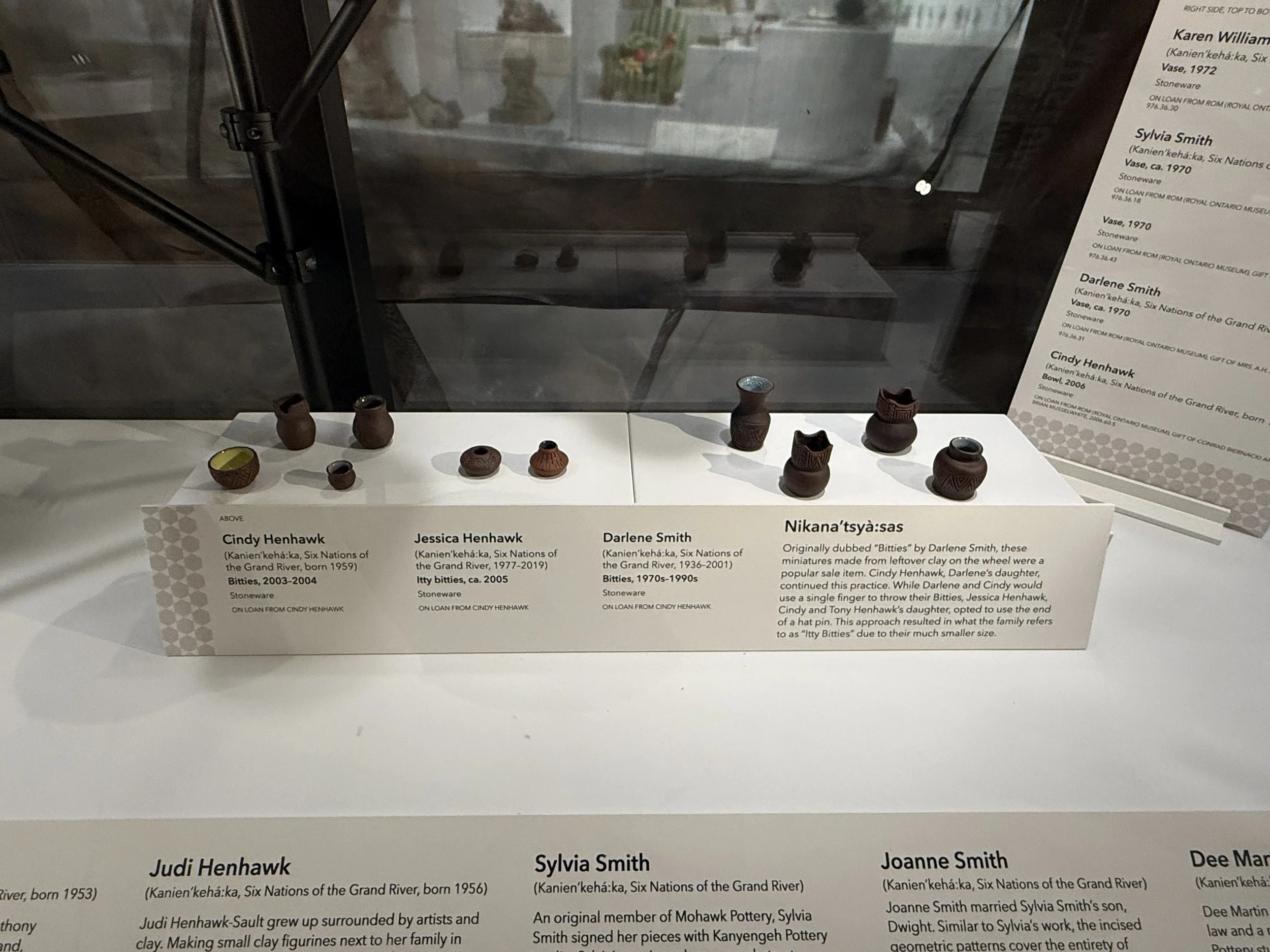
A snapshot of the “Itty Bitties” from the Gardiner Museum. Started out as making miniature pieces with left over clay, the format become a popular sale item. This practice carries on from generation to generation. I love how each artist bring the essence of their work down to the miniatures.
I attended a guided tour of the Indigenous Immemorial works at the Gardiner Museum, in Toronto. We had the good fortune to be guided by the museum’s Curator of Indigenous Ceramics herself, Francesca Herbert-Spence. We focused primarily on the newly installed structure titled yelákhwaˀ… designed by architect Chris Cornelius. The metaphorical vessel housed many works, or belongings, from Great Lakes Region artists, including a display designed to represent a family tree. Part of the family tree works showcased several miniature stoneware pots and vessels called, “Itty Bitties.” This was my favourite part of the display. At first glance, I was drawn to them because of the extreme contrast in size and also my love of miniatures. One of my pottery teachers, Cielo Vianzon, is one of the leading miniature ceramists in the industry. Once Francesca shared how and why she included them as part of her overarching curation theme to reframe and retake autonomy for the makers, I appreciated them even more. Actually got me thinking about access, power, and the duality of this medium I love.
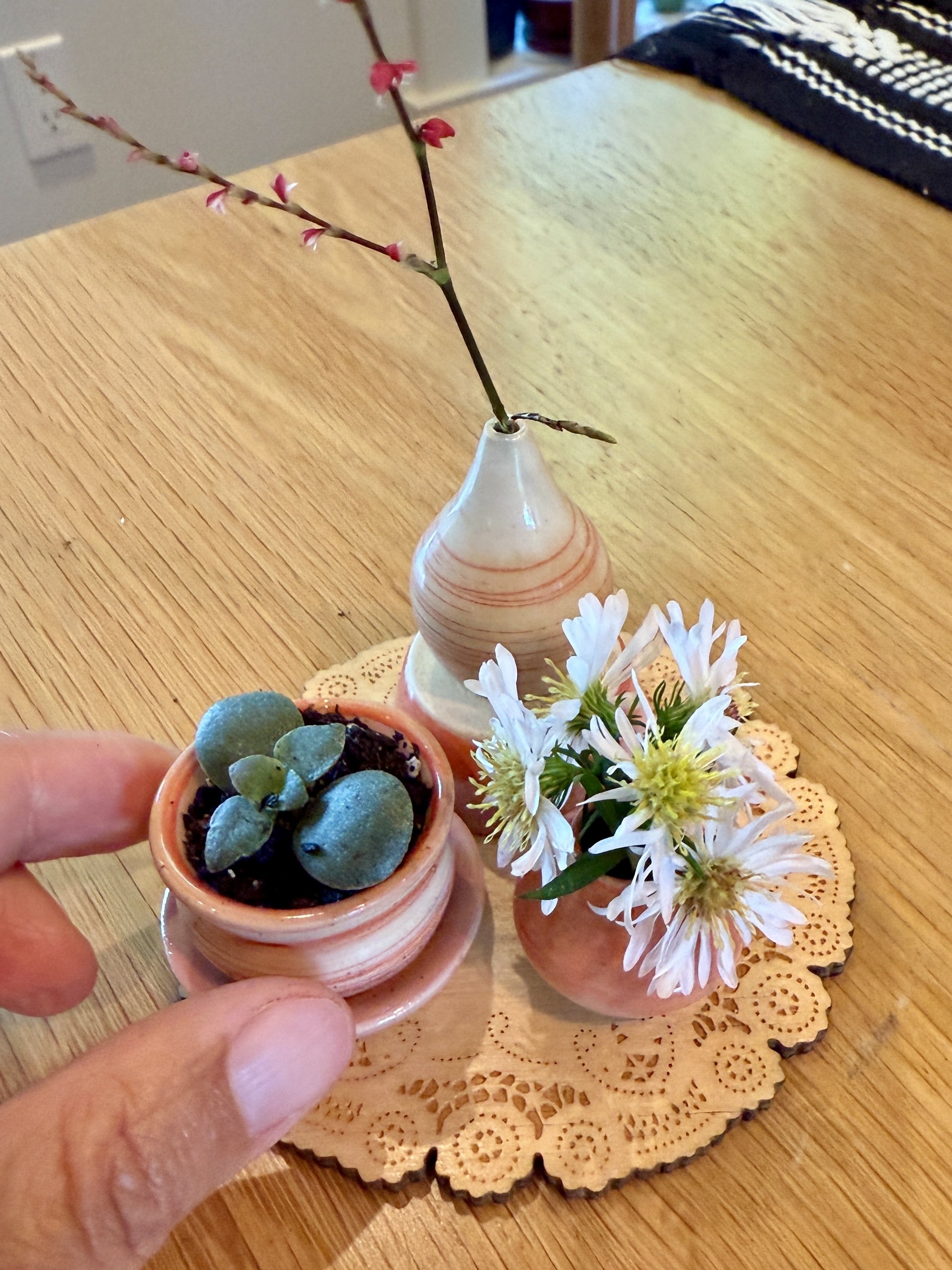
First pieces from the mini wheel…
… and I was hooked. In September, 2025 I took a workshop series at Mini Pottery Studio in Toronto. It started out as a curiosity and then grew into a genuine love for the format. At the time, I didn’t give it too much thought, focusing more on the joy of working small. It wasn’t until the Gardiner tour that I got me thinking a bit more critically.
Duality of Clay
Slowly, I’m discovering many juxtapositions when it comes to clay arts. Clay is essentially found all around us. It really is dirt cheap. But in order to turn it into ceramics, there are numerous steps and processes involved. In order to participate, one needs access to all sorts of tools, materials, equipment, space, knowledge and time. The analogy that came to mind is that you can play soccer or you can play hockey. Big difference in the buy-in and access. Working small gave a window into a world that might otherwise be prohibitive. Same can be said about lots of other medium as well. Perceptions of clay arts as “serious” or “fine” art comes to mind as well. Do functional works deem less art-worthy than say a sculpture? Also, what about the makers themselves? We often refer to them as artisans or craftsman, craftswomen and not artists. For now, I am grateful for the ability and access to work big and small. Maybe someday, I’ll incorporate both formats into my work. Hmm. That’s another intriguing prospect I’m excited to explore.